

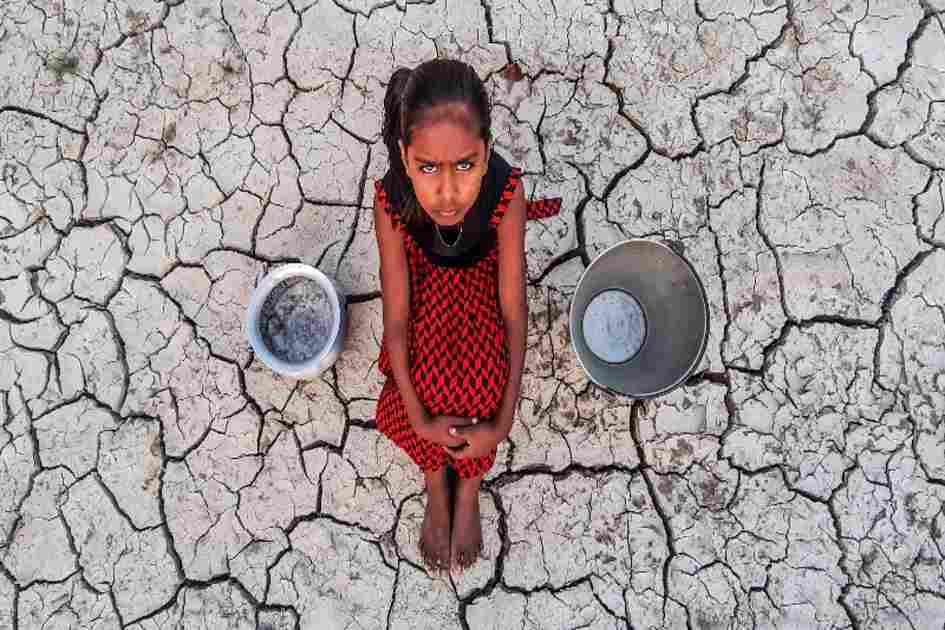



The opinion argues that Bangladesh’s climate vulnerability is being worsened by weak enforcement, unchecked pollution and policy choices that undermine the delta’s natural resilience.
Bangladesh offers the world one of the starkest lessons in environmental injustice available today. Contributing less than 0.5 percent of global greenhouse gas emissions, it faces consequences disproportionate to any nation of comparable size – accelerating sea level rise, intensifying cyclones, riverbank erosion displacing tens of thousands annually, and saltwater intrusion that is quietly destroying the agricultural foundations of coastal communities. But to understand Bangladesh’s environmental crisis only through the lens of climate change is to miss the deeper and more controllable story: that for decades, Bangladesh’s own systems of power have treated the environment as an enemy.
This is not metaphor. It is the operating logic that has governed environmental policy and enforcement in Bangladesh across successive governments. The environment is framed as an obstacle to economic growth, a constraint on industry, an inconvenience to development. Polluters operate with near-total impunity. Regulatory frameworks that are substantial on paper are selectively enforced or quietly ignored. The result is a country that is simultaneously a victim of global environmental injustice and a perpetrator of domestic environmental destruction – and the people caught in the middle are invariably those with the least power to demand accountability.
The scale of the damage is measurable. A 2024 World Bank assessment estimated that environmental degradation costs Bangladesh the equivalent of 17.6 percent of GDP annually – a staggering economic self-injury that dwarfs most development investments. Air pollution from brick kilns, vehicle emissions, and industrial sources has reduced average life expectancy by an estimated 5.5 years. Rivers surrounding Dhaka now receive thousands of tons of untreated industrial and municipal waste daily. The Buriganga, for example, is by any scientific measure biologically dead – a condition that has persisted for decades while the regulatory apparatus capable of addressing it has remained largely inactive.
The Injustice Within the Injustice
International discourse on Bangladesh’s environmental vulnerability tends to focus on what the world owes Bangladesh: climate finance, loss and damage reparations, emissions reductions by major polluting nations. These claims are legitimate and urgent. But they exist alongside a domestic injustice that is less often named: the systematic distribution of environmental burden onto those least able to bear it.
In Bangladesh, as in many developing nations, environmental degradation does not affect all citizens equally. Coastal farmers absorb the advancing saltwater that renders their fields unproductive. Riverbank communities lose land and homes to erosion accelerated by upstream hydraulic interventions. Urban informal settlers breathe the most contaminated air and drink from the most compromised water sources. Women walk greater distances as clean water sources become inaccessible or contaminated. These populations bear the compounded weight of global climate injustice and domestic environmental neglect simultaneously – and they possess the least political leverage to demand change from either direction.
Meanwhile, those with economic and political influence have largely been able to buffer themselves from these consequences through private infrastructure, geographic mobility, and access to resources unavailable to the majority. This structural separation between those who benefit from polluting industries and those who suffer their consequences is not unique to Bangladesh – it is a pattern visible across the developing world. But in Bangladesh, where environmental systems are under extraordinary pressure from both anthropogenic and climatic stressors, the consequences of this separation are particularly acute and accelerating.
The Delta Beneath the Crisis
What makes Bangladesh’s situation geologically and scientifically distinctive – and what receives insufficient attention in international environmental discourse – is the fundamental nature of the landscape itself. The Bengal Delta is one of the most dynamic geological formations on Earth, built over millennia by the sediment load of the Ganges-Brahmaputra-Meghna river system. Sediment is not incidental to Bangladesh’s existence. It is the active geological mechanism by which the delta maintains elevation against sea level rise, replenishes agricultural soils, sustains coastal and riverine ecosystems, and preserves the mangrove ecology of the Sundarbans – one of the world’s most biodiverse and climatically significant forest systems.
Yet sediment is treated within Bangladesh’s water management establishment as a problem to be engineered away. It causes waterlogging. It clogs drainage channels. It complicates navigation. The response has been decades of embankments, barrages, and flood control infrastructure that interrupt the natural sediment dynamics on which the delta depends. The proposed Padma Barrage, if constructed without a rigorously designed sediment bypass system, risks replicating the downstream sediment deprivation already documented below the Farakka Barrage on the Ganges – what I have described as a potential “double Farakka” effect. When the foundational geological processes of a deltaic landscape are redefined as engineering obstacles, the long-term habitability of that landscape is placed at measurable, preventable risk.
This is the scientific dimension of environmental injustice that international audiences rarely encounter: it is not only that Bangladesh is vulnerable to rising seas, but that internal policy decisions are actively undermining the delta’s natural capacity to adapt. A landscape that has survived millennia of climate variability through sediment-driven elevation gain is being deprived of that mechanism precisely when it needs it most.
What the World Can Learn – and What Bangladesh Must Do
Bangladesh’s environmental crisis carries lessons that extend well beyond its borders. It demonstrates that climate vulnerability and domestic environmental mismanagement are not separate problems – they are compounding ones. International climate finance directed toward a country that simultaneously allows its rivers to die and its delta sediment system to be disrupted will not produce resilience. It will produce the appearance of adaptation while the foundations erode.
It also demonstrates that environmental law without enforcement is not law – it is performance. Bangladesh’s legal architecture for environmental protection is not negligible. The problem is selectivity: enforcement that functions as negotiation for the economically powerful and as pressure for those without resources or connections. Until the cost of environmental destruction falls on those who cause it rather than those who suffer from it, the trajectory will not change.
The path forward requires more than awareness or international solidarity, though both matter. It requires Bangladesh’s leadership – political, scientific, and civic – to make a fundamental cultural shift: to recognize the environment not as an obstacle to development but as the irreplaceable foundation on which all development depends. The rivers, the delta, the sediment system, the groundwater, the ecology of the Sundarbans – these are not constraints on Bangladesh’s future. They are its future.
The global community owes Bangladesh a just response to the climate crisis it did not cause. But Bangladesh owes its own people – particularly its most vulnerable – the environmental governance they deserve and have not yet received.
We cannot sustain what you are destroying. And you cannot demand justice from the world while denying it to your own citizens.
The write is a geologist and environmental scientist, with nearly three decades of regulatory experience at the Kentucky Department for Environmental Protection. A member of the Bangladesh Environment Network.




