

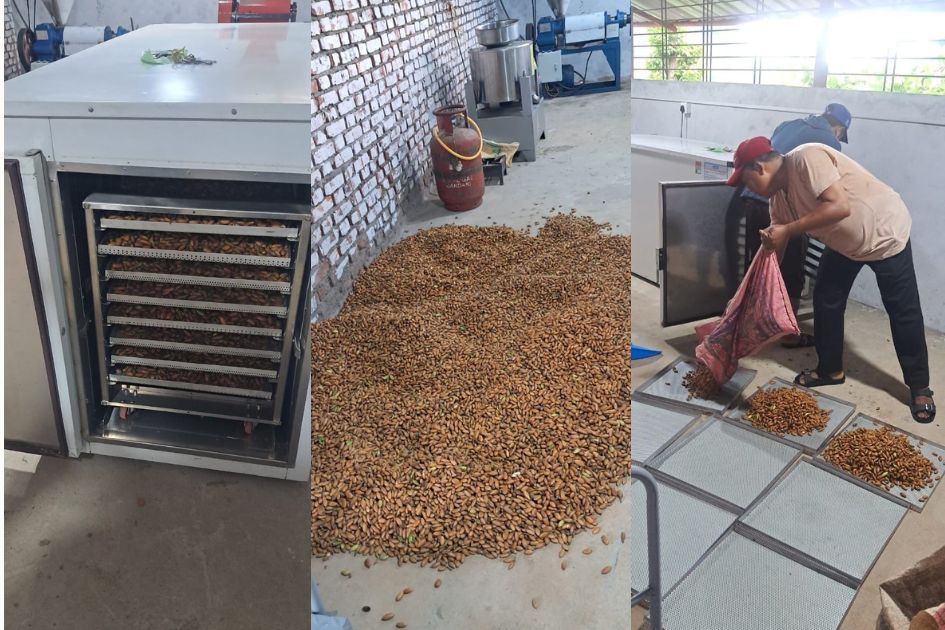



Modern processing equipment is helping a Chitwan cooperative buy chiuri seeds from local collectors, reduce forest waste and prepare chiuri butter for wider sale.
Residents of the hilly areas of Rapti Municipality-10 in Chitwan, who have traditionally collected chiuri seeds and pressed them in wooden oil presses to produce chiuri butter primarily for household use, have now begun collecting and selling the seeds after gaining access to improved technology. The initiative has provided some additional support to local farmers’ livelihoods.
Gambir Praja of Gokhatdanda in Ward No. 10 of Rapti Municipality collected 200 kilograms of chiuri seeds this year. He sold the seeds to the nearby Shree Korak Small Farmers Cooperative Ltd. at Rs 55 per kilogram, earning Rs 11,000.
“In previous years, we collected the seeds mainly for household use,” he said. “There was no market for them. But this year, the cooperative had already decided to purchase the seeds from us.”
According to Indra Tamang, manager of Shree Korak Small Farmers Cooperative Ltd., the cooperative has set a target of collecting 6,000 kilograms of chiuri seeds from farmers this year. The cooperative has also reached an agreement with forest user groups to purchase chiuri seeds collected by members of the Satyadevi and Parbat community forests.
A total of 50 members from the two community forests are collecting chiuri seeds this year and selling them to the cooperative.
The hilly areas of Chitwan are well known for chiuri trees, which grow abundantly in the region. In the past, residents collected the seeds mainly to extract butter for household consumption, while much of the produce went to waste in the forest. This year, however, the cooperative has taken the initiative to commercialise chiuri products, Tamang said.
“We thought that if our small effort could help local people earn some money from chiuri that would otherwise go to waste in the forest, why shouldn’t we work to develop a market for it?” he said.
The cooperative has purchased modern electric-powered machines for pressing and drying chiuri seeds, replacing the traditional wooden presses used to extract the oil.
The Agriculture and Forestry Facilitation Programme, implemented with support from the Food and Agriculture Organization of the United Nations, helped the cooperative acquire the machinery and bring in the necessary technology.
The cooperative plans to process the chiuri seeds purchased from farmers and sell the extracted chiuri butter in the market, Tamang said.
“Had we continued using the traditional method, the cooperative could not have taken on this work. It would have been impossible in terms of time and other practical considerations,” he said. “But with the machines, we can process a much larger quantity of seeds. We also no longer face difficulties drying the seeds. That is why the cooperative has taken the initiative to market chiuri products.”




