




A community visit highlighted nurseries, sapling planting and mangrove apple pickle production as women-led activities linking environmental restoration with income generation in Guliakhali.
Local women in Guliakhali, Sitakunda are using environmental and community-based initiatives to build livelihoods, leadership and economic participation, organisers said after a community discussion held on August 10, 2026.
The AUW Green Bangle Movement coordinated the community engagement visit at the home of Ms. Jharna Akter, one of the local women actively involved in the project. The visit brought together Dr. Nancy Mock, Associate Professor at the School of Public Health and Tropical Medicine at Tulane University in the United States; Dr. Mosae Selvakumar Paulraj, Director of Environmental Sciences and Biological Sciences at the Asian University for Women; and the GBM team.
YPSA, Young Power in Social Action, joined as a supporting partner.
The discussion focused on how women’s participation in livelihood and environmental initiatives has influenced their income, confidence, decision-making, leadership and daily lives.
During the discussion, Dr. Nancy Mock asked local women about their experiences, giving them an opportunity to describe how their roles within their households and communities have changed.
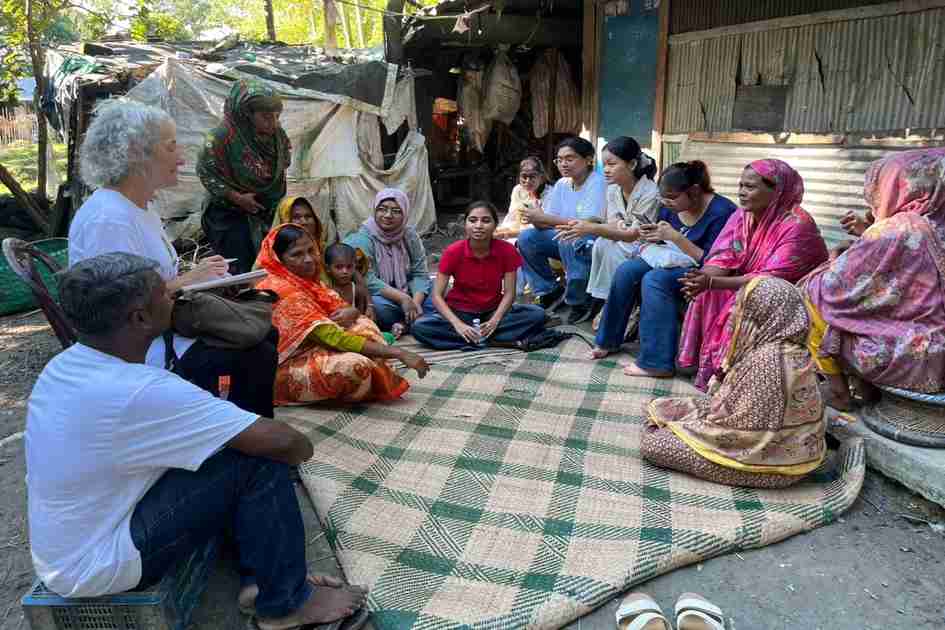
The group discussion was coordinated by Shaika Mohammad Chowdhury, Assistant Project Manager of the AUW Green Bangle Project and Afra Nawar Rahman, an Environmental Sciences student at AUW and Youth Coordinator of YPSA.
Participants described several small-scale initiatives supported by GBM and YPSA that have helped women generate income. These include home-based nurseries, where women grow saplings from seeds provided by GBM and seasonal livelihood activities such as producing and selling mangrove apple, or keora, pickle within the AUW community.
The activities allow women to earn through their own labour, skills and locally available resources while taking part in environmentally connected work.
As part of the visit, the team observed Ms. Jharna Akter’s home nursery, where saplings are being raised from seeds supplied by GBM. Saplings grown through the women’s care and labour are purchased for further planting and restoration, creating a direct income-generating opportunity through nursery work.
The team also purchased saplings from the women’s home nurseries and gifted moringa saplings from the GBM Nursery to all local women participating in the project.
Moringa saplings were planted at the homes of each participating local woman, while palmyra and sugar date saplings were planted outside their homes.
The initiative creates a cycle of seed support, nursery development, women’s care and labour, sapling production and income generation. Other community-based activities, including seasonal mangrove apple pickle production, provide additional opportunities for women to earn from their skills and local resources.
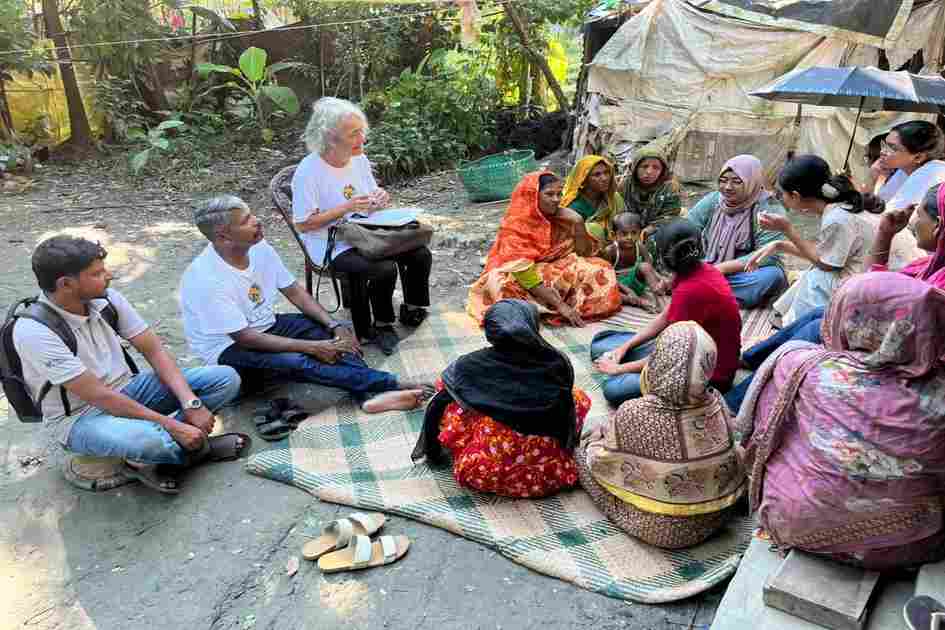
The activity showed how environmental restoration can create opportunities for women to become growers, entrepreneurs and environmental stewards within their communities.
By linking environmental work with small-scale livelihood opportunities, GBM is supporting women to take a more active role in the economic and environmental development of their communities.
The visit to Guliakhali reflected the broader work of GBM and YPSA to advance women’s empowerment, livelihood development and environmental restoration while strengthening community ownership of local environmental initiatives.




