




The Nairobi Convention’s latest progress report highlights High Seas Treaty ratifications, mangrove restoration and regional pollution planning, while exposing persistent gaps in financing and implementation.
Seven of 10 contracting parties ratify High Seas Treaty; 18,000 hectares of mangroves restored as leaders call for stronger climate action and conservation financing.
Tanzania has called for stronger regional cooperation to protect the Western Indian Ocean’s marine resources, valued at more than $300 billion, warning that climate change, pollution and unsustainable exploitation threaten ecosystems and the livelihoods of millions of people.
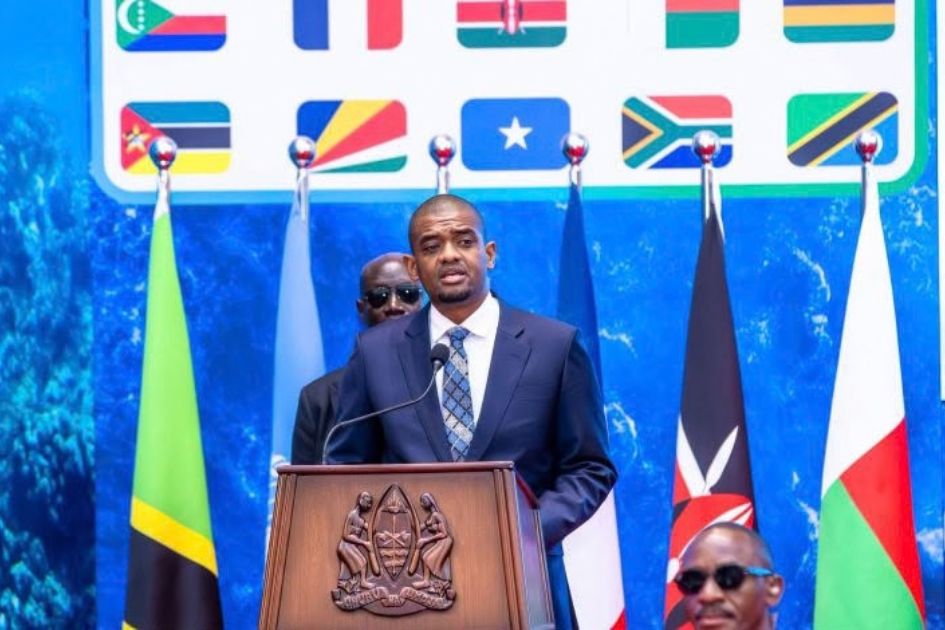
The appeal came during the 12th Conference of the Parties (COP12) to the Nairobi Convention, held in Dar es Salaam from October 6 to 9, as participating countries marked four decades of cooperation on marine and coastal protection.
More than 65 million people depend directly on the region’s ocean resources for food, employment and income, making marine conservation vital to economic development, food security and climate resilience.
Speaking on behalf of President Samia Suluhu Hassan, Tanzanian Vice-President Deogratius Ndejembi urged governments to strengthen environmental cooperation while ensuring that economic growth does not undermine marine ecosystems or coastal livelihoods.
“Addressing these interconnected challenges requires combined regional cooperation, environmental protection, economic development and social inclusion,” he said.
He stressed that a sustainable blue economy must protect ecosystems, create decent livelihoods and ensure that economic benefits are shared fairly.
Progress in marine conservation
A progress report presented by Nairobi Convention Secretariat head Dr Jared Bosire highlighted significant achievements in marine biodiversity protection, ecosystem restoration and regional environmental governance.
According to the report, seven of the Convention’s 10 contracting parties have ratified the UN Biodiversity Beyond National Jurisdiction (BBNJ) Agreement, commonly known as the High Seas Treaty.
The landmark agreement, which entered into force on January 17, 2026, establishes a legal framework for conserving marine biodiversity in international waters. It provides for marine protected areas, environmental impact assessments and equitable sharing of benefits from marine genetic resources.
Six contracting parties have also ratified the amended Nairobi Convention, strengthening the region’s legal framework for addressing emerging challenges in ocean governance.
The report further highlighted the restoration of approximately 18,000 hectares of mangroves across the region with support from governments and development partners.
Mangroves play a vital role in protecting coastlines from storms and erosion, supporting fisheries, storing carbon and strengthening the resilience of coastal communities.
Another achievement is the finalisation of a regional oil spill contingency plan to improve coordination during major marine pollution incidents.
These developments form part of the Convention’s 2025-2028 Programme of Work, which prioritises integrated ocean governance, biodiversity conservation, environmental quality and regional cooperation.
Climate threats and economic risks
Despite the progress, regional leaders warned that climate change could reverse conservation gains without stronger adaptation measures and sustained investment.
The Western Indian Ocean generates approximately $20.8 billion annually, while its ecosystem services are valued at around $25 billion a year, according to figures presented by Tanzania.
However, rising sea temperatures, coral bleaching, sea-level rise, coastal erosion and marine pollution are placing growing pressure on fisheries, tourism and coastal settlements.
Ndejembi called for stronger restoration of mangroves, seagrasses and coral reefs, alongside improved pollution control, marine spatial planning and sustainable fisheries management.
He also urged governments to translate regional environmental agreements into national legislation, institutional responsibilities, dedicated budgets and effective enforcement.
UNEP urges wider partnerships
UN Assistant Secretary-General and Deputy Executive Director of the UN Environment Programme (UNEP), Elizabeth Maruma Mrema, said four decades of cooperation under the Nairobi Convention had strengthened marine conservation, scientific collaboration and the management of shared ocean resources.
However, she warned that public financing alone could not meet the region’s growing environmental and development needs.
Mrema called for greater cooperation among governments, scientific institutions, civil society organisations, development partners and the private sector to mobilise resources and accelerate implementation.
Tanzania’s Minister of State for Union and Environment, Hamad Masauni, also urged stronger regional partnerships to create jobs, protect marine ecosystems and ensure the sustainable use of ocean resources for present and future generations.
Implementation remains the key challenge
Adopted in 1985 under UNEP, the Nairobi Convention brings together Comoros, France, Kenya, Madagascar, Mauritius, Mozambique, Seychelles, Somalia, South Africa and Tanzania.
Over four decades, it has become an important regional framework for protecting marine biodiversity, strengthening scientific cooperation and promoting sustainable coastal development.
Yet significant challenges remain. According to the COP12 progress figures, three contracting parties have not ratified the High Seas Treaty, while four have yet to ratify the amended Convention.
Questions also remain over whether countries can secure sufficient financing, strengthen environmental enforcement and translate regional agreements into measurable improvements in marine ecosystem health.
Delegates stressed the importance of involving women, young people, local communities and the private sector in decisions concerning marine conservation and the blue economy.
Despite four decades of regional cooperation, the future of the Western Indian Ocean will depend on whether governments can turn environmental commitments into effective enforcement, sustained financing and tangible benefits for coastal communities.
For millions who depend on the ocean, the real measure of progress will be healthier ecosystems, secure livelihoods and a fairer share of the blue economy.




