




Pacific nations are pushing for direct adaptation grants, stronger maritime protections and faster emissions cuts as Australia’s fossil fuel policies raise questions about COP31’s climate ambitions.
Nearly 30 countries back stronger climate action as island nations demand accessible finance, protection of maritime rights and accountability from major emitters.
Pacific climate talks concluded Thursday with fresh adaptation finance pledges and renewed demands for deeper emission cuts, but disagreements over fossil fuel expansion exposed tensions ahead of next month’s COP31 summit in Türkiye.
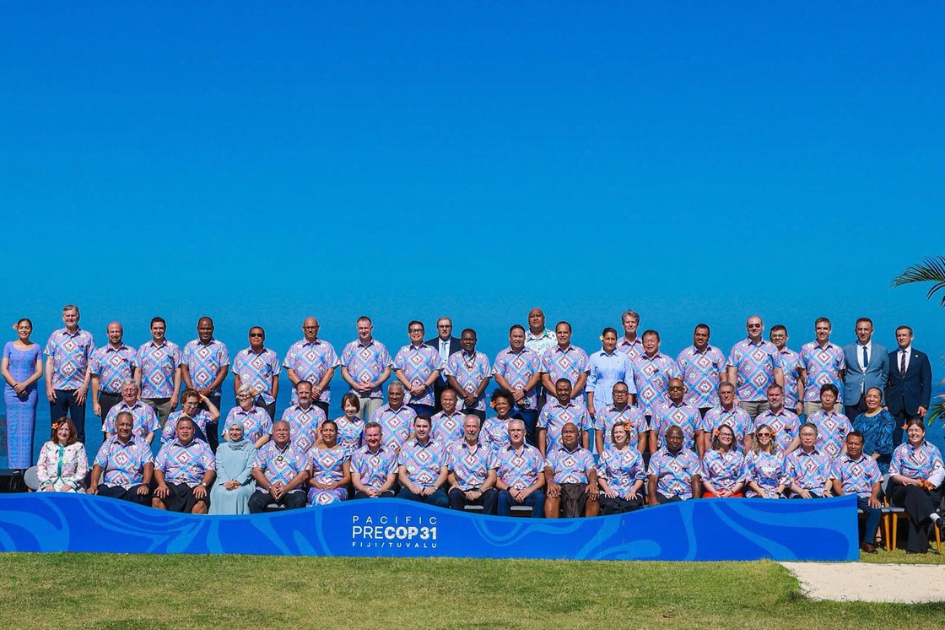
The four-day meeting, co-hosted by Fiji, Tuvalu and Australia, brought ministers and representatives from more than 50 countries together as Pacific island nations pressed major emitters for stronger action, faster access to climate finance and greater influence over international negotiations.
Held from October 5 to 8, the Pacific Pre-COP31 discussions focused on climate finance, clean energy, ocean protection and efforts to keep the Paris Agreement’s 1.5°C warming limit within reach.
The talks placed Pacific island nations, which have contributed little to global emissions but face rising seas, coastal erosion, freshwater shortages and increasingly severe weather, at the centre of preparations for the November summit in Antalya.
Resilience fund remains far below target
The Pacific Resilience Facility, a Pacific-led financing mechanism designed to support community-based adaptation, secured approximately US$15 million in additional pledges during the talks.
Contributions from Fiji, Denmark and other partners brought cumulative commitments to just under US$200 million, according to Reuters. However, the facility remains well below its initial US$500 million capitalisation target and longer-term ambition of US$1.5 billion.
Fiji pledged US$10 million, while Denmark committed approximately US$2.2 million. Additional support came from other international partners.
Unlike many large international climate funds, the Pacific Resilience Facility aims to provide smaller grants directly to communities for locally identified priorities, including coastal protection, water security and climate-resilient livelihoods.
Fiji’s Minister for Information, Environment and Climate Change, Lynda Tabuya, welcomed the progress but stressed that political momentum must translate into concrete commitments and delivery.
The funding shortfall highlighted a persistent challenge for vulnerable countries: international climate finance continues to fall short of the scale of adaptation needs.
Taku Pakasoa Declaration backs stronger action
Political momentum also grew behind the Taku Pakasoa Declaration, adopted during a leaders’ gathering in Tuvalu on October 6 and backed by around 30 countries.
The declaration calls for deep, rapid and sustained emission reductions, accelerated renewable energy deployment, a transition away from fossil fuels and improved climate finance for Small Island Developing States and Least Developed Countries.
It also urges governments to strengthen their national climate commitments and accelerate implementation of the Paris Agreement.
Significantly, the declaration reaffirms the importance of preserving statehood, sovereignty and maritime rights despite the physical impacts of climate-related sea-level rise.
For low-lying Pacific countries, climate change threatens not only homes and infrastructure but also territorial security, cultural identity and the future of communities whose existence is closely tied to the ocean.
The declaration recognises the leadership of young people, Indigenous Peoples and local communities in responding to climate change and calls for their meaningful participation in decision-making.
Tuvalu’s Climate Minister Maina Vakafua Talia urged more countries to support the declaration before COP31.
Although politically significant, the declaration is voluntary and does not create new legally binding obligations.
Climate finance access under scrutiny
Beyond additional pledges, Pacific leaders demanded reforms to the international climate finance system, arguing that complicated application procedures, lengthy approval processes and limited institutional capacity prevent vulnerable countries from accessing available resources.
Australia advanced a proposed Statement and Action Plan on Access to Climate Finance for Small Island Developing States and Least Developed Countries, seeking commitments from governments and financial institutions to simplify procedures and accelerate delivery.
Pacific representatives stressed that announcing new funding means little if resources cannot reach communities facing immediate climate threats.
They called for simplified requirements, transparent approval timelines, predictable funding and greater access to grants rather than loans that could deepen debt burdens.
The discussions reflected growing frustration over the gap between international financing commitments and actual disbursements to frontline communities.
Electrification target gains momentum
Türkiye and Australia also advanced a proposed global target to increase electricity’s share of final energy consumption from about 23 percent to 35 percent by 2035.
The initiative seeks to accelerate electrification across transport, buildings and industry, supported by renewable energy expansion, stronger electricity grids and energy storage.
Supporters argue that wider electrification could reduce dependence on fossil fuels while improving energy security.
However, the target remains a proposal rather than a binding commitment. Its effectiveness will depend on national policies, investment and the pace of the transition towards cleaner energy systems.
Türkiye and Australia propose COP31 decision
Another significant development was a joint effort by Türkiye and Australia to pursue a presidency-led decision at COP31 aimed at accelerating implementation of existing climate commitments.
COP31 President Murat Kurum and Australia’s Climate Change and Energy Minister Chris Bowen indicated that the proposed decision would address mitigation, adaptation, finance and implementation while reinforcing efforts to limit global warming to 1.5°C.
The initiative is intended to build political momentum without replacing the formal negotiating process.
Bowen said the Fiji meeting was designed to give negotiators “the best possible launching pad for Antalya.”
The proposal will require further consultations, with its final scope and language dependent on negotiations among governments at COP31.
Climate leaders warn against inaction
Senior climate officials warned that international commitments were failing to keep pace with the scale and urgency of the climate crisis.
Kurum criticised governments for avoiding responsibility as vulnerable nations faced mounting threats from rising temperatures and extreme weather.
He stressed that protecting the 1.5°C warming limit was a matter of survival for countries such as Tuvalu, where rising seas threaten homes, livelihoods, cultures and national territory.
UN Climate Change Executive Secretary Simon Stiell also urged governments to accelerate emission reductions, improve access to finance and strengthen international cooperation.
Stiell acknowledged that temporarily exceeding 1.5°C of global warming is now considered inevitable, while emphasising the importance of keeping any overshoot as small and short as possible.
Such an overshoot does not mean the Paris Agreement’s temperature goal has been abandoned. Instead, it increases pressure on governments to reduce emissions rapidly and strengthen efforts to limit long-term warming.
Australia faces scrutiny over coal expansion
Australia, which will chair COP31 negotiations, faced renewed questions over its continued coal and gas production despite commitments to renewable energy and Pacific climate resilience.
The debate intensified after Australia’s High Court on October 7 upheld a ruling overturning approval for the expansion of the Mount Pleasant coal mine in New South Wales.
The case concerned the failure of planning authorities to properly consider downstream greenhouse gas emissions, including those generated when exported coal is burned overseas.
Climate advocates welcomed the ruling as an important development in holding fossil fuel projects accountable for their wider environmental impacts.
Industry representatives, however, warned that the judgment could create investment uncertainty and affect future mining approvals.
The ruling does not permanently prohibit the expansion. It concerns the legality of the previous assessment and approval process, meaning a revised proposal could still be considered. The mine also retains separate approval to continue operating until 2032.
Bowen defended Australia’s record on renewable energy and its support for Pacific climate resilience.
The controversy nevertheless exposed a broader challenge facing COP31: whether countries advocating stronger international climate action can align their domestic energy policies with the emission reductions required under the Paris Agreement.
Pacific communities demand action, not promises
For Pacific communities, the significance of the meeting extends beyond diplomatic agreements and financial announcements.
Rising seas, declining fish stocks, damaged coral reefs and increasingly unreliable freshwater supplies are already disrupting livelihoods and threatening cultural connections to land and ocean.
Fijian Indigenous climate advocate Lavenia Naivalu, from the Yasawa Islands, has called for stronger representation of frontline communities in international negotiations.
She highlighted the impacts of climate change on fishing livelihoods, freshwater resources and coastal settlements, urging governments to move beyond technical discussions and prioritise practical solutions.
Her concerns reflected wider demands for Indigenous knowledge, local leadership and lived experiences to guide climate policies and financing decisions.
Pacific leaders also stressed the close relationship between ocean health and climate action, warning that ocean warming, acidification and biodiversity loss threaten food security, economic stability and cultural heritage.
They called for stronger recognition of ocean-related climate risks and sustained support for community-led marine conservation and coastal adaptation.
The test ahead in Antalya
The Pacific Pre-COP31 meeting concluded with renewed political commitments, additional adaptation finance and greater international attention to the priorities of vulnerable island nations.
Yet substantial challenges remain.
The Pacific Resilience Facility is still far from its financing target, complicated funding procedures continue to restrict access to resources, and major emitters face questions over the consistency of their climate commitments and domestic fossil fuel policies.
For Pacific leaders, the priorities are clear: deeper emission cuts, predictable and accessible finance, protection of oceans and maritime rights, and meaningful influence over decisions affecting their future.
With COP31 scheduled for November 9–20 in Antalya, the Fiji talks have highlighted a persistent gap between international climate pledges and national energy policies.
Whether governments can narrow that gap through faster emission reductions, credible finance and concrete support for vulnerable communities will be a central test of the Antalya summit.




