

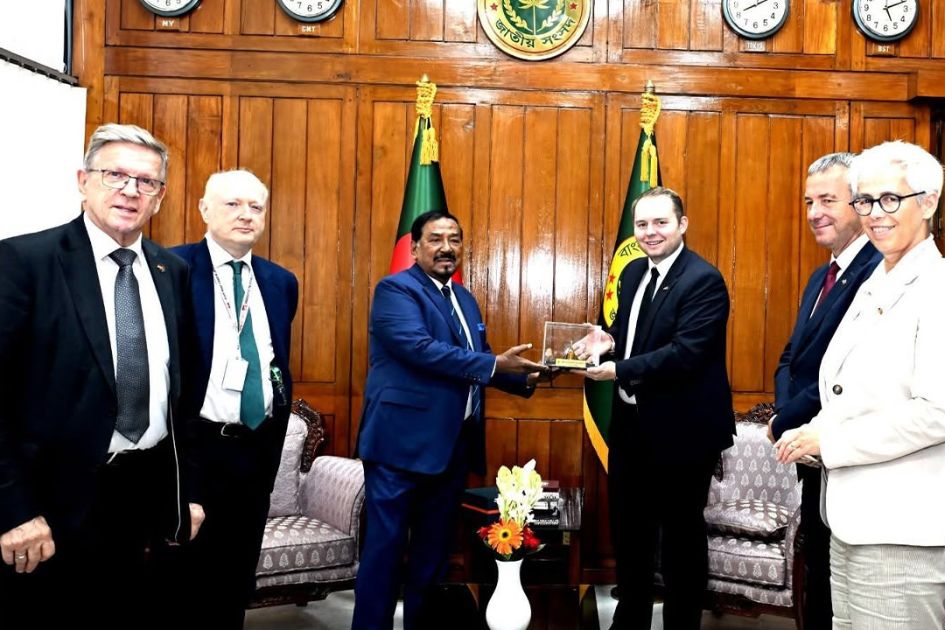



German lawmakers are exploring investment, industrial and parliamentary cooperation in Dhaka as tighter development funding reshapes the broader bilateral relationship.
A German parliamentary delegation’s three-day visit to Dhaka is focusing on investment, industrial cooperation and parliamentary ties at a time when Germany is reducing its development spending, adding a new dimension to Bangladesh-Germany relations.
The German Bundestag’s German-South Asian Parliamentary Group arrived in Dhaka on September 17 as part of a wider South Asia tour. The delegation is led by chairman Nicklas Kappa, with Johann Saathoff, Ulle Schauws and Gerold Otten. The Bundestag says the visit is aimed at strengthening parliamentary exchanges and deepening political, economic and cultural cooperation. Its Bangladesh programme includes meetings with parliamentary leaders and committees, as well as visits to German companies to discuss industrial development and investment opportunities. Climate and energy cooperation are also emerging as important dimensions of the expanding Bangladesh-Germany relationship.
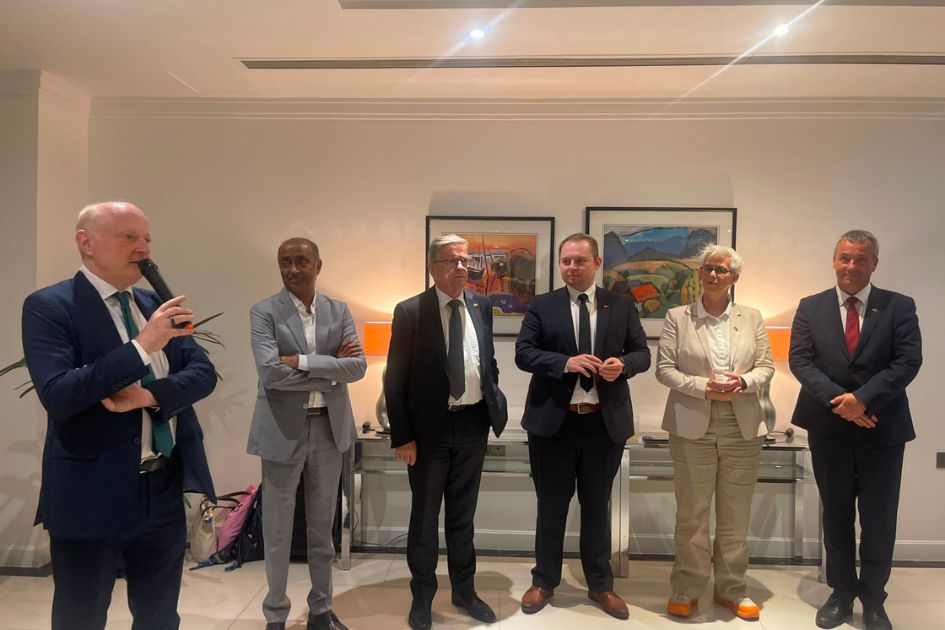
Reception brings political and business circles together
A reception was held Thursday evening at the residence of the German ambassador in Dhaka, bringing together business leaders, representatives of political parties, civil society figures and members of the diplomatic community. Law, Justice and Parliamentary Affairs Minister Md Asaduzzaman and German Ambassador to Bangladesh Dr Rüdiger Lotz were among those present.
Discussions focused on Bangladesh’s recent political changes, its economic situation and prospects for future bilateral cooperation.
Speaker meeting highlights parliamentary diplomacy
On September 17, the delegation paid a courtesy call on Jatiya Sangsad Speaker Hafiz Uddin Ahmad, with the German ambassador also present. The meeting covered parliamentary diplomacy, discussions on forming a Bangladesh-Germany Parliamentary Friendship Group and the ongoing Rohingya crisis.
The Speaker highlighted Germany’s longstanding friendship with Bangladesh since independence and briefed the delegation on the country’s democratic journey. He referred to controversies surrounding past elections and said the current government was working to improve freedom of expression and the human rights situation in line with international standards.
Women’s representation enters the discussion
The Speaker also highlighted the political role of former Prime Minister Khaleda Zia, describing her contribution to women’s political and economic empowerment as noteworthy. He said the current parliament has six women lawmakers elected through direct voting and 50 women lawmakers elected from reserved seats.
Women’s economic participation is also closely linked to Bangladesh’s trade relationship with Germany. The garment sector, where women make up a large share of the workforce, remains central to Bangladesh’s exports to the German market.
German investment agenda expands beyond garments
Ready-made garments have long been at the centre of Bangladesh-Germany trade. Bilateral trade stood at approximately €9 billion in 2024, according to Germany’s Federal Foreign Office. Germany was Bangladesh’s second-largest bilateral export market that year, while more than 90 percent of Bangladesh’s exports to Germany consisted of textiles.
The delegation’s economic programme, however, extends beyond apparel. The Bundestag says it will visit German companies in Bangladesh involved in cement production, textile chemicals and printer cartridges, with discussions on economic cooperation, industrial development and investment opportunities.
The delegation is also scheduled to visit the Meghna Industrial Economic Zone in Munshiganj, where German companies including CHT, Siegwerk and Heidelberg Materials have operations.
The programme highlights potential areas for expanding economic cooperation, including industrial production, technology, energy and sustainable manufacturing.
Rohingya displacement crisis remains a key concern
The Rohingya displacement crisis was also discussed during the delegation’s meeting with the Speaker. Germany continues to provide humanitarian assistance to Rohingyas who have fled Myanmar and supports efforts toward a sustainable solution, including conditions for a voluntary, safe and dignified return to Myanmar.
German development spending faces tighter outlook
While the economic relationship is being discussed in Dhaka, Germany’s development budget is becoming tighter. The Federal Ministry for Economic Cooperation and Development has around €10.06 billion available for 2026.
Development Minister Reem Alabali Radovan has said the ministry’s allocation was reduced by a further €360 million in 2026, according to DW. Development and humanitarian organisations have warned that further reductions could affect programmes supporting people in vulnerable situations. A coalition of around 20 German development and humanitarian organisations has publicly raised concerns over the impact of the planned cuts.
The German government has proposed reducing the BMZ budget to around €9.47 billion in 2027, about €586.6 million below the 2026 level. The development ministry says Germany will nevertheless continue to focus its resources on international partnerships, poverty and hunger, economic opportunities and resilience to climate change.
A changing Bangladesh-Germany relationship
The Dhaka visit comes as Bangladesh and Germany seek to broaden economic and parliamentary engagement while Germany’s development priorities and financing are changing.
For Bangladesh, the visit highlights two parallel dimensions of the relationship: expanding trade and industrial cooperation and the changing scale and priorities of German development financing.




