




Nepal’s community forestry gains have expanded conservation, but experts warn marginalized groups still lack meaningful influence over resource management and benefit-sharing.
Nepal’s conservation journey has now spanned nearly 40 years. Forest cover, which was once limited to around 29 percent, has increased to about 46 percent through conservation efforts led by local communities. Alongside these achievements, questions have continued to arise about the use of natural resources and the meaningful participation of marginalized communities such as Indigenous peoples, women and Dalits in decision-making processes.
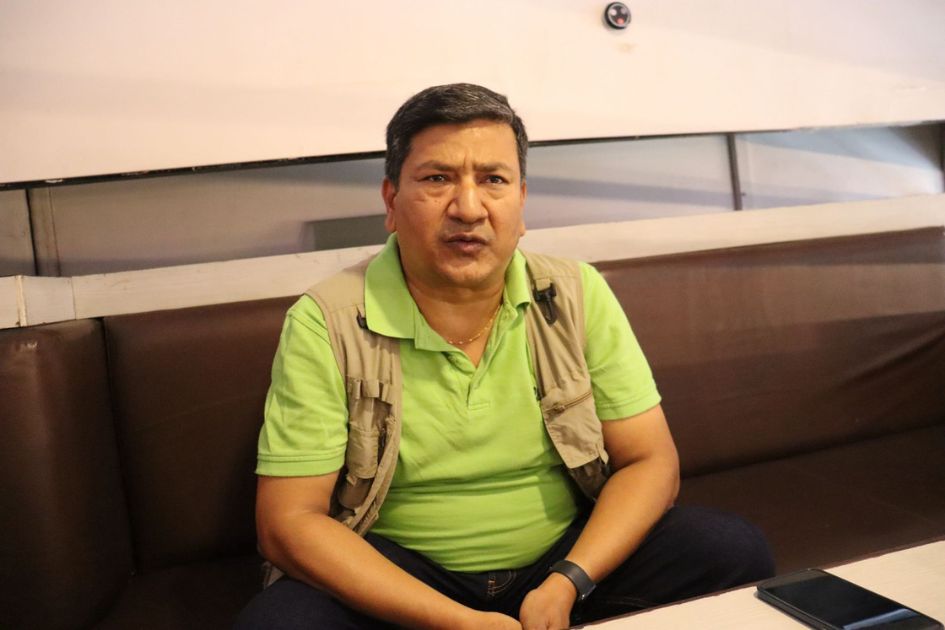
Pradeep Budhathoky, deputy director of RECOFTC Nepal, has worked in conservation at the community level as well as at the policy level for nearly three and a half decades. We spoke with him about the participation of poor, marginalized communities in decision-making and the problems emerging at the local level. Here is an edited summary of the conversation.
Where does Nepal stand in terms of conservation?
It has been 40 years since the community-based conservation movement began in Nepal. Around 31,000+ community-based forest management systems are now involved in conservation and forest management activities. Now, Nepal’s forest cover has increased to 44 percent.
This has not only resulted in an increase in forest cover. Leadership capacity has also developed and reached the political level among communities across the country.
However, while we talk about the success of conservation, there has not been significant progress in the participation of Indigenous peoples, Janajatis, women and Dalits in decision-making processes. In terms of numbers, their participation may appear satisfactory, but in terms of the quality and influence of that participation, there is still considerable work to be done.
Similarly, provisions for benefit-sharing exist in principle, as well as in policies and laws. But in practice, these benefits are often captured by well-off and elite people. As a result, those who depend on forests for their livelihoods continue to be marginalized.
What do you think are the reasons for their exclusion from decision-making processes?
Nepal has many good provisions on paper. Unfortunately, however, these provisions have often not been implemented at the local level. In some cases, people are not even aware that these provisions exist.
For example, Nepal’s Constitution guarantees rights to people from all classes and communities. But many people do not know about those rights and provisions. They are also unaware of the provisions contained in the Forest Act and Regulations, as well as the National Parks and Wildlife Conservation Act and its regulations.
As a result, they have been unable to fully exercise their rights or fulfil their responsibilities. One of the major issues is that even though they live close to natural resources, they are unable to use, manage or exercise ownership over those resources.
In addition, because of the discriminatory attitudes of dominant groups, marginalized people often lack the confidence they need to move forward.
How can these people be brought into the mainstream?
The most important thing is capacity building and legal literacy. Capacity building plays a crucial role in empowering and raising awareness among the targeted communities.
What difference does it make when Indigenous peoples, Janajatis, women, Dalits and local communities are not included in decision-making processes?
It makes a significant difference. It creates the potential for conflict in society. Based on my experience, such situations still exist in many places.
There is also a possibility of physical conflict. Even where there is no physical conflict, we can already see a kind of psychological conflict. Among some communities, there is a perception that forest resources do not belong to them.
When they do not have access to, control over or a role in managing forest resources, they develop a mindset that these resources are not meant for them. As a result, communities that depend on forest resources for their livelihoods are deprived of the benefits.
We have already seen conflict emerging in many places.
So, could this ultimately harm conservation itself?
The government may have reason to take pride in the achievements made in conservation. But what is more important is how these people have been addressed and how they have been brought into the mainstream.
Until they develop a sense of ownership and are able to benefit from these resources and opportunities, there remains a possibility that their dissatisfaction could erupt into physical conflict.
We are beginning to see such dissatisfaction emerging. If the government does not take steps to address these grievances in time, they could take a serious and potentially dangerous form.
Where is the gap?
We need to examine how effectively the agencies responsible for implementing existing laws are actually carrying them out. In the initial years, there appeared to be greater enthusiasm and commitment toward implementation. But that level of commitment is no longer as evident as it was before.
What needs to be done to bridge that gap?
Existing laws and policies should be packaged into comprehensive capacity-building and legal literacy programmes and taken to the relevant communities and beneficiaries.
People need to be informed about the rights they have under existing policies and laws. At the same time, they also need to understand their responsibilities. Whenever we talk about rights, we must also talk about responsibilities.
There should also be mechanisms that prioritize targeted communities in the distribution of benefits.
Some people argue that this situation exists because the targeted groups do not have sufficient leadership capacity. What do you think?
That is completely wrong. We have plenty of examples showing that when they are given responsibility, they can lead successfully.
For example, the chairperson of a buffer-zone community in Chitwan National Park is from the Dalit community. His performance has been much better than that of previous leaders.
Instead of saying that they lack capacity, we should give them opportunities and see what they can do.
Even government employees who enter the civil service after passing the Public Service Commission examination do not know everything from the beginning. They receive extensive training and capacity-building opportunities.
The same applies to community forestry. Many people have reached leadership positions today because they were given opportunities to work in community forests. If they had not been given those opportunities, they would not have reached leadership positions today.




