

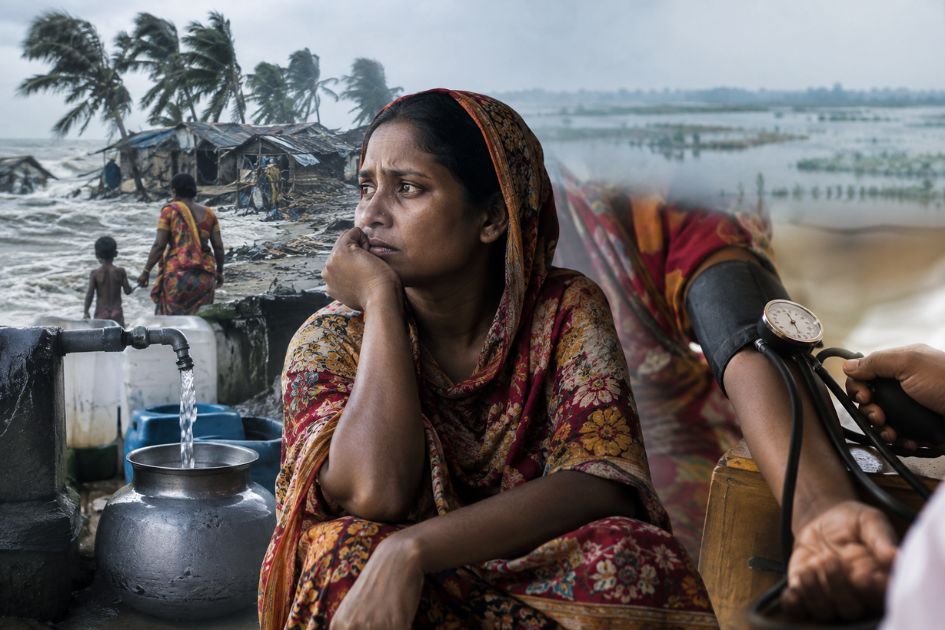



A study links rising drinking-water salinity and prolonged psychological stress to higher hypertension risks among reproductive-aged women in coastal Bangladesh.
Coastal Bangladesh women face significant health risks linked to drinking-water salinity and prolonged psychological stress, with 75.4 percent experiencing moderate to severe stress and 24.9 percent diagnosed with high blood pressure, according to a population-based study of 4,693 women.
The study also found an association between high sodium levels in drinking water and severe psychological stress with an increased likelihood of hypertension.
Published in Springer Nature last August, the study was titled “Joint association of drinking water salinity and psychosocial stress with hypertension among reproductive-aged women in coastal Bangladesh: a population-based cross-sectional study”. It was conducted by researchers Ashraful Alam Siddiqui and Mahin Al Nahian of the International Centre for Diarrhoeal Disease Research, Bangladesh (icddr,b), with support from the National Institute of Population Research and Training (NIPORT).
The researchers analysed data from women aged 18 to 49 in nine sub-districts across seven coastal districts of Bangladesh. Six of the sub-districts were in areas with high salinity and three were in areas with low salinity.
Blood pressure was measured directly, while researchers also assessed sodium levels in the participants’ drinking water and their levels of psychological stress.
The average age of the women who took part was 33, while 44.1 percent were aged 35 or older. Some 42.8 percent drank water containing more than 2,000 milligrams of sodium per litre and 27.3 percent lived in highly saline areas.
Over the previous 10 years, 76.3 percent of the women reported experiencing at least one major climate-related disaster. During the same period, 58.3 percent said their household income had fallen because of climate-related impacts.
The study found that 40.1 percent of participants were experiencing moderate psychological stress and 35.3 percent severe stress. Overall, 75.4 percent were experiencing moderate to severe psychological stress.
At the same time, 24.9 percent of the women were found to have hypertension. Another 10.2 percent had both hypertension and moderate to severe psychological stress.
The prevalence of hypertension increased with the level of psychological stress. Among women reporting no psychological stress, 13.9 percent had hypertension. The rate rose to 28 percent among those with moderate stress and 29.1 percent among those experiencing severe stress.
Researchers found the association remained after taking into account factors including age, education, financial status, area-level salinity, disaster experience and declining household income.
Compared with women without psychological stress, those experiencing moderate stress were 1.86 times more likely to have hypertension, while those experiencing severe stress were 1.88 times more likely to have the condition.
The study also found that for every 100-milligram increase in sodium concentration per litre of drinking water, the likelihood of hypertension increased by 10 percent.
The combined effect of high sodium exposure and severe psychological stress was stronger. Women whose drinking water contained more than 2,000 milligrams of sodium per litre and who were also experiencing severe psychological stress were 2.45 times more likely to have hypertension than women exposed to lower sodium levels and no psychological stress.
In coastal areas, seawater salinity can enter groundwater and other freshwater sources, increasing sodium levels in drinking water. While people can partly control the amount of salt they consume through food, sodium intake through drinking water is largely involuntary, making it more closely linked to environmental and infrastructure problems than to individual behaviour.
The pressures are compounded by cyclones, floods, increasing salinity, fears of losing livelihoods and declining incomes. Researchers said such problems do not end as one-off disasters but can create prolonged environmental uncertainty and sustained psychological stress.
They said prolonged anxiety and depression can alter the body’s stress-related hormones and nervous system activity, potentially disrupting normal blood vessel function and contributing to a higher risk of hypertension.
Mahin Al Nahian, one of the researchers, told Bangla-language business that the mental health impacts of disasters such as storms and cyclones in coastal areas are widely known, but relatively little research has examined how gradually increasing salinity affects women’s mental health, blood pressure and other health risks.
“We tried to highlight these issues. Our research found an association between drinking saline water and high blood pressure among women. We also tried to identify what kind of healthcare they need because of these crises and what services should be integrated into existing healthcare. We hope this will help the government take further steps,” he said.
Experts said addressing health risks in coastal areas requires more than treating hypertension. Mental health screening and appropriate support should be integrated into primary healthcare and hypertension management.
They also called for measures to expand access to safe freshwater, increase rainwater harvesting, recharge groundwater and introduce local initiatives to remove salt from water.
Public health specialist Dr Lelin Chowdhury told that salt from saline water enters the body through the food chain in various ways, increasing the risk of hypertension and heart disease.
“Therefore, the use of saline water must be reduced, the supply of safe drinking water increased and people with high blood pressure brought under treatment quickly. Community health centres in coastal areas also need to be strengthened,” he said.
Chowdhury said prolonged exposure to weather uncertainty, storms and tidal surges can negatively affect mental health.
“When many men go fishing in the deep sea, women who remain at home face additional psychological stress because of fears of storms and tidal surges. Therefore, mental health counsellors could be appointed at health centres in these areas, employment opportunities increased and life insurance provided for fishermen,” he said.




