

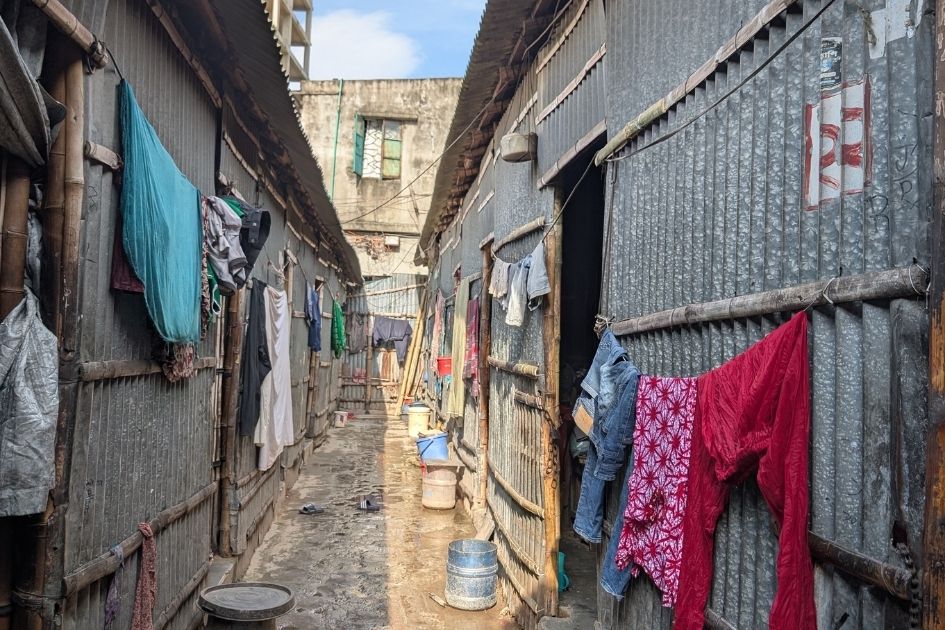



Climate-displaced families in Dhaka’s Balurmath slum face overcrowding, rising living costs and limited services as they rebuild after losing homes to floods and river erosion.
Families displaced by floods and river erosion who move to Dhaka in search of safety often find themselves facing a new set of hardships, including insecure housing, high living costs, limited access to basic services and unstable livelihoods.
Dhaka, Bangladesh’s largest city and a major economic centre, has become a key destination for people forced from their homes by climate-related disasters. But for many, reaching the capital does not end their displacement. Instead, they settle in informal communities where secure housing, clean water, sanitation, electricity, healthcare and stable employment remain difficult to access.
The World Bank estimates that Bangladesh could have 13.3 million internal climate migrants by 2050 under a high-impact climate scenario, as climate change affects agriculture, water availability and coastal areas.
The scale of displacement is already evident. An International Organization for Migration (IOM) assessment in 2025 found that many people displaced by disasters had remained displaced for years, turning relocation into a prolonged process of rebuilding their lives.
The UN-Habitat World Cities Report 2024 identifies climate-induced migration as an emerging urban challenge. The report also highlights an emergency shelter established by Dhaka South City Corporation for migrants arriving in the city.
Such responses underscore that climate migration is no longer only a rural or environmental issue. It has also become an urban challenge involving housing, livelihoods and access to basic services.
The experiences of residents of Balurmath in Hazaribag, an area of Dhaka South City, illustrate the difficulties facing families after they leave disaster-affected communities.
Mst. Asma, a housewife, moved to Dhaka from Sunamganj in Sylhet after a flood destroyed her home. She and her family were left homeless for 17 days.
Yarun, who runs a tea stall, and Rahima, a domestic worker, both came from Bhola in Barishal after river erosion took their homes. All three women had owned homes in their places of origin.
“Fire at least leaves behind the land, but river erosion leaves nothing. It takes away everything,” Yarun said.
With no choice but to leave, the families began rebuilding their lives and livelihoods in Dhaka. They now live with their families in Balurmath slum, where they face difficulties meeting their daily needs.
Their experiences raise a central question for climate-affected families: does moving to Dhaka make them safer or simply change the form of vulnerability they experience?
The homes they now occupy are a stark contrast to those they left behind. In Balurmath, families live in a highly congested settlement where rooms, including roofs, are made of tin. Residents also have to pay rent for the limited space available to them.
The women said life in their villages before the disasters involved fewer financial pressures. They did not have to worry about rent, food and treatment costs. They had open space and fresh air, kept domestic animals such as cattle and goats and could obtain fresh milk.
They also grew vegetables and grains, caught fish and could either consume or sell what they produced without the same financial concerns. They said they had been more financially stable in their villages because living costs were lower than in Dhaka.
Their main wish now is simple: a house where they can live peacefully without the burden of rent.
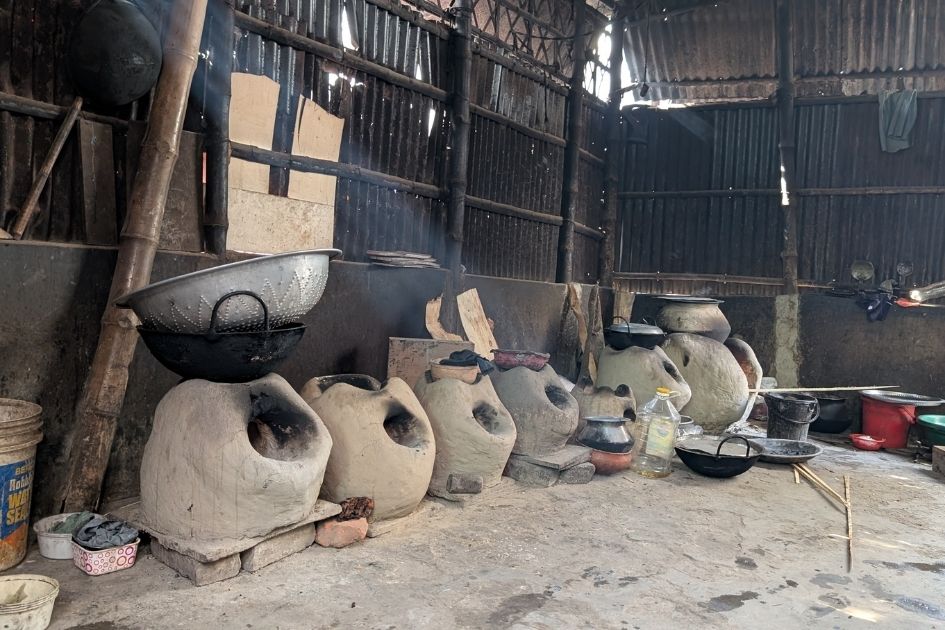
In one section of the slum, about 24 families share six clay gas stoves for cooking, while a single bathroom is shared by all of them.
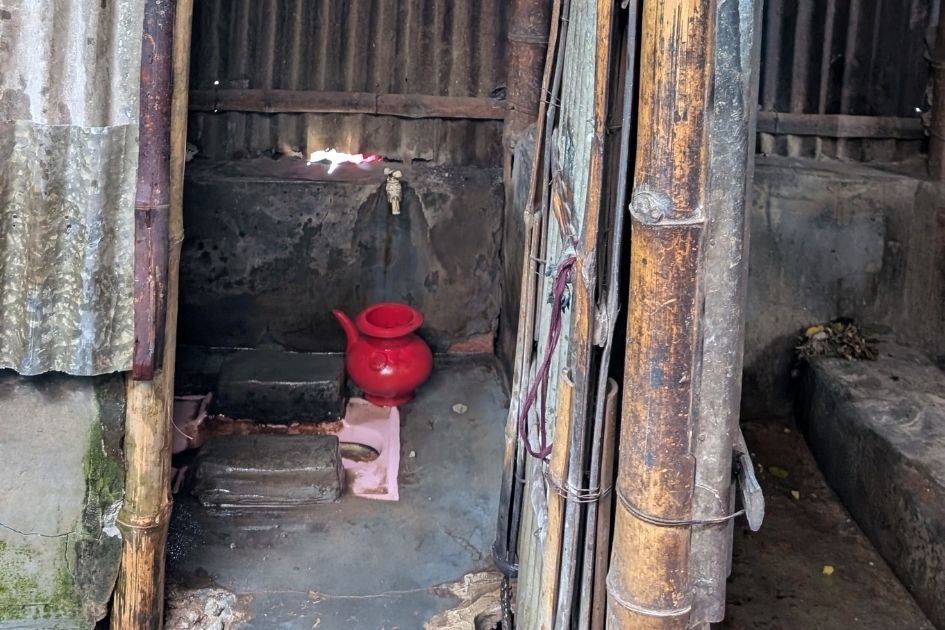
For people who left their homes after disasters, finding safety in Dhaka has therefore meant adapting to another pattern of hardship, marked by limited facilities and financial insecurity.
The problems experienced in Balurmath reflect a broader pattern among climate-displaced people arriving in Dhaka, according to organisations working with vulnerable communities.
Md. Jahangir Alam, coordinator of the Agro-Biodiversity, Climate Change & Food Security Programme at BARCIK, has worked with climate migrant communities in Dhaka, Rajshahi and Satkhira for years.
In Dhaka, his field station covers Balurmath, Boubazar, Boatghat, Chanduddan, Kallyanpur and Mirpur.
Alam said many residents of Balurmath slum had migrated from Bhola in Barishal, where river erosion was a major factor behind their displacement. He said migrants chose slum settlements because of their lower cost of living.
He identified several major problems confronting the communities.
Their houses, made of tin and plastic, become extremely hot during summer and extremely cold during winter, making it difficult for residents to remain indoors.
Heavy rainfall can also flood the homes and destroy residents’ belongings and other assets.
Healthcare costs are another burden. Alam said heatwaves and the conditions of their surroundings make residents sick, forcing them to spend 30 percent of their income on treatment.
He also shared several recommendations aimed at improving their living conditions.
For Balurmath’s residents, the physical journey from a disaster-affected home to Dhaka may have ended, but rebuilding their lives remains an ongoing struggle. Climate migration has left many of them facing continuing uncertainty long after they have reached the city.




