

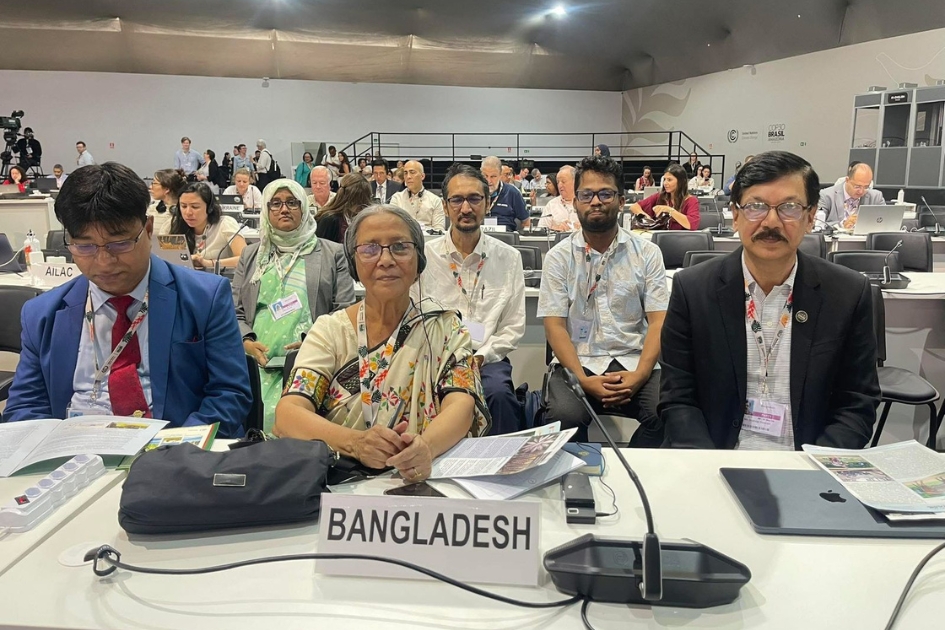



Despite modest gains, women remain sidelined in global climate negotiations at COP30, raising concerns over equity, effectiveness and climate justice for the most vulnerable communities worldwide.
Women remain significantly underrepresented in global climate decision-making despite gradual improvements over the years, according to recent reports from the Women’s Environment & Development Organization (WEDO) and the United Nations.
WEDO’s Gender Climate Tracker shows that women’s representation at climate negotiations has risen only slightly over the last 17 years, from 31% at COP14 in 2008 to 40% at COP30. Men continue to dominate. Sixty-one percent of Party delegations had more men than women and only 33% were led by women.
Women Lead Only 1 in 4 Climate Negotiations
The Gender Snapshot 2025, produced by UN Women and the UN Department of Economic and Social Affairs, reveals that women lead just one in four climate negotiations globally. Covering all 17 Sustainable Development Goals (SDGs), the report highlights alarming trends. If current patterns continue, 351 million women and girls will still live in extreme poverty by 2030 and SDG 5 on gender equality will be missed.
“This is not inevitable,” the report notes. “It reflects political choices, systemic neglect and stalled investments. But a different path is possible. Closing the gender digital divide alone could lift 30 million women and girls out of poverty by 2050 and add $1.5 trillion to global GDP by 2030.”
With just five years left to achieve the 2030 Agenda, the report calls for urgent action anchored in the Beijing+30 Action Agenda. It identifies six priority areas for accelerated delivery, including investments in digital inclusion and freedom from poverty.
Experts stress that without meaningful inclusion of women and marginalized communities, climate negotiations risk ignoring the voices of those most affected by the crisis, undermining global climate goals and equity.
“This data shows that much more work is needed to ensure all voices are heard in climate decision-making,” said Jahanara Saeed, manager at WEDO.
Though the Bangladesh delegation at COP30 was headed by Adviser Farida Akhter of the Ministry of Fisheries and Livestock, women’s participation in climate policy and local adaptation initiatives in Bangladesh remains limited despite the country being among the most climate-vulnerable in the world.
Sohanur Rahman, executive coordinator of YouthNet Global, said, “Inclusive leadership is key to climate justice. Without the voices of women and marginalized communities, policies fail to reflect the needs of those on the frontlines of climate change. Bangladesh must ensure women are central to climate action, from local adaptation to national policy-making.”
The report offers both a warning and a way forward, emphasizing that investment in women’s leadership and inclusive policies is not just a moral imperative but a necessary step to achieve global sustainability and prosperity.




