

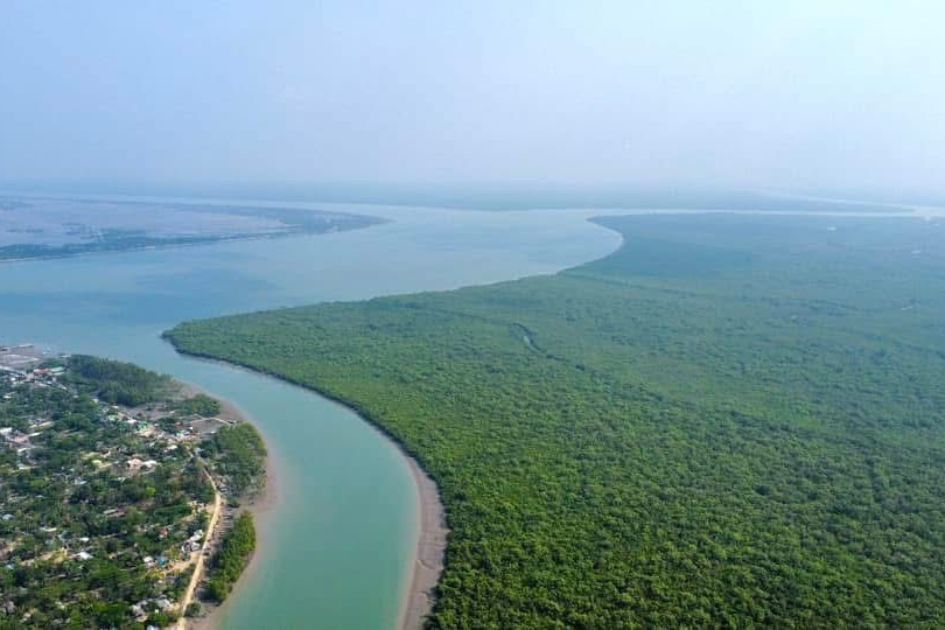



Bangladesh has closed the Sundarbans for three months to protect wildlife and breeding habitats, but the move has intensified concerns over lost income, climate justice, and support for forest-dependent communities.
Bangladesh has imposed a three-month ban on all entry into the Sundarbans, the world’s largest contiguous mangrove forest and a UNESCO World Heritage Site, in an effort to protect wildlife breeding, fish spawning grounds and the ecosystem’s rich biodiversity during a critical reproductive season while also raising urgent questions about the livelihoods of forest-dependent communities.
The restriction, which takes effect on June 1 and remains in force until August 31, prohibits access to all visitors, including fishermen, crab collectors, honey gatherers, wood collectors and tourists. Authorities say no permits will be issued during the period, while joint patrols involving the Forest Department, Coast Guard, River Police and Fisheries Department will monitor the forest to prevent illegal entry.
The Sundarbans, shared between Bangladesh and India, is globally recognised for its ecological significance. Home to the endangered Royal Bengal tiger and hundreds of species of birds, fish, reptiles and mammals, the vast mangrove ecosystem also serves as a natural shield, protecting millions of people from cyclones, storm surges and the impacts of climate change in the Bay of Bengal region.
The annual closure, introduced in 2021, is designed to give the forest a period free from human disturbance. According to the Forest Department, June through August is the primary breeding season for many species of fish, crabs, shrimp, reptiles, birds and mammals. During this period, the forest’s rivers and canals function as important spawning grounds while mangrove vegetation undergoes crucial stages of regeneration, seed germination and growth.
The Sundarbans is facing growing pressures from climate change, rising salinity, riverbank erosion and illegal extraction of resources, said Fazlul Haque, a forest official in the Satkhira Range. Allowing the forest to rest during the breeding season is essential for protecting biodiversity and ensuring the long-term health of the ecosystem.
Forest-dependent communities face months without income
While conservationists broadly welcome the seasonal closure, the decision has renewed concerns among thousands of forest-dependent families whose livelihoods are closely tied to the mangrove ecosystem.
Many of these communities are known as Bonojibis, a term used for people whose lives and livelihoods are directly dependent on the Sundarbans. Bonojibis include fishers, crab collectors, honey gatherers and wood collectors who traditionally enter the forest in small groups using boats and seasonal knowledge of tides, rivers and forest cycles.
For them, the Sundarbans is not only an ecological landscape but also the foundation of daily survival. The annual closure often means three months with little or no income.
“The Sundarbans is our only workplace,” said Rajab Ali, a crab collector from Datinakhali village in Shyamnagar. “When permits are suspended for three months, it becomes very difficult to support our families. Many of us survive through loans and debt.”
Shefali Bibi, another forest-dependent resident, said the seasonal ban creates severe hardship for households with no alternative source of income.
“We live by fishing,” she said. “If we cannot enter the rivers and forest, how will we survive? Some form of government support during this period would help families like ours.”
Abdus Salam, a fisherman from Burigoalini, said many families struggle to meet daily expenses, school costs and loan repayments during the closure period.
Tourism sector also affected
The restriction is also expected to affect the local tourism industry.
Around 250 tourist vessels operating in the Satkhira region remain inactive during the closure period. Industry representatives estimate that approximately 1,500 workers and boat crew members, along with 250 vessel owners, experience significant income losses, affecting thousands of family members who depend on Sundarbans tourism.
“Tourism activities come almost to a complete halt,” said Abdul Halim, a former leader of a local tourist vessel association. “The impact extends far beyond boat operators to workers, guides, vendors and many others whose livelihoods depend on visitors.”

Beyond a conservation-versus-people narrative
For decades, conservation campaigns and tourism marketing have often portrayed the Sundarbans as an untouched wilderness, a pristine landscape separate from human life. Yet for generations, people living around the mangrove delta have maintained a different understanding of the forest.
In this context, Bonojibis are forest-dependent communities whose livelihoods, cultural practices and survival are closely tied to the Sundarbans ecosystem. They include fishers, crab collectors, honey gatherers, wood collectors and others who depend on seasonal access to forest resources.
Many Bonojibis, particularly devotees of Bonbibi, the spiritual guardian revered across Muslim, Hindu and Indigenous communities in the delta, view the forest as mayer kol, meaning a mother’s lap. In this worldview, the forest is not simply a resource but a living home shared by humans, animals, rivers and other forms of life.
Before entering the forest, many seek Bonbibi’s protection through prayers that acknowledge both dependence on and responsibility toward the forest. Their beliefs encourage taking only what is necessary for survival and emphasise respect for wildlife and ecological balance.
Researchers studying the Sundarbans argue that these traditions represent long-standing ecological knowledge developed through generations of living with the forest. Common sayings across the delta reflect this relationship: “If the forest survives, we will survive,” and “Without the forest, we cannot exist.”
Such expressions reflect a worldview in which humans are not separate from nature but part of a larger network of life where survival depends on maintaining balance with the ecosystem.
Conservation and climate justice
The debate surrounding the closure also highlights wider questions of climate justice and environmental governance.
Many Bonojibis do not oppose conservation measures. Instead, they argue that biodiversity protection should be accompanied by social protection, alternative employment opportunities and recognition of their ecological knowledge.
Environmental advocates note that while seasonal fishing bans in coastal waters are often accompanied by government assistance programmes, similar support mechanisms for forest-dependent families remain limited.
“Protecting biodiversity is necessary, but communities should not bear the entire cost of conservation,” said Mahmud Hasan, a local biodiversity campaigner. “If people are asked to stop working for three months to help protect a national and global ecological asset, they should receive support to sustain their families during that period.”
Sohanur Rahman, Executive Coordinator of YouthNet Global, said protecting the Sundarbans is essential for biodiversity conservation and climate resilience, but conservation policies must also recognise the rights and realities of forest-dependent communities.
“The people who depend on the Sundarbans are not enemies of the forest. They are among its closest custodians,” he said. “For generations, Bonojibis have lived with the forest through ecological knowledge, cultural practices and deep respect for nature. If the state asks them to stop entering the forest for three months, then social protection, alternative livelihoods and financial assistance must also be ensured. Conservation cannot be sustainable if the communities who help sustain the forest are pushed deeper into poverty.”
He added that the future of the Sundarbans depends on balancing biodiversity protection with climate justice and community wellbeing.
“Protecting the forest and protecting people should not be seen as opposing goals,” he said. “The long-term survival of the Sundarbans is closely connected to the dignity, resilience and participation of the communities who have lived alongside it for generations.”
The issue is becoming increasingly important as communities around the Sundarbans face mounting climate-related pressures, including salinity intrusion, stronger cyclones, river erosion and displacement. Many families already live on the frontline of the climate crisis and have few alternative livelihood options.
Forest officials say discussions on alternative employment and support programmes for affected communities are ongoing, though no formal assistance package has yet been announced.
Balancing biodiversity and human wellbeing
The Sundarbans remains one of the world’s most important ecological landscapes, supporting extraordinary biodiversity while protecting vulnerable coastal populations from extreme weather and climate impacts.
For conservationists, the annual closure is an essential tool for safeguarding fish stocks, wildlife populations and forest regeneration. For forest-dependent communities, however, it is also a period marked by uncertainty, debt and economic hardship.
As Bangladesh seeks to protect one of the planet’s most important mangrove ecosystems, the challenge facing policymakers is not simply how to conserve nature, but how to ensure that the people who have lived with, depended on and cared for the forest for generations are not left behind.
The three-month closure will end on September 1, when the Sundarbans is scheduled to reopen. Until then, the future of both the forest and its people remains at the centre of an ongoing conversation about conservation, livelihoods and climate justice in one of the world’s most environmentally significant regions.




