

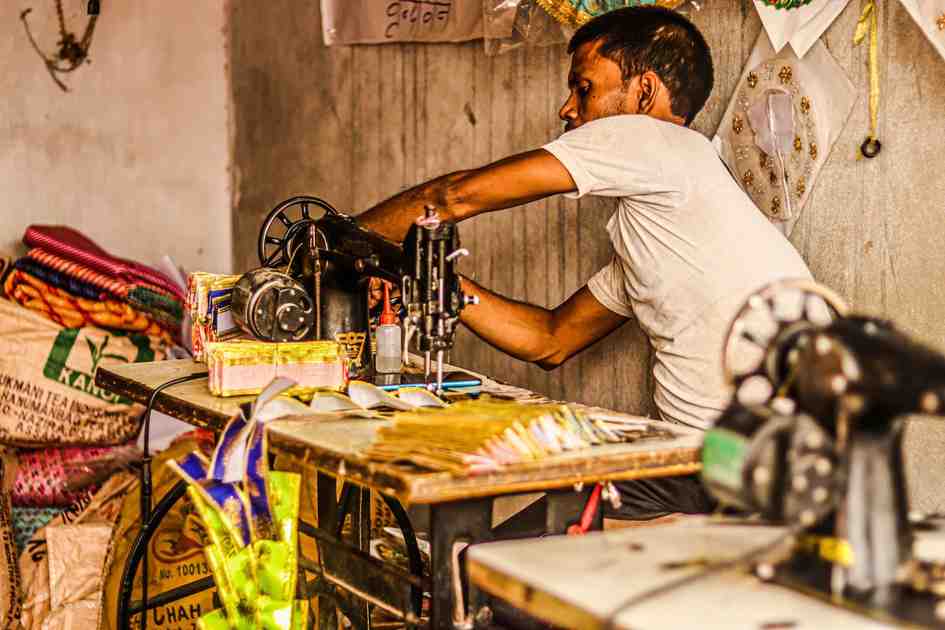



From Jamdani to Shital Pati, Bangladesh’s artisan traditions show how local materials, circular practices and community knowledge can support greener, more inclusive economic growth while protecting livelihoods and cultural heritage.
When sustainability is discussed today, the conversation often revolves around renewable energy, electric vehicles, green buildings and carbon reduction. These innovations are essential for addressing climate change and achieving global sustainability goals. Yet sustainability is not only about adopting new technologies. It is also about how societies use resources, produce goods, consume responsibly and pass knowledge from one generation to the next.
As Bangladesh advances its transition towards a greener economy, new opportunities are emerging to broaden the conversation on sustainability. Alongside investments in renewable energy, climate resilience and green growth, the country’s traditional creative industries offer valuable examples of sustainable practices. Recognizing these practices can enrich Bangladesh’s sustainability journey by connecting cultural heritage with contemporary environmental goals. Crafts such as Jamdani weaving, Nakshi Kantha embroidery, Shital Pati making, pottery, bamboo and cane work and Shotoronji weaving are generally valued for their cultural significance or economic potential. They also offer valuable examples of sustainable production systems that deserve greater recognition.
Long before concepts such as the circular economy, low-carbon production and sustainable consumption became part of international climate discourse, Bangladeshi artisans were practising many of these principles in their everyday work. They relied on locally available renewable materials, produced goods by hand with minimal energy use, repaired and repurposed materials instead of discarding them and sustained community knowledge through generations of practice. These traditions were not developed as responses to climate change. They evolved from practical ways of living within the limits of local resources.
Bangladesh is taking important steps to strengthen its creative economy. The government has set a target for the creative economy to contribute 1.5 percent of the national GDP. Organizations such as UNESCO and the British Council are promoting creative industries as drivers of innovation, employment and cultural development. As these initiatives move forward, sustainability should also be recognized as a quality that already exists within many of Bangladesh’s traditional creative practices. They demonstrate how creativity, local knowledge and responsible resource use can contribute to a more sustainable future.
Traditional creative industries are more than cultural heritage
The term “traditional creative industries” may bring to mind handcrafted products displayed at craft fairs or sold as souvenirs. In reality, these industries represent a much broader ecosystem of creativity, knowledge and livelihoods. They include handloom weaving, Jamdani, Muslin, Nakshi Kantha embroidery, Shital Pati weaving, Shotoronji carpets, pottery, bamboo and cane crafts, metalwork, woodcraft and many indigenous textile traditions. These continue to support communities across Bangladesh. These industries are deeply rooted in local environments. Artisans depend on materials that are readily available in their surroundings, such as bamboo, jute, murta cane, clay, cotton and natural fibres. Production is typically decentralized and community-based rather than concentrated in large factories. Homes and small workshops become spaces of production, learning and innovation, where skills are passed from one generation to the next.
Beyond preserving cultural identity, these industries also make important economic contributions. The handicraft sector of Bangladesh alone is estimated to employ around one million artisans serving both domestic and international markets. Women play a particularly significant role in many of these industries. In the Shotoronji weaving clusters of Rangpur, for example, thousands of women contribute to household incomes through craft production. Such industries therefore support not only cultural continuity but also rural employment and economic inclusion.
Bangladesh has recognized the creative economy as a strategic sector for national development. As this momentum grows, it also presents an opportunity to highlight another strength of Bangladesh’s traditional creative industries. Built around locally sourced materials, skilled craftsmanship and resource-conscious production, these industries demonstrate practices that align closely with contemporary sustainability goals. At a time when countries are exploring pathways to greener and more inclusive economies, they offer valuable insights into how cultural heritage and environmental stewardship can reinforce one another. Understanding traditional creative industries as living production systems rather than relics of the past changes how we value them. They become examples of how economic activity, environmental responsibility and community knowledge can coexist. This perspective provides an important foundation for examining what these industries can teach us about sustainability in the context of contemporary climate challenges.
Sustainability begins with materials
Every product begins with a choice of material. That choice often determines how much energy production requires, whether a product can be repaired or recycled and what happens when it reaches the end of its life. Modern industries largely depend on synthetic materials, plastics and complex global supply chains. Such systems consume significant amounts of energy and generate considerable waste. In contrast, Bangladesh’s traditional creative industries have historically relied on materials that are renewable, locally available and biodegradable.
Artisans across the country have long worked with bamboo, jute, murta cane, clay, cotton, wood and natural fibres. These materials are closely connected to local ecosystems. These have been used for generations to produce everyday items as well as works of artistic and cultural value. Bamboo and cane are used to make furniture, baskets, household items and decorative products. Clay is transformed into pottery and earthenware. These naturally decompose at the end of their useful life. Murta is a wetland plant that is woven into Shital Pati mats. These mats have provided a sustainable alternative to synthetic floor coverings for centuries. Cotton forms the foundation of Jamdani and Muslin, while jute continues to offer biodegradable alternatives to many plastic-based products. The importance of these materials extends beyond their cultural significance. They are sourced locally. Their supply chains are short. So less transportation is required for such materials than for imported raw materials. Most can be regenerated or cultivated again, making them renewable resources when managed responsibly. Their biodegradable nature also reduces the long-term environmental burden associated with disposal. In an era when plastic pollution and non-biodegradable waste have become major environmental concerns, these characteristics are increasingly valuable.
However, using natural materials alone does not automatically make an industry sustainable. These resources depend on healthy ecosystems. For example, wetlands must be protected for the cultivation of murta used in Shital Pati weaving. Bamboo requires sustainable harvesting to prevent resource depletion. Clay extraction needs to be managed carefully to avoid environmental degradation. Likewise, cotton and natural dye production depend on responsible agricultural practices. Protecting biodiversity and natural ecosystems therefore becomes essential not only for environmental conservation but also for sustaining the creative industries that rely on them.
The close relationship between nature and production is one of the defining features of Bangladesh’s traditional creative industries. Sustainable production also depends on maintaining a balanced relationship between people and the natural resources on which their livelihoods depend. It is also about maintaining a balanced relationship between people and the natural resources on which their livelihoods depend. Traditional artisans are not merely producers of cultural goods. They are also guardians of knowledge about working with nature in ways that minimize waste and maximize the value of local resources.
Waste was never meant to be waste
One of the core principles of the circular economy is that products and materials should remain in use for as long as possible. Instead of following a take, make and dispose model, the circular economy encourages repairing, reusing, repurposing and recycling. Although this concept has gained global attention only in recent decades, many traditional creative industries in Bangladesh have practised these principles for generations.
Perhaps the most well-known example is Nakshi Kantha. Traditionally, women stitched together layers of worn-out saris, lungis and other household fabrics to create quilts. These were both functional and artistic. What might have been discarded became a durable household item enriched with embroidery that reflected personal memories, local traditions and everyday life. In today’s language, Nakshi Kantha represents a form of textile upcycling. Yet for the women who created these quilts, it was simply a sensible way to reduce waste while extending the life of valuable materials.
This resourcefulness can also be seen in newer craft initiatives inspired by traditional practices. For example, recently, in many places of the country, artisans have been transforming discarded coconut shells into bowls, spoons, bird feeders, lamps and decorative items. A material once treated as agricultural waste is now being converted into products with both commercial and environmental value. Similar approaches are emerging in cases where artisans are using leftover cotton and textile waste from the ready-made garment industry in handcrafted products. Such initiatives demonstrate that traditional craftsmanship can continue to evolve while remaining rooted in principles of resource efficiency. However, these traditions are under growing pressure. Cheap mass-produced goods and plastic alternatives have already displaced many handcrafted products from everyday use. Consumer habits are shifting towards convenience and low-cost disposable items. As a result, the culture of repair and reuse that once characterized many households is gradually fading. This change is not only affecting artisan livelihoods but also eroding practical knowledge that has long supported more sustainable patterns of production and consumption.
The value of slow production
Today, speed is often considered a measure of efficiency. Factories are expected to produce more in less time. Consumers demand quick delivery. Businesses compete by lowering production costs. This model has increased the availability of goods. But it has also encouraged mass consumption, shorter product lifespans and greater pressure on natural resources. In contrast, traditional crafts are built on patience, skill and attention to detail. A Jamdani sari, for example, may take weeks or even months to complete, depending on the complexity of its design. Each motif is woven by hand without automated machinery. It requires years of experience and exceptional craftsmanship. The revival of Muslin likewise reflects the extraordinary knowledge required to produce one of the world’s finest fabrics. Such products cannot be rushed without compromising their quality, authenticity and cultural value. This slower pace of production has environmental implications. Since most traditional crafts rely on manual labour or simple tools, they consume far less energy than machine-oriented manufacturing. Small workshops and household-based production also reduce dependence on large industrial infrastructure. In many cases, artisans source raw materials locally, which shortens supply chains and lowers the environmental costs associated with long-distance transportation. Traditional creative industries are not entirely free from environmental impacts. Even so, slow production also encourages a different relationship between producers and consumers. Handmade products often carry a sense of uniqueness that mass-produced goods cannot produce.
However, slow production presents economic challenges. Handmade products are labour-intensive and therefore more expensive than factory-made alternatives. As a result, many consumers naturally choose cheaper products even if they are less durable or environmentally friendly. This creates a difficult situation for artisans. Although their work embodies many principles of sustainability, they often struggle to compete in markets dominated by low-cost, mass-produced goods. The revival of Muslin demonstrates this tension well. The high cost of its production limits its accessibility to a small segment of consumers.
This raises an important question: how should society value slow production? If price is the only measure, traditional crafts will always face disadvantages. However, if environmental sustainability, cultural heritage, skilled labour and product longevity are also considered, these home-based industries represent far more than handcrafted commodities. They become investments in a production system that values quality over quantity, durability over disposability and craftsmanship over speed. This way of thinking is gaining momentum through the ideas of slow fashion and ethical consumption. Traditional creative industries of Bangladesh have long demonstrated that slower production can remain both economically meaningful and environmentally responsible.
Sustaining communities, not just products
Sustainability is generally measured through carbon emissions, energy use or waste reduction. These indicators are important, but sometimes they tell only part of the story. A truly sustainable economy also depends on people, for example, their knowledge, skills, livelihoods and ability to adapt to changing environmental and economic conditions. In this respect, the traditional creative industries offer lessons that extend well beyond the products they create. Unlike many modern industries, traditional crafts are deeply rooted in communities. Skills are rarely acquired through formal education. Instead, they are passed down from one generation to the next through observation, practice and shared experience. A child growing up in a Jamdani weaving family in Narayanganj does not simply learn how to produce a craft. They inherit generations of knowledge about selecting materials, mastering techniques, responding to customer preferences and sustaining a family livelihood. This transfer of knowledge keeps traditions alive as well as strengthening the social fabric of communities. Traditional creative industries also provide employment for large numbers of people, many of whom have limited access to formal labour markets. The handicraft sector in Bangladesh is estimated to employ around one million artisans. This makes it one of the country’s important sources of rural and informal employment. Women play a particularly significant role here. For example, in the Shotoronji industry of Rangpur, around 50,000 people depend on the sector for their livelihoods, and approximately 95 percent of them are women. The importance of these industries extends to indigenous and marginalized communities as well. Many ethnic communities across the country continue to produce handwoven textiles, bamboo products, jewellery and other traditional crafts that reflect their unique cultural identities. These creative practices preserve languages, customs and artistic traditions while creating opportunities for local entrepreneurship.
However, these knowledge systems are becoming increasingly fragile. Many young people are choosing different professions because traditional crafts often provide unstable incomes and limited social recognition. If experienced artisans retire without creating successors, valuable techniques that have been developed over generations risk disappearing. This loss would not only affect the cultural heritage of Bangladesh, but also diminish practical knowledge about resource-efficient production that has become increasingly relevant in the search for sustainable development.
Therefore, supporting traditional creative industries is not simply limited to preserving beautiful objects or maintaining cultural traditions. It is also about investing in people, protecting knowledge systems and strengthening community resilience. As Bangladesh works toward a greener and more inclusive economy, the experience of its artisan communities reminds us that sustainability is ultimately a human endeavour. It depends not only on conserving natural resources but also on ensuring that the communities that have long practised responsible resource use are able to survive, adapt and thrive.
The sustainability paradox
If the traditional creative industries embody many of the principles now associated with sustainable development, one might expect them to be flourishing. However, many of these industries are struggling to survive. This paradox exposes an important lesson: environmental sustainability alone does not guarantee economic sustainability.
Shital Pati could be an example. Woven from murta, a renewable wetland plant, Shital Pati is biodegradable, handcrafted and requires very little energy to produce. Yet its presence in Bangladeshi households has steadily declined as inexpensive plastic mats have become widely available. Consumers mostly choose plastic because it is cheaper and more accessible, even though it contributes to long-term environmental pollution. As demand for Shital Pati decreases, fewer artisans remain in the profession, and the traditional knowledge associated with this craft is gradually disappearing. However, the experience of Jamdani reveals a different kind of contradiction. Jamdani is internationally recognized by UNESCO as an Intangible Cultural Heritage and protected through Geographical Indication status. However, many weavers continue to receive only a small share of the final market value of their products. Designers, retailers and intermediaries often benefit more than the artisans whose skills make the craft possible. Global recognition has enhanced the reputation of Jamdani, but it has not always converted into economic security for the communities that sustain the tradition.
After disappearing for more than a century, Muslin was successfully revived through extensive research and government support. The achievement has been widely celebrated as a restoration of an important part of the cultural identity of Bangladesh. But the fabric still remains extremely expensive to produce, placing it beyond the reach of most consumers. This raises an important question: can a traditional industry be considered truly sustainable if it survives primarily as a luxury product rather than as a viable source of livelihood for artisan communities? Other traditional crafts face even more severe challenges. Such examples remind us that sustainability depends not only on environmentally responsible production but also on functioning markets, supportive institutions and fair economic opportunities.
Several structural barriers continue to limit the growth of traditional creative industries. Artisans often have limited access to finance, modern marketing channels and digital marketplaces. Intellectual property protection remains weak, making it difficult to prevent the misuse or imitation of traditional designs. The absence of a comprehensive national database on crafts also makes it challenging to understand the sector’s full contribution or to develop evidence-based policies. The adoption of the National Handicraft Industry Policy in 2025 marks an important step towards strengthening the sector. However, its effective implementation will be crucial to addressing the longstanding challenges. These challenges reveal that sustainability is multidimensional. A product may be environmentally friendly, but the industry producing it cannot endure if artisans earn inadequate incomes, younger generations abandon the profession or supportive institutions remain absent. Likewise, preserving a craft as a relic is not the same as sustaining the living communities that continue to practise it. Recognizing this distinction is essential. The future of traditional creative industries of Bangladesh will depend not only on celebrating their cultural significance but also on creating conditions that allow them to compete, innovate and provide dignified livelihoods.
Rethinking sustainability through culture
Bangladesh has made significant progress in advancing climate action through investments in renewable energy, disaster resilience, sustainable agriculture and green infrastructure. As the country continues its journey towards a low-carbon and climate-resilient future, traditional creative industries offer an opportunity to broaden the understanding of sustainability. Rooted in resource efficiency, craftsmanship and strong community networks, these industries demonstrate that long-standing cultural practices can complement contemporary sustainability efforts.
As the creative economy grows, traditional creative industries can evolve alongside innovation while preserving the values of craftsmanship, resource efficiency and community knowledge. Integrating these industries into the country’s sustainability agenda would strengthen climate action by promoting low-carbon livelihoods, circular production, ecosystem conservation and inclusive economic growth. Such an approach would also strengthen the connection between climate action and local communities. Sustainability becomes more meaningful when people see it reflected in familiar practices. Environmental responsibility, cultural identity and economic activity do not have to exist in separate spheres. They can reinforce one another when supported by appropriate institutions, fair markets and responsible stewardship of natural resources.
As Bangladesh advances towards a greener future, it can draw inspiration not only from new technologies but also from its own traditional creative industries. Principles that underpin sustainable development today, such as renewable materials, circular production, durable design, community resilience and respect for ecological limits, have long been embedded in these practices. Recognizing traditional creative industries as partners in sustainable development can enrich the country’s climate journey while ensuring that the knowledge and livelihoods of its artisan communities remain central to that transition.




