

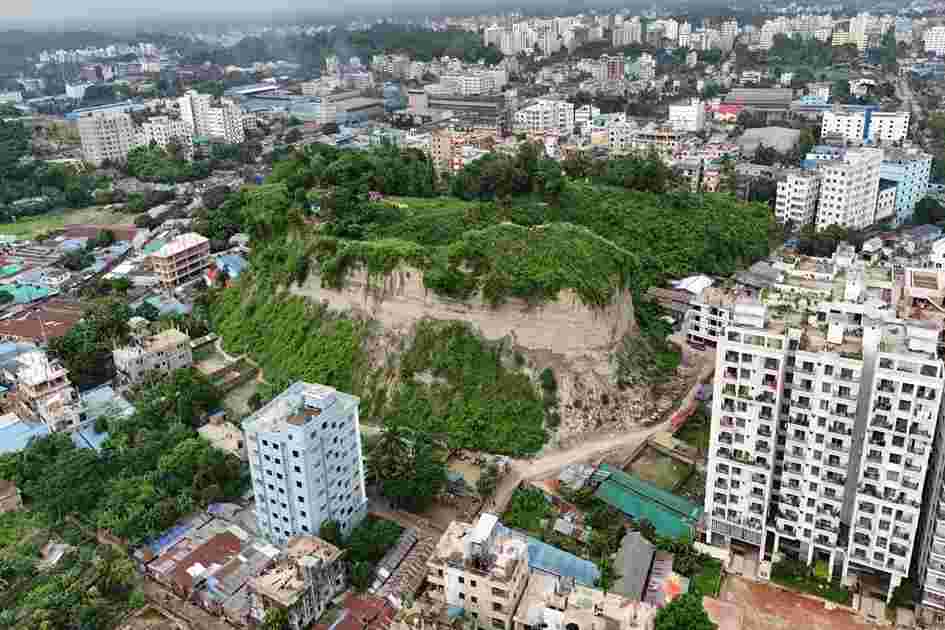



Researchers warn that fragile hills, unplanned settlements and weak enforcement have left thousands exposed as extreme rainfall pushes landslide risks beyond known danger thresholds in Chattogram and the hill districts.
Years of indiscriminate hill cutting in southeastern Bangladesh have turned the monsoon into a deadly season, with at least 29 people killed in landslides across Chattogram, Rangamati, Cox’s Bazar and Rohingya camps after the port city recorded its heaviest rainfall in 43 years.
The Bangladesh Meteorological Department recorded 412 millimetres of rain in Chattogram in 24 hours last Tuesday, the highest in 43 years. The heavy downpour triggered a series of landslides in Chattogram, Rangamati, Cox’s Bazar and the Rohingya camps in Cox’s Bazar.
Research shows that from 1990 to 2024, about 1,200 people were killed in 35 major landslides in Chattogram and the Chittagong Hill Tracts. Over the same period, about 120 hills disappeared from Chattogram city.
Environmental expert Dr Muhammad Idris Ali said natural factors such as extremely heavy rainfall had combined with human activities to sharply increase the risk.
“Indiscriminate hill cutting, deforestation, settlements on hill slopes and at the foot of hills, destruction of natural drainage systems and unplanned urbanisation have multiplied the risk of landslides,” he said.
He said deaths occur every monsoon, but hill cutting has not been fully stopped and most of the recommendations made by an inquiry committee formed after the 2007 landslides have not been implemented.
On Wednesday noon, a 12-year-old girl, Samia Islam, died after being buried under mud in a landslide in the Chashma Hill area under Panchlaish police station in Chattogram city. Fire Service personnel recovered her body.
The same day, 10-month-old Ashraful Islam Tanvir died when mud from a landslide fell on a tin-roofed house in the Jangal Salimpur area of Sitakunda upazila. Sitakunda Upazila Nirbahi Officer Md Fakhrul Islam confirmed the death.
Several others were killed in landslides in Panchlaish, Sitakunda and the Rohingya camps. In Rangunia, a woman died after a hill collapsed onto a house. Altogether, the number of deaths from landslides in Chattogram, Rangamati and Cox’s Bazar rose to 29.
Dr Md Iqbal Sarwar, a professor at the Department of Geography and Environmental Studies at the University of Chittagong, said excessive rainfall alone was not responsible for landslides.
He said years of mismanagement, including indiscriminate hill cutting, deforestation, unplanned settlements on hill slopes and foothills, destruction of natural drainage and unplanned urban growth, had damaged the natural stability of the hills. As a result, prolonged heavy rainfall now sharply increases the risk of collapse.
Most hills in Chattogram and the hill districts are made up of sand, shale and sandy loam, making them geologically fragile. When excessive rainwater penetrates deep into the soil, its binding strength weakens quickly, creating the risk of landslides.
A joint study by Young Power in Social Action, Save the Children Bangladesh and Professor Iqbal Sarwar found that 85 millimetres of rain in 24 hours, 186 millimetres in 48 hours and 335 millimetres in 72 hours are considered dangerous thresholds for landslides.
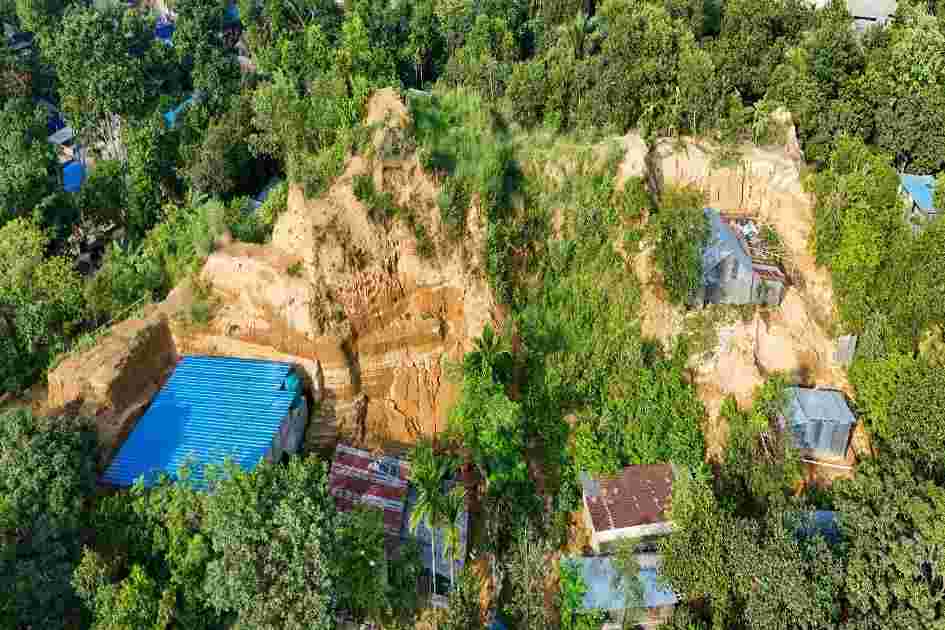
The study analysed 35 landslides from 1990 to 2024 and found that about 1,200 people were killed and around 2,000 low-income people were injured.
Researchers said the latest 412 millimetres of rain in 24 hours far exceeded the danger threshold. Without timely warnings, evacuation of people from risky areas and effective measures to stop hill cutting, the risk of further deaths could rise, they warned.
About 12 percent of Bangladesh’s land area is hilly, mostly in greater Chattogram, the Chittagong Hill Tracts and Sylhet. During the monsoon, landslides have become an almost regular disaster in these regions, especially since 1990, with casualties and deaths rising steadily.
The deadliest landslide in Bangladesh’s history occurred in June 2017, when three days of heavy rain triggered landslides in Rangamati, Bandarban, Khagrachhari and other hill areas, killing 164 people. In Rangamati alone, 120 people died. The dead included five army personnel who were taking part in rescue operations.
A decade earlier, on June 11, 2007, landslides struck six areas of Chattogram city, including Lalkhan Bazar, Motijharna, Kusumbag and Batali Hill, killing 127 people and injuring 105. It remains the deadliest landslide in the city’s history.
After that disaster, an inquiry committee made 36 short, medium and long-term recommendations. Most were never implemented.
Researchers said many later deaths could have been avoided if effective measures had been taken after the 2007 and 2017 disasters.
According to Bangladesh’s Department of Environment, there are currently 30 risky hills in Chattogram, where about 200,000 people live on slopes and foothills. Over time, residential areas, slums, industrial units, brick kilns and other structures have been built after cutting hills.
The district administration lists 17 risky hills. Of them, 304 families live on seven government-owned hills and 531 families live on 10 privately owned hills. Authorities have carried out repeated eviction drives, but have not been able to fully stop people from living on risky hills.
The largest concentration of people is in Jangal Salimpur in Sitakunda, where about 60,000 to 70,000 people from around 12,000 families live with the risk of landslides.
Thousands more live on hills in Motijharna, the Court Building area, Jangal Latifpur, Jalalabad, Batali Hill, Chashma Hill and different parts of the Bayezid area in Chattogram city.
Several studies and reports show that more than 50,000 low-income people live in about 11,000 dwellings on 42 hills in Chattogram. Many families remain on the slopes despite knowing the danger because of livelihood needs and the lack of alternative housing.
Hill cutting in Chattogram is not new. Researchers say the East India Company first cleared forests by cutting hills on a large scale in 1760 to build residential areas. More hills were cut in 1950 to develop industrial zones and again during the implementation of the 1961 master plan for new settlements and infrastructure.
After Bangladesh’s independence, the pace of hill destruction increased with industrialisation, urban expansion and the growth of the housing business.
Studies show that about 90 hills disappeared in Chattogram from independence until 2011. Recent research puts the number at about 120.
Research by the Department of Geography and Environmental Studies at the University of Chittagong found that hill areas in Khulshi and Nasirabad shrank by 5.23 percent between 1989 and 2011. Of that area, 2.62 percent was converted into residential buildings, while the rest was used for industrial units, educational institutions, shops and other structures.
Another study found that in 1976, hill areas across Khulshi, Pahartali, Bayezid, Panchlaish and Kotwali police station areas covered 32.37 square kilometres. By 2008, that had fallen to 14.02 square kilometres.
Nagin Hill in the Bayezid area is one example. Two-thirds of the hill, which covered about 150,000 square feet, was cut to build two residential areas.
Housing projects are one of the main causes of hill cutting. Hills have also been cut for industrial units, brick kilns, roads, filling water bodies and lowlands, development projects and soil trading.
Research by the University of Chittagong’s geography and environmental studies department found that soil from hills has been used to develop residential plots and build factories, educational institutions, roads and other infrastructure. This has damaged the natural balance of hills, destroyed biodiversity, forests and wildlife habitats, and worsened canal filling, soil erosion and waterlogging.
Because of hill cutting and deforestation, rainwater enters the soil more quickly and weakens the hills, significantly increasing the risk of landslides during continuous rain.
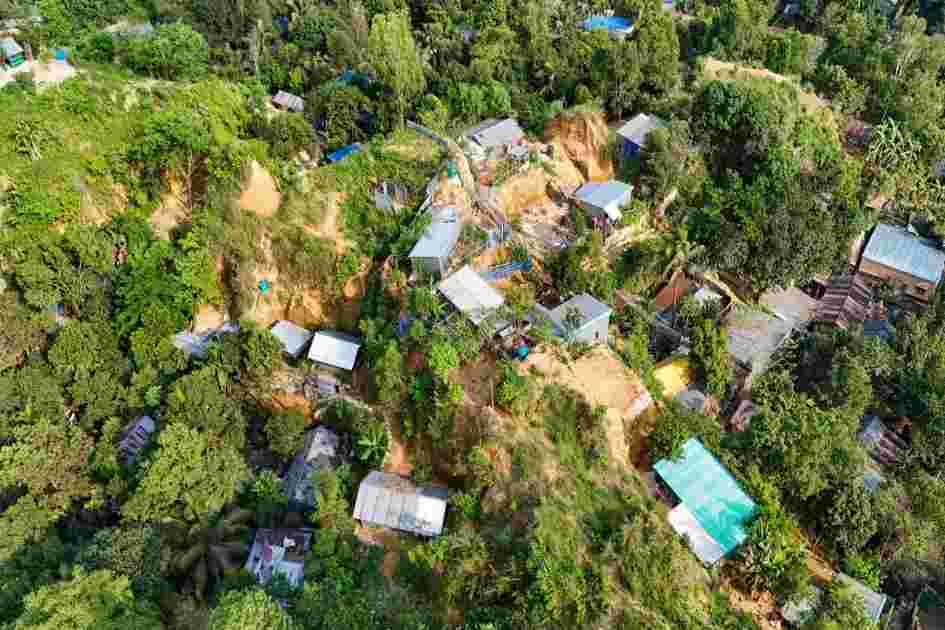
Regular drives, mobile courts, cases and fines have failed to stop hill cutting. Complaints continue to surface from different areas of Chattogram throughout the year, often beyond the view of authorities.
According to the Department of Environment, evidence of hill cutting has been found at at least 53 places in Chattogram city since 2015. In 2019 alone, hill cutting was identified at 25 locations.
Field observations found allegations of ongoing hill cutting in Khulshi, Banglabazar, Shapla Residential Area, Nasirabad, Motijharna, Chandranagar, Jangal Salimpur, Jangal Latifpur, Jalalabad and other areas.
Over the past six years, the Department of Environment has imposed more than 55.9 million taka in fines and filed 59 cases over hill cutting. In the 2025-26 fiscal year, nine mobile court drives by the district administration resulted in 15 cases and fines totalling 780,000 taka.
During the same period, 22 regular cases and 15 enforcement cases led to the imposition of 16,944,035 taka in environmental compensation.
Environmental expert Aliur Rahman said the economic gains from cutting hills far exceed the fines and cases.
Most hills in Chattogram city are owned by government agencies, autonomous institutions, private organisations and major industrial groups. Among government agencies, Bangladesh Railway owns the largest number of hills. The Chattogram City Corporation, Chattogram Development Authority, Chattogram Water Supply and Sewerage Authority and the Public Works Department also own hills.
Several industrial groups, including A K Khan, Ispahani and Finlay, also own significant numbers of hills.
Researchers say hill soil has become a profitable business. It is used for residential projects, factories, brick kilns, road construction, and the filling of lowlands and water bodies. As a result, hill cutting has become not only an environmental threat but also an organised economic activity.
The 36 recommendations made by the inquiry committee after the 2007 landslides included banning brick kilns within 10 kilometres of hilly areas, stopping approval of new housing projects within five kilometres, removing risky settlements, strictly stopping hill cutting and ensuring coordinated action by relevant agencies to protect hills.
Nearly two decades later, most of the recommendations remain unimplemented. Instead, new settlements have continued to grow on risky slopes and foothills, leading to repeated deaths and damage every monsoon.
Environmentalists and researchers say landslides cannot be seen only as natural disasters. Although climate change is increasing the trend of heavy rainfall, indiscriminate hill cutting, deforestation and unplanned settlements have multiplied the risk of deaths.
They said deaths from landslides in Chattogram cannot be reduced without a complete halt to hill cutting, phased rehabilitation of risky settlements, forest conservation, an effective early warning system and strict enforcement of existing laws.
Aliur Rahman said political influence and powerful groups play the biggest role behind illegal hill cutting.
“Allegations remain that no matter which political party comes to power, a section of influential people from that party and those close to them become involved in hill cutting,” he said. “As power changes hands, the identity of the hill grabbers changes, but the destruction of hills does not stop.”
Although the Department of Environment regularly conducts mobile courts, imposes fines and carries out drives, these measures have not been able to effectively stop illegal hill cutting. People concerned say illegal hill cutting can be stopped only through strict law enforcement, impartial action against influential people and round-the-clock monitoring.
Every monsoon, after deaths from landslides, investigations, recommendations, drives, cases and fines return to public attention. But once the rains end, the activity largely fades, while hill cutting, deforestation and settlements on risky slopes continue.
Experts fear that climate change will increase the frequency of extremely heavy rainfall. Without effective action to stop hill cutting, rehabilitate risky settlements and protect hills, landslides will continue to claim lives in Chattogram and the hill districts every monsoon.
After years of neglect and mismanagement, the hills of Chattogram remain a silent death trap for thousands of people.




