

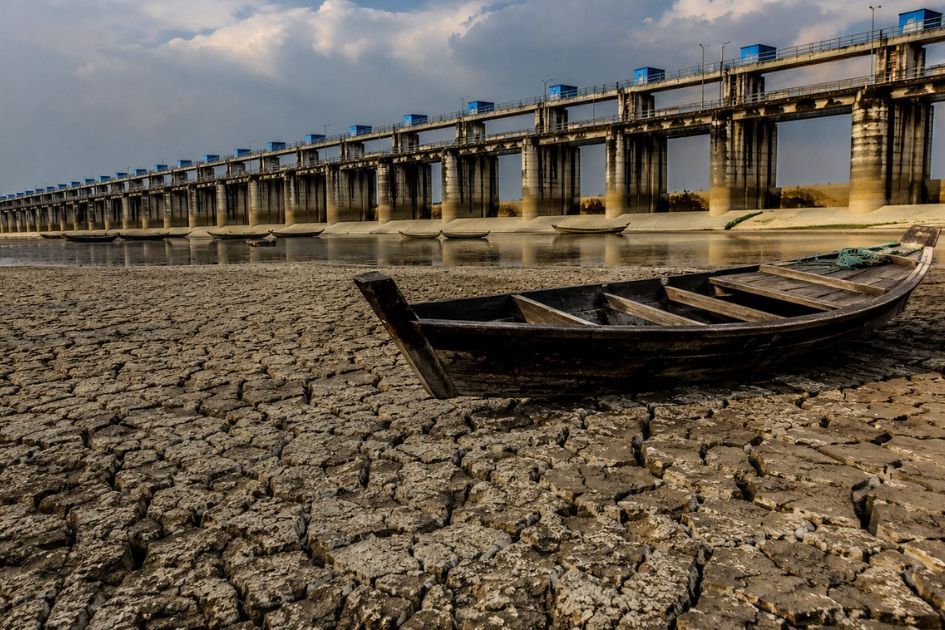



Framing the Teesta as a shared ecological system rather than a bilateral water dispute, the article warns that disrupted river flows and sediment transport threaten agriculture, wetlands and the long-term stability of the GBM delta.
The Teesta River is dying, and with it, the geographical and ecological stability of South Asia is rapidly fracturing. Once a powerful, roaring lifeline carving its way from the high glaciers of Sikkim through the Indian state of West Bengal and into the agricultural heartland of Bangladesh, the Teesta is being systematically strangled. Driven by aggressive upstream damming in India and a desperate, short-sighted engineering response within Bangladesh, this critical transboundary river is being reduced to a ghost of its former self. If this current trajectory continues, we are not just witnessing the slow death of a single river. We are witnessing the opening chapter of a total ecological collapse across the entire Ganges-Brahmaputra-Meghna (GBM) delta.
The Transboundary Squeeze and Forced Extremes
For decades, the downstream flow of the Teesta has been dictated not by natural seasonal rhythms but by unilateral geopolitical decisions. India’s massive network of upstream infrastructure, most notably the Gajoldoba Barrage, has effectively severed the river’s natural pulse. During the lean winter months, upstream diversions reduce the water entering Bangladesh to a literal trickle, sometimes plunging from historical volumes down to a devastating few hundred cusecs.
The consequences for northern Bangladesh are immediate and catastrophic. Deprived of critical surface moisture, the local riparian ecology suffocates, groundwater tables plummet and millions of farmers are left to look over a parched, dry riverbed that can no longer sustain regional food security. The loss of agricultural viability drives mass migration, creating a class of environmental refugees from a region that was once an agrarian powerhouse.
Yet, when the monsoon arrives, the crisis reverses into violence. Rather than absorbing the seasonal rains naturally, the heavily dammed river system is subjected to sudden, unregulated water releases from overflowing upstream reservoirs in India. Northern Bangladesh is abruptly thrust from severe drought into immediate, destructive flooding. Entire villages are submerged overnight, fragile infrastructure is swept away and severe riverbank erosion permanently swallows valuable agricultural land. Local communities are trapped in a cruel, manufactured cycle of living between these two engineered extremes.
The Illusion of Internal Engineering
Faced with a permanently stalled transboundary water-sharing treaty with India, Bangladesh has chosen to pivot toward a massive, independent engineering fix of its own. The government has officially declared the Teesta Barrage Master Plan a national priority, with Prime Minister Tarique Rahman pledging to implement the initiative “at any cost.” Backed by significant technical support and funding from China, this multi-billion-dollar initiative, slated for the FY2026-27 cycle, aims to build more than 100 kilometres of rigid guide embankments and heavily dredge the riverbed to manage irrigation and control seasonal floods.
While presented to the public as a triumph of modern water management, this internal channelisation poses a terminal threat to the river itself. Rivers are complex, dynamic biological entities. They are not artificial concrete pipelines designed for human convenience. By constricting the Teesta into narrow, engineered channels, we are permanently disconnecting the river from its natural floodplains and destroying its wetland ecology. It stops acting as a living ecosystem and instead becomes a rigid, artificial drainage ditch.
Furthermore, as environmental scientists and hydrologists point out, dredging a riverbed to extract shallow groundwater without ensuring a baseline transboundary flow will only lower the local water table further, worsening the long-term water crisis for the 20 million people who rely on it. It is a short-term band-aid that accelerates long-term desertification.
The Ultimate Crisis: Sediment Starvation and Delta Collapse
The tragedy of the Teesta is not isolated to its immediate riverbanks. The true, terrifying scale of this crisis affects the survival of the entire Ganges-Brahmaputra-Meghna delta, home to well over 100 million people.
Healthy rivers are natural conveyor belts. They do not just carry water. They transport millions of tonnes of vital silt and nutrient-rich sediment from the Himalayan mountains down to the coast. This continuous sediment deposit is the only defence low-lying delta regions have against the aggressive forces of the ocean. It builds up the land, balances natural erosion and keeps rising sea levels at bay by literally elevating the delta floor.
Every upstream dam built in India acts as a physical trap for this sediment, stopping it long before it can reach the plains. When Bangladesh builds its own internal barrages, embankments and channelisation networks, it further disrupts the natural distribution of the remaining silt. We are starving the delta of its fundamental building blocks.
Without this constant replacement of sediment, the structural integrity of the GBM delta will fail. The land will literally begin to sink, accelerating coastal erosion and allowing saltwater to permanently intrude inland, destroying vast tracts of fertile soil and poisoning fresh drinking water aquifers.
A Fragmented Future
The current approach to the Teesta is a masterclass in how not to manage a shared river ecosystem. It has been fractured into pieces, fought over as a geopolitical chess piece between New Delhi and Beijing, and divided by artificial political borders that nature does not recognize, a dynamic laid bare by the long, unresolved history of the Teesta water-sharing dispute.
If we continue to treat the Teesta as something to be dammed upstream and channelised downstream, the river will die, the regional ecology will vanish and the delta itself will collapse. Nature does not care about political borders or engineered master plans. Saving the Teesta requires an immediate shift away from fragmented engineering toward genuine, basin-wide ecological management that prioritises equitable water distribution and uninterrupted sediment flow. If we do not act to protect the river as a whole, the encroaching sea and a dying landscape will soon rewrite the map of the subcontinent for us.
Dr. Ahad Chowdhury is a geologist and environmental scientist with nearly three decades of experience in environmental regulation and a member of the Bangladesh Environment Network.




