

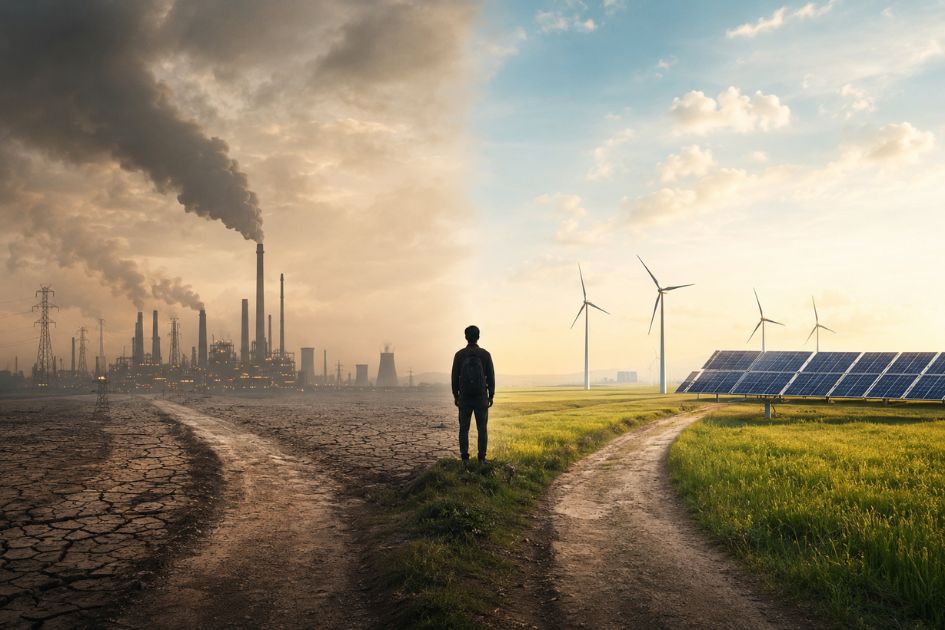



Bangladesh’s reliance on imported fossil fuels exposes households, students and workers to volatile prices, pollution, power disruptions and wider economic pressures, strengthening the case for renewable energy.
A few months ago, I was in the middle of an important online meeting when the electricity went out. The internet connection disappeared with it. I tried using mobile data, but the network was unstable. By the time I reconnected, the conversation had moved on.
For me, this was not simply an inconvenient power cut. I work remotely, so reliable electricity and internet are essential to my livelihood. When the power goes out, I do not only lose electricity; I lose time, productivity and sometimes income. It made me think about how we calculate the price of energy. We usually see that price on an electricity bill or at a fuel station. But is that the real price?
When a student misses an online class, a freelancer misses a deadline, a shop runs a diesel generator or a family pays higher transport and food costs, we are paying for energy again. These expenses do not appear as separate items on our electricity bills, but they come out of our pockets nevertheless. This is the true cost of fossil fuels.
The price follows us everywhere
Energy discussions in Bangladesh often take place through technical terms: generation capacity, LNG cargoes, fuel mix, tariffs and subsidies. These matter, but they can make energy feel disconnected from ordinary life. In reality, the price of imported oil and LNG follows us everywhere.
When diesel prices rise, buses and trucks cost more to operate. Transport fares increase. Carrying vegetables from farms to city markets becomes more expensive. Factories face higher production and logistics costs. Eventually, all of these costs reach consumers.
Samiha Binte Mostafa, a student at Jagannath University, a public university in Bangladesh’s capital Dhaka, explained how this affects her daily commute: “I do not have a direct bus service to my university, so I often have to use ride-sharing services or CNGs. But the fares keep increasing. Especially after the recent fuel crisis, they have risen significantly.”
A student may never import a litre of diesel but still pays for it through higher transport fares. A family may never know the price of an LNG cargo but experiences its impact through electricity bills, taxes, power cuts and rising commodity prices. The cost moves through the economy until it reaches people who had no role in creating our dependence.
Exposed to every international crisis
Bangladesh does not control international oil and LNG prices. We do not control conflicts in the Middle East, shipping disruptions, decisions by exporting countries or competition among wealthier buyers. Yet our energy system remains deeply exposed to all of them.
That exposure became unmistakable during the latest international supply disruption. In March 2026, spot LNG cargoes purchased by Bangladesh reportedly cost more than twice the prices paid in January. By May, eight of the country’s planned 11 LNG cargoes were expected to come from the volatile spot market.
The pressure led the government to increase energy subsidies for March and April by Tk 4,500 crore, while Bangladesh sought billions of dollars in external financing to manage energy imports and the wider crisis.
This is what fossil-fuel dependence looks like. A conflict thousands of kilometres away can affect our foreign-exchange reserves, public budget, electricity supply, fertiliser production, transport costs and household expenses. We call it an energy crisis when prices suddenly rise or supplies become scarce. But dependence itself is the crisis. The price shock only makes it visible.
Cheap for whom?
Fossil fuels are often defended as the affordable or practical option. But they appear affordable partly because we do not count their complete costs.
When the government subsidises expensive energy, that money does not come from nowhere. It comes from public resources that could support education, healthcare, public transport, climate resilience or social protection. Subsidies may be necessary to protect households from sudden price shocks, but a system that repeatedly requires emergency financial support is not genuinely cheap.
There is also the cost of pollution. Bangladesh’s air-pollution crisis has several sources, including transport, industry, brick kilns, construction and household fuels. Fossil-fuel combustion is an important part of this wider burden. The World Bank’s Bangladesh Country Environmental Analysis found that air pollution, unsafe water, poor sanitation and lead exposure caused more than 272,000 premature deaths and 5.2 billion days of illness in 2019. Together, these environmental harms were equivalent to 17.6 percent of GDP. Household and outdoor air pollution accounted for nearly 55 percent of the premature deaths identified.
Behind these figures are costs families understand: medicine, hospital visits, missed school days, lost working hours and reduced income. Then there is the climate cost. Fossil fuels contribute to the warming that intensifies heatwaves, floods, salinity, displacement and pressure on agriculture. Bangladesh pays heavily for these impacts despite contributing very little to historical global emissions.
Fyaj Khan Anam, a student at the University of Asia Pacific in Dhaka, described how extreme heat affects something as ordinary as attending class: “My university is in a very busy area, and often the heat outside is too intense for me to leave home, cross through the crowded area and attend classes.”
We pay when we import fossil fuels. We pay when their international prices rise. We pay through subsidies and pollution. And we pay again through climate damage. How, then, can this system honestly be described as cheap?
Power cuts are not equal
Energy insecurity does not affect everyone equally. A large company may have generators, dedicated internet connections and the ability to absorb higher costs. A wealthy household may have an inverter or rooftop solar system. But a student, small shopkeeper, new freelancer or low-income family may have no backup. For them, one hour without electricity can mean a missed class, unfinished work, spoiled food, unbearable heat or income that cannot be recovered.
Fatema Nur Jarin, a student at United International University in Dhaka, experienced this when her university temporarily moved classes online: “During the rainy period a few days ago, my university shifted to online classes. But there was constant load shedding in my area, and I could not attend most of the classes properly.”
We celebrate digital education and remote work as signs of progress. But neither can function without reliable electricity. Access to education or income should not depend on whether a family can afford backup power. Energy is therefore also a question of justice. Those least able to absorb energy shocks often pay the highest price for them.
Renewable energy is about control
Renewable energy is usually presented as a climate solution. It is one, but for Bangladesh it is also an economic and energy-security solution.
Sunlight does not have to be imported through a volatile international market. A rooftop solar panel is not exposed to a conflict near the Strait of Hormuz. Energy efficiency does not require foreign currency each time a fan, motor or air conditioner uses less electricity. Distributed renewable systems can also provide resilience when the central grid is under pressure.
Renewables will not solve every problem overnight. Bangladesh needs grid modernisation, storage, responsible investment, better procurement and a transition that protects workers and low-income households. But complexity cannot remain an excuse for continuing a dependence that repeatedly makes the country vulnerable.
The choice is not between an easy fossil-fuel system and a difficult renewable one. The fossil-fuel system is already difficult. We have simply become accustomed to paying for its failures in scattered ways.
The true cost of fossil fuels is divided among our electricity bills, transport fares, food prices, taxes, medical expenses, interrupted studies and lost working hours. Because the cost is scattered, it is easier to ignore. But ordinary people are already paying it every day.
Young people have a particular reason to influence Bangladesh’s energy choices. We will live with the power plants, contracts, debts and vulnerabilities being created today. These decisions will determine whether we can study reliably, work competitively, travel affordably and build secure futures.
We are already paying the true cost of fossil fuels. The question is whether we will keep paying for dependence or begin investing in an energy future Bangladesh can control.
About the writer
Amanullah Porag is the Executive Director of Youth for NDCs, a youth-led organisation working on climate action, energy transition and sustainable development.




