

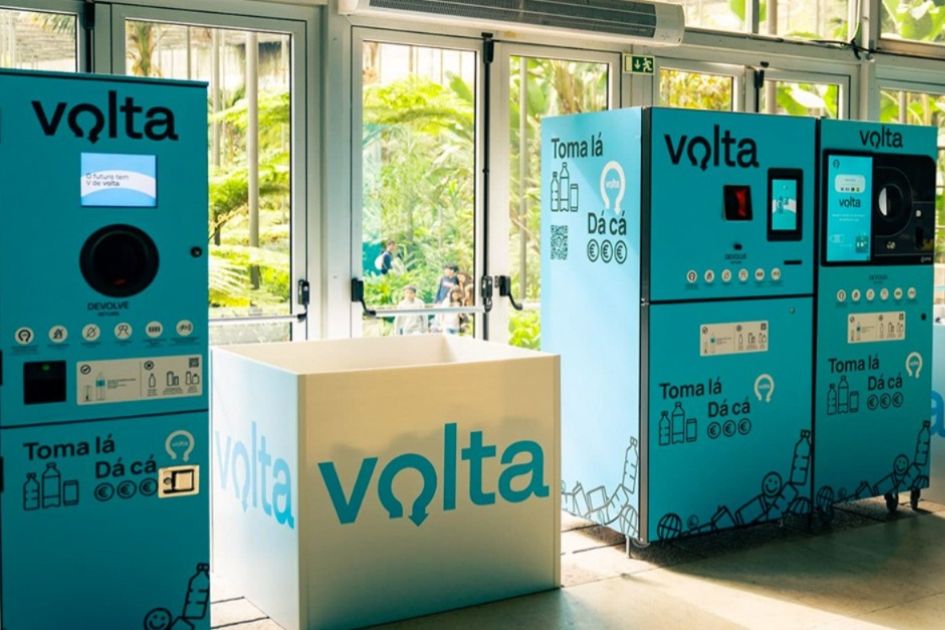



Portugal’s €0.10 deposit-return system has already collected more than 10 million containers, as authorities target a 90 percent collection rate by 2029.
Portugal will require all eligible single-use plastic beverage bottles and metal drink cans sold nationwide to be registered under its new “Volta” deposit-return scheme from Aug. 10, as the country steps up efforts to reduce packaging waste, boost recycling and meet European Union circular economy targets.
From Sunday, retailers will no longer be allowed to sell one-time-use beverage containers that do not carry the official Volta logo, marking the end of a four-month grace period introduced when the national deposit-return scheme came into force on April 10.
The system requires consumers to pay a refundable deposit of €0.10 (10 euro cents) on plastic beverage bottles and metal drink cans with a capacity of up to three liters. Retailers were given four months to clear existing stocks produced before the new rules took effect.
Under the Volta scheme, consumers receive the deposit back by returning empty beverage containers to authorized collection points. To qualify for a refund, bottles and cans must be empty, undamaged and carry a clearly readable barcode.
Refunds can be received in several forms, including cash, shopping vouchers, loyalty card credit or donations to charitable organizations.
The regulation applies to supermarkets, convenience stores, cafés, restaurants and all other retailers selling eligible single-use beverage containers.
Government figures show that more than 10 million beverage containers have already been returned since the system was introduced in April, reflecting growing public participation in Portugal’s recycling efforts.
The deposit-return scheme is part of Portugal’s broader strategy to strengthen recycling, reduce packaging waste and promote a circular economy in line with European Union environmental policies, including efforts to reduce waste from single-use packaging. The country aims to collect 90 percent of eligible beverage containers by 2029, in line with EU targets.
At present, the Volta scheme covers plastic, aluminum and steel beverage containers. The Portuguese government is also assessing whether to expand the system to include glass bottles.
Environment Minister Maria da Graça Carvalho said the government will decide on the possible inclusion of glass only after evaluating whether the environmental and economic benefits justify the additional costs, given Portugal’s existing glass recycling network.
Officials say the deposit-return scheme is expected to significantly reduce litter, increase recycling rates and support Portugal’s transition toward a more resource-efficient circular economy while helping the country achieve its 2029 beverage container collection target.




