

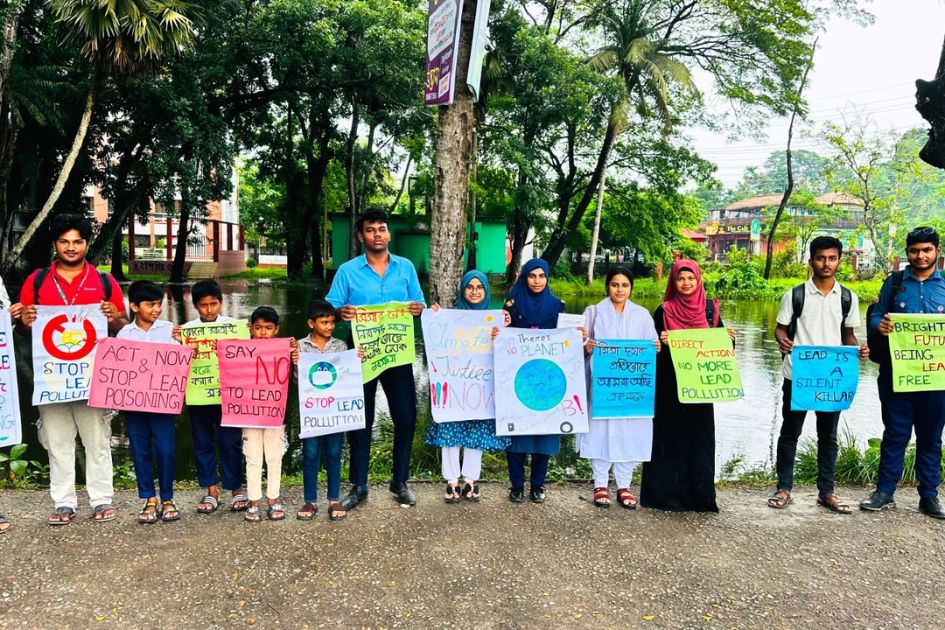



Young campaigners highlighted the linked threats of toxic lead exposure and climate impacts, calling for stronger enforcement, clean energy investment and sustainable development policies across Bangladesh.
Youth activists formed a human chain in front of Shariatpur Government College on Wednesday, demanding stronger action against climate change and toxic lead pollution while urging the authorities to protect public health and accelerate Bangladesh’s transition to renewable energy.
The programme, organised by YouthNet Global’s Shariatpur district team, brought together students from schools and colleges, youth volunteers and environmental activists as part of the organisation’s nationwide campaign promoting climate justice and a lead-free future.
Holding colourful placards and banners, participants called for stronger enforcement to prevent lead pollution, greater protection for children from lead exposure, expanded investment in renewable energy and more effective climate policies to address the country’s growing environmental challenges.
Organisers said the campaign highlighted the need to tackle both the climate crisis and toxic pollution through sustainable development policies that protect people, public health and the environment simultaneously.
Speakers warned that lead pollution remains one of the most overlooked environmental health threats in Bangladesh, saying exposure to the toxic metal can permanently damage children’s brain development, reduce learning ability and affect physical growth. They urged the government to strengthen monitoring and enforcement to eliminate sources of lead contamination and increase public awareness of its health impacts.
Referring to Bangladesh’s growing exposure to floods, cyclones, river erosion and other extreme weather events, speakers said the country must accelerate climate action by reducing dependence on fossil fuels and investing in clean, renewable energy to build a more resilient future.
The demonstrators carried placards bearing messages including “Climate Justice Now,” “There Is No Planet B” and calls for a lead-free future, attracting the attention of pedestrians and commuters in the area.
“Protecting children from lead exposure and tackling the climate crisis are not separate challenges. Both require urgent action today to safeguard the future of our communities,” one of the organisers said during the programme.
Participants urged citizens, educational institutions, policymakers and government agencies to work together to combat environmental pollution, promote sustainable development and ensure a healthier future for coming generations.
They expressed hope that similar youth-led initiatives across the country would encourage greater public engagement and inspire stronger policy action to build a cleaner, healthier and more climate-resilient Bangladesh.




