

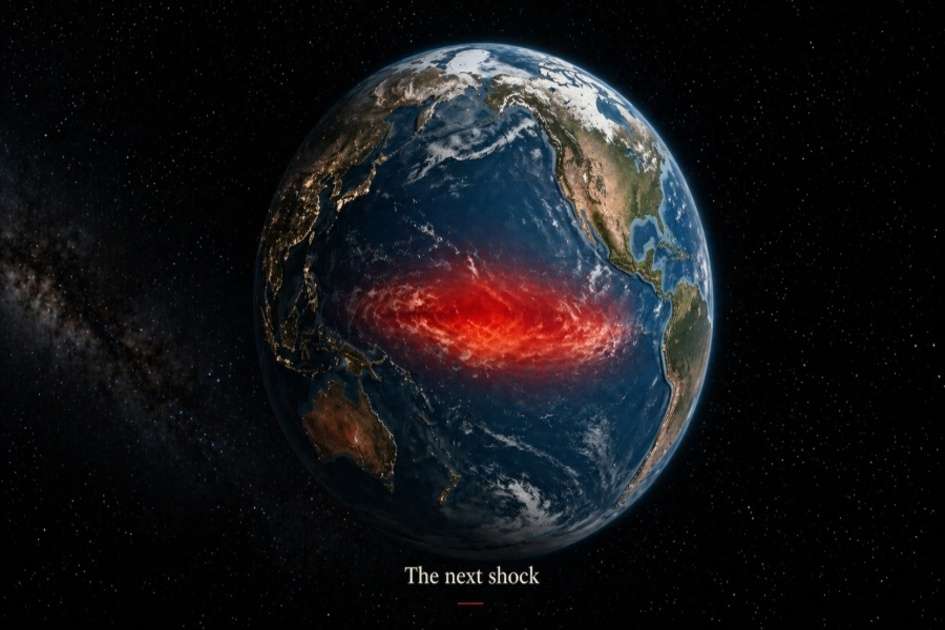



The UN says a new El Niño could become one of the strongest in decades, amplifying global warming, extreme weather, drought risks and potentially making 2027 the hottest year recorded.
A new phase of El Niño could begin within the next few weeks. The World Meteorological Organization said the climate pattern is likely to strengthen through the rest of this year, increasing the chances of severe weather in many regions. Forecasts from weather agencies in several countries suggest it could develop into one of the strongest El Niño events on record and may even be classified as a “super” El Niño.
Scientists say El Niño forms when changes in wind patterns allow warm ocean waters to spread across the tropical Pacific. Many researchers believe this latest episode could become unusually powerful.
“We are almost certain that a major event is coming,” said Professor Adam Scaife, head of monthly to decadal prediction at the UK Met Office. “It could even surpass previous records.”
A major reason for that concern lies deep in the ocean. Data from satellites, buoys and ocean monitoring systems show that vast bodies of water, in some places more than 6 degrees Celsius warmer than normal, are slowly moving eastward through the Pacific at depths of several hundred metres.
Michelle L’Heureux, a scientist at the US National Oceanic and Atmospheric Administration’s Climate Prediction Center, said the deep-ocean warmth could be compared with some of the strongest El Niño events ever observed.
That excess heat beneath the sea surface typically rises later, warming upper ocean waters. The warmer surface water then heats the air above it and disrupts normal weather patterns around the world.
UN Secretary-General Antonio Guterres said El Niño would add “fuel to the fire” of an already warming planet. He said its impacts would become more intense, spread farther and move across borders at alarming speed.
Not all El Niño events are the same and different regions can feel the effects at different times of the year. But strong El Niño episodes typically bring hotter and drier conditions to parts of South America, Southeast Asia and Australia, increasing the risk of drought and wildfires.
Previous El Niño events have also been linked to rising food prices and economic losses worldwide running into hundreds of billions of dollars and in some cases trillions.
El Nino usually reaches peak strength toward the end of December. With several months still to go, scientists say it is too early to know for certain whether this event will break all previous records. But they caution that even if it does not reach “super” status, the consequences could still be extremely serious.
Zeke Hausfather, a climate scientist at Berkeley Earth, said that under current conditions, 2027 is very likely to become the hottest year in recorded history.
He said that 1998 saw an exceptionally strong El Niño and, for that time, an exceptionally warm year. But if the same event happened today, he said, it would be regarded as a comparatively cooler year than many seen over the past two decades.
Source: BBC




