

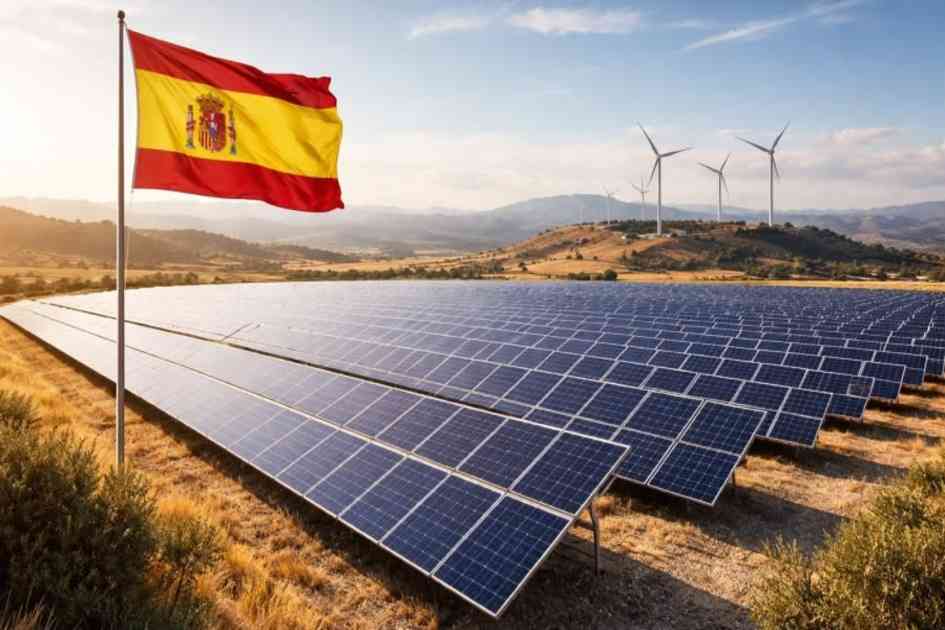

Wind, solar and just transition policies have positioned Spain as a European clean electricity leader, with renewable power supplying most of its electricity in 2025.
In 2026, Spain achieved global recognition as FIFA World Cup champions. But beyond the football celebrations and the scenes of victory, another transformation has been unfolding across the country: Spain’s ambitious transition toward a renewable-powered electricity future.
Spain’s success is not only measured in goals, trophies, and moments of sporting excellence. It is also reflected in how the country has expanded clean electricity, reduced exposure to volatile fossil fuel markets, strengthened energy security, and built one of Europe’s most ambitious renewable energy systems.
Like a championship team, Spain’s clean energy transformation did not happen overnight. It has been shaped by decades of preparation, investment, strategic planning, policy reforms, and cooperation among government, industry, communities, and citizens.
While football has brought Spain global recognition, its renewable energy journey tells another story of ambition, teamwork, resilience, and long-term commitment.
A Renewable Energy Champion in Europe
Spain has emerged as one of Europe’s leading renewable electricity markets, demonstrating how consistent policy support, infrastructure investment, and long-term planning can accelerate the transition away from fossil fuels.
Renewable sources generated 55.5% of Spain’s electricity in 2025, marking another major milestone in the country’s clean electricity transformation. However, while Spain has made remarkable progress in renewable power generation, sectors such as transport, heating, and industry still require deeper decarbonisation to achieve a fully low-carbon economy.
A year earlier, Spain reached another historic achievement. On April 16, 2025, the country’s electricity grid ran entirely on renewable power for a full day for the first time ever. Wind, solar, and hydropower supplied the entire electricity demand of mainland Spain, demonstrating the growing ability of renewable energy to power a modern economy.
Five days later, solar energy reached another record, generating 20,120 MW of instantaneous power and covering 78.6% of electricity demand, accounting for 61.5% of the electricity mix at that moment.
Even during the country’s coldest period, renewable energy continued to demonstrate its strength. In January 2025, renewable sources supplied around 56% of Spain’s electricity generation, showing the resilience of a power system increasingly supported by wind, solar, and other clean technologies.
Wind and Solar: The Two Champions Driving Spain’s Clean Energy Growth
Spain’s renewable transformation has been powered by two major forces: solar and wind.
Solar power has become Spain’s largest source of renewable electricity, generating around 22% of total electricity in 2025. Falling technology costs, increased investment, and supportive policies have helped solar become the country’s fastest-growing clean energy source.
Wind energy remains the backbone of Spain’s renewable system, generating 21.6% of the country’s electricity mix in 2025. It continues to outperform both natural gas and nuclear power, providing a stable source of clean electricity throughout the year.
Together, wind and solar accounted for around 42% of Spain’s electricity mix, significantly above the European Union average of around 30%, according to Ember. Spain is now the second-largest producer of solar power in the EU, reflecting the speed and scale of its renewable expansion.
However, Spain’s renewable success story is still a work in progress. Around one-fifth of the country’s electricity continues to come from natural gas, highlighting the need for further renewable deployment, grid modernisation, and expanded energy storage.
Policy and Planning Behind Spain’s Energy Transformation
Spain’s renewable growth has been driven by deliberate policy choices, ambitious targets, and long-term investment.
The country’s 2021 Law on Climate Change and Energy Transition established a framework for decarbonisation, including restrictions on new fossil fuel exploration permits, a pathway toward ending domestic fossil fuel production, and a commitment to achieving climate neutrality by 2050.
Spain’s updated National Energy and Climate Plan (PNIEC) has further increased its renewable ambitions, raising the target for renewable electricity generation to 81% by 2030.
Achieving this goal will require continued expansion of wind and solar capacity alongside major investment in electricity grids, battery storage, renewable hydrogen, and other technologies needed to manage a power system increasingly dependent on variable renewable sources.
As solar generation grows, Spain faces the challenge of balancing abundant daytime electricity with demand during evenings and periods of lower renewable output. Expanding storage capacity, improving grid flexibility, and strengthening regional connections will be essential for the next phase of the transition.
Reducing Fossil Fuel Dependence and Strengthening Energy Security
Spain’s renewable transformation has also been driven by the need to reduce dependence on expensive and uncertain fossil fuel imports.
The expansion of wind and solar has helped lower wholesale electricity costs during periods of strong renewable generation, while reducing exposure to international gas market volatility. However, consumer electricity prices remain influenced by broader factors, including energy markets, infrastructure costs, and economic conditions.
Spain’s experience demonstrates that renewable energy is not only a climate solution. It is also an energy security strategy and an opportunity for economic transformation.
By investing in domestic renewable resources, Spain has strengthened its energy independence and created new opportunities in clean technology industries.
A Just Transition: Ensuring No Community Is Left Behind
One of the most important lessons from Spain’s energy transition is its commitment to ensuring that communities affected by the decline of fossil fuel industries are not abandoned.
As coal-fired power plants closed, Spain developed a dedicated Just Transition framework that included agreements with affected regions, support for workers, economic diversification programmes, and investment in new industries.
In former coal-producing regions such as Asturias, León, and Aragón, transition efforts have focused on worker retraining, attracting renewable energy investment, restoring industrial areas, and creating new economic opportunities.
This approach recognises that a successful energy transition is not simply about replacing fossil fuels with clean energy. It is about protecting livelihoods, supporting workers, revitalising communities, and ensuring that the benefits of the transition reach people who have historically depended on carbon-intensive industries.
Challenges Ahead
Despite its progress, Spain’s renewable transformation continues to face significant challenges.
These include expanding electricity grid capacity, increasing energy storage, reducing renewable energy curtailment, ensuring public acceptance of large-scale renewable projects, and reducing dependence on imported fossil fuels during periods of lower renewable generation.
These challenges demonstrate that clean energy transitions require more than renewable technologies alone. They depend on strong institutions, inclusive policies, modern infrastructure, social participation, and long-term political commitment.
Lessons for the Global Energy Transition
Spain’s experience offers important lessons for countries seeking to accelerate renewable energy adoption.
The country’s progress has been built on ambitious targets, consistent policy support, infrastructure investment, and a people-centred approach to transition. Its journey shows that renewable energy can strengthen climate action while also improving energy security, supporting economic development, and creating new opportunities.
Spain’s story is a reminder that a clean energy future is not achieved through technology alone. It requires vision, preparation, investment, and fairness.
Just as a World Cup victory reflects years of preparation before the final whistle, a renewable energy transformation is built through decisions made decades before the results become visible.
In 2026, Spain celebrates a victory on the football field. But its renewable energy journey represents another kind of championship: the long-term effort to build a cleaner, more secure, and more equitable future.




