

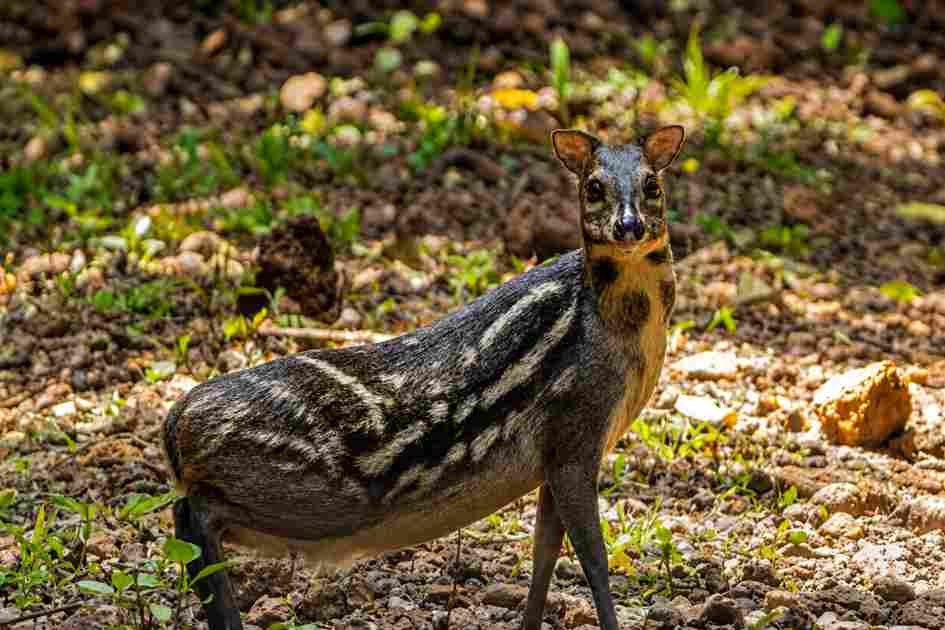

A recent sighting of an Indian mouse deer in Odisha’s Similipal National Park has drawn widespread attention after a photograph of the elusive animal went viral on social media, delighting wildlife enthusiasts and tourists.
The image was captured inside the national park in Mayurbhanj district, a renowned wildlife habitat known for its rich biodiversity and rugged forest landscape. The sighting has once again highlighted Similipal’s importance as a sanctuary for rare and lesser-known species.
The Indian mouse deer (Moschiola indica) is regarded as one of the world’s smallest and most primitive hoofed mammals. A small herbivorous species, it is distinguished by its grayish-black body, small ears and large eyes. Primarily nocturnal in nature, the animal is rarely seen in the wild, making photographic evidence of its presence particularly noteworthy.
Among the smallest ungulates on Earth, the Indian mouse deer survives only in select forest habitats across India. Wildlife experts say its continued presence is an indicator of healthy forest ecosystems.
Similipal’s dense forests are also home to several rare and endangered species, including tigers, elephants, bears and crocodiles, reinforcing the park’s status as one of eastern India’s most important wildlife landscapes.
Forest officials at the Similipal Tiger Reserve have been carrying out ongoing efforts to protect the species and conserve its habitat. According to Bhanumitra Acharya, former honorary wildlife warden and independent director of the Odisha Forest Development Corporation, the mouse deer has inhabited Similipal for many years and its presence in the region is not a new phenomenon.
“Local communities traditionally refer to the animal as ‘Guran di’,” Acharya said. “Its continued presence reflects the ecological richness of Similipal’s forests.”
The latest sighting has sparked renewed public interest in the little-known mammal and underscored the ecological significance of Similipal National Park as a refuge for India’s diverse wildlife.




