

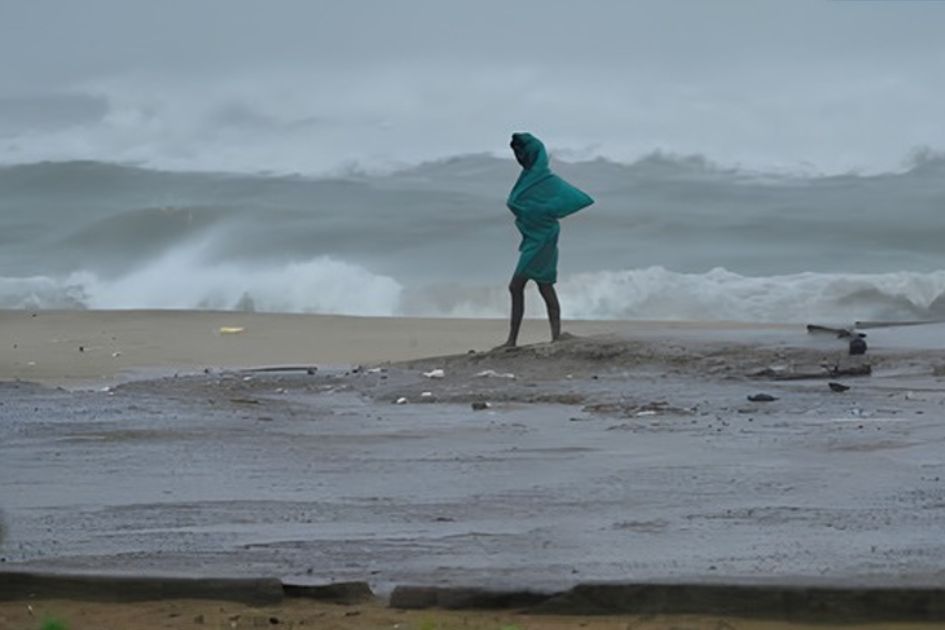

Drawing on recent research and global policy frameworks, the article argues that preventing climate displacement requires governance that protects ecosystems, strengthens community rights and secures people’s right to remain safely in place.
A new framework known as Natural Rights Led Governance (NRLG) argues that governments should shift disaster policy from managing displacement after disasters to protecting the natural systems that enable people to remain safely in their communities, according to an article by M. Zakir Hossain Khan.
The article argues that disasters begin long before cyclones, floods or storm surges occur, with environmental degradation, poor land management and weak governance. It says disasters also continue long after floodwaters recede as displaced families face homelessness, debt, disrupted education, unsafe migration, exploitative work, family separation, declining health and the gradual loss of cultural and ecological ties.
Rather than treating disaster-induced displacement solely as a humanitarian emergency, the article describes it as a breakdown of human rights, natural rights, ecological integrity and intergenerational justice.
It says conventional disaster governance has focused on moving people away from danger while failing to protect the ecosystems and social conditions needed for communities to remain where they belong. According to the article, governments have invested in evacuation and reconstruction but have often neglected the environmental degradation that drives repeated displacement.
The article presents NRLG as an alternative approach based on protecting life by safeguarding the integrity, sovereignty and regenerative capacity of nature.
Drawing on the 2026 report The human cost of disaster displacement in Bangladesh: A life-year approach to understanding impacts, published by the Internal Displacement Monitoring Centre (IDMC) and Bangladesh’s Refugee and Migratory Movements Research Unit (RMMRU), the article highlights the scale of disaster displacement in Bangladesh.
It says disasters triggered about 21.3 million internal displacement movements in Bangladesh between 2008 and 2025, placing the country among the six most affected countries globally. More than 99 percent of the movements were linked to weather-related hazards, with cyclones and storm surges accounting for about 11.3 million and floods another 7.8 million.
The article notes that the figures represent displacement movements rather than separate individuals, with many households displaced repeatedly. It says recurring displacement creates a downward cycle in which families lose assets, borrow to rebuild, recover only partially and are displaced again before restoring their livelihoods.
It says at least half of the displacement movements resulted from pre-emptive evacuations. While Bangladesh’s investments in early warning systems, cyclone shelters and community preparedness have saved lives, the article argues that evacuation alone does not provide lasting protection because many survivors return to destroyed homes, saline farmland, polluted water sources, damaged infrastructure, dead livestock and weakened local economies.
According to the article, disaster policy should therefore move beyond moving people away from hazards to protecting their right to remain safely in place, return after disasters or relocate voluntarily with dignity where return is impossible.
The article highlights the IDMC-RMMRU report’s use of a life-year approach to estimate temporary reductions in quality of life during displacement and recovery. It says disaster displacement caused about 89,000 life-years lost in Bangladesh between 2008 and 2025, equivalent to around $1.7 billion in cumulative human welfare costs and an annual average of about $102 million.
It says the losses reflect inadequate shelter, livelihood disruption, interrupted education, declining health, insecurity, reduced social connections and prolonged uncertainty rather than physical damage alone.
According to the report cited in the article, Cyclone Amphan in 2020 caused the largest estimated single-event burden with about 9,500 life-years lost, valued at around $184 million. The 2020 monsoon floods accounted for another 8,800 life-years lost, valued at about $169 million.
The article says nearly 70 percent of the estimated human cost resulted from recurrent small and medium-scale disasters rather than major catastrophic events, suggesting that repeated local flooding, river erosion, salinity intrusion, waterlogging and smaller storm surges may cumulatively cause greater losses in wellbeing than high-profile disasters.
It also cites the World Bank’s Groundswell analysis, which projects that climate change could force as many as 216 million people across six regions to move within their own countries by 2050. The analysis says decisive emissions reductions and resilient, inclusive development could reduce projected internal climate migration by up to 80 percent.
For Bangladesh, the World Bank projects as many as 19.9 million internal climate migrants by 2050 under a high-impact scenario, almost half of South Asia’s projected total.
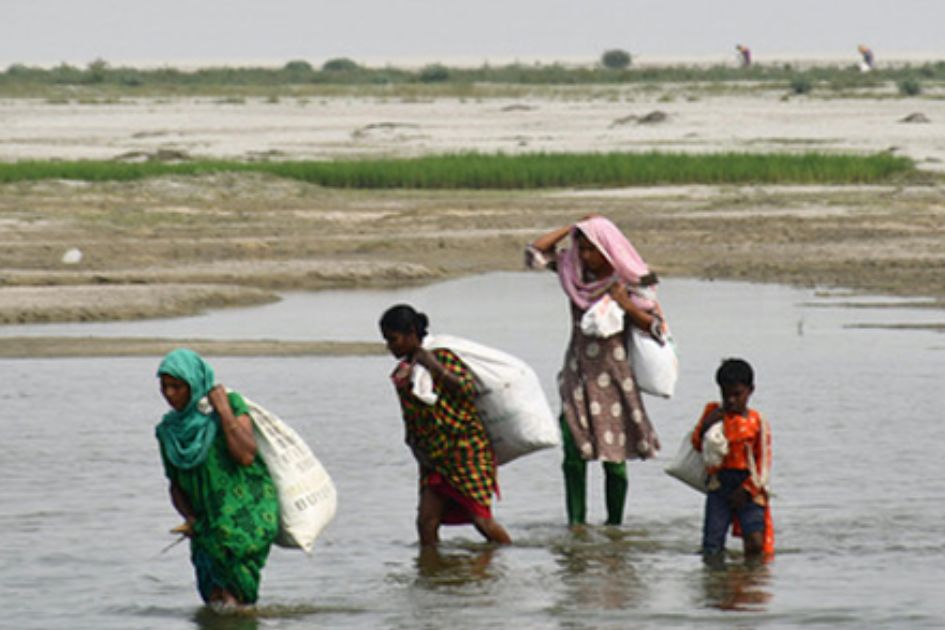
The article argues that migration outcomes depend not only on climate impacts but also on land governance, public investment, ecosystem protection, livelihood security, urban planning and communities’ ability to adapt where they live.
It distinguishes voluntary migration, undertaken with information, resources, legal protection and choice, from forced displacement driven by the loss of control over where and when people move.
The article also highlights gender disparities through findings from Change Initiative’s study, Assessment of Impacts of Climate Induced Migration in Bangladesh on Female Workers. It says the research found that women displaced by climate impacts often experience lower incomes, limited education, weaker access to land and natural resources, insecure employment and increased exposure to gender-based violence.
According to the study, many women displaced by river erosion, flooding, salinity and livelihood loss move to informal settlements in Dhaka, Bangladesh’s capital, where they often work in domestic service, informal manufacturing, petty trading and other low-paid jobs with limited protection.
The article says higher urban incomes do not necessarily improve wellbeing because of increased living costs, insecure employment, unsafe accommodation, limited labour protections and reduced access to justice.
It also cites the 2026 IDMC-RMMRU report, which found that average monthly incomes among households that were poor before displacement increased from $67 to $111, although only 381 of 1,467 households moved above the poverty line. Among households previously above the poverty line, 20 percent experienced absolute income losses and 11 percent saw incomes decline by more than 30 percent.
The article argues that so-called natural disasters are shaped by political decisions including wetland destruction, deforestation, river encroachment, poor drainage planning, inadequate embankments, fossil fuel emissions, weak labour protections and insecure land tenure.
It says that where displacement is intensified by avoidable ecosystem destruction, pollution, poor planning, corruption or climate inaction, it should be regarded as a foreseeable violation of rights rather than simply a natural event.
The article contends that disaster displacement represents the collapse of interconnected rights including the rights to life, physical safety, land, water, food, livelihoods, health, education, shelter, culture, community, women’s participation, ecosystem regeneration and the rights of future generations.
It proposes a seven-pillar NRLG framework covering the protection of life, habitat and property, ecosystem restoration, legal accountability for ecological harm, equitable disaster protection, conflict resolution, community stewardship and legal recognition of the rights of nature.
The framework calls for governments to map displacement risks at household and ecosystem levels, invest in resilient housing and essential services, restore mangroves, wetlands, rivers and agricultural soils, require Natural Rights and Displacement Impact Assessments for major infrastructure projects and strengthen legal accountability for ecological damage.
It also advocates prioritising disaster protection for women, children, older people, persons with disabilities, Indigenous peoples, fishing communities, landless households and others facing repeated displacement, while ensuring women play decision-making roles in disaster management and ecosystem stewardship.
The article proposes establishing Natural Rights and Displacement Justice Councils to resolve disputes over land, compensation, relocation, eviction, access to natural resources and environmental damage linked to reconstruction.
It also calls for legal recognition of rivers, wetlands, forests and mangroves as rights-bearing ecosystems with enforceable rights to exist, regenerate and maintain ecological functions.
According to the article, NRLG should be applied across four stages: preventing displacement through ecosystem restoration and climate-resilient development, ensuring safe and inclusive evacuation, providing voluntary rights-based relocation where return is impossible and rebuilding through ecological regeneration rather than conventional reconstruction.
The article says cities such as Dhaka should be treated as frontline adaptation zones by expanding affordable housing, social protection, healthcare, childcare, safe transport, skills development, labour protections and urban ecosystem restoration for displaced populations.
It also argues that climate finance should prioritise grants over loans, prevention over emergency spending, direct funding for communities, full accounting of human and ecological losses and greater accountability for high-emitting countries and environmentally destructive investors.
Reviewing international initiatives, the article notes the United Nations Guiding Principles on Internal Displacement, the Sendai Framework for Disaster Risk Reduction 2015-2030, the Task Force on Displacement under the United Nations Framework Convention on Climate Change, the Platform on Disaster Displacement and the United Nations Secretary-General’s Action Agenda on Internal Displacement.
However, it says these initiatives remain fragmented because responsibilities are divided across humanitarian, climate, migration and development institutions, there is no comprehensive binding international framework for climate displacement, financing remains inadequate and existing approaches focus primarily on people rather than the ecosystems whose degradation drives displacement.
The article concludes that international climate and disaster governance should recognise three connected rights: the right to remain safely in one’s community through ecosystem protection and livelihood security, the right to move voluntarily with full legal protection and the right of nature to survive and regenerate.
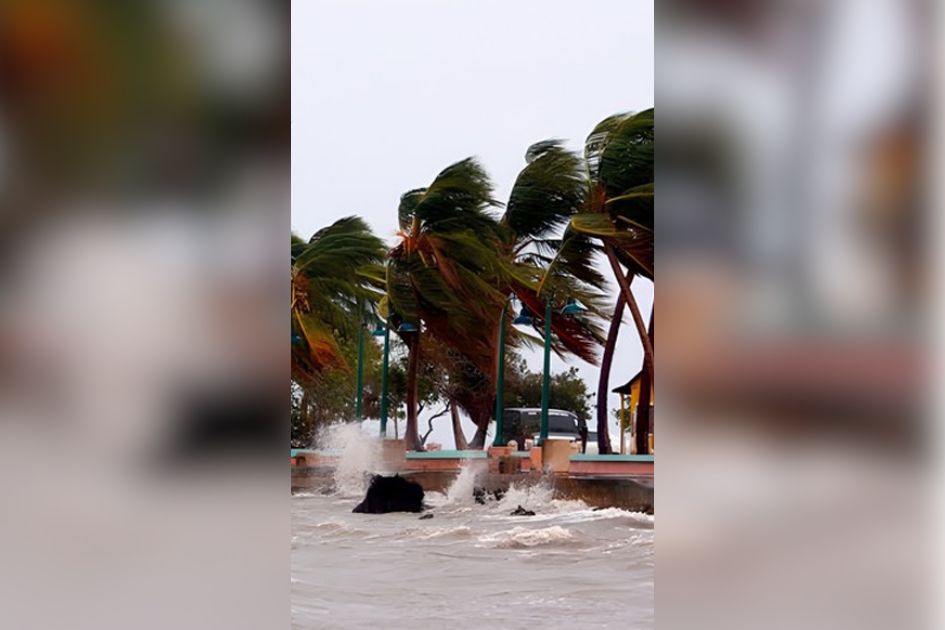
It argues that governments should measure resilience by tracking how many people avoid displacement, return safely, regain livelihoods, secure protected employment for women, restore wetlands, mangroves and forests, maintain river flows, avoid debt and preserve life-years.
The article concludes that while Bangladesh has significantly reduced disaster mortality through early warning systems and community preparedness, future policy must ensure that survival is followed by secure livelihoods, restored ecosystems and dignified lives rather than prolonged displacement.
It says the objective of global disaster governance should be that no person is forced to lose their home, dignity or identity because governments failed to protect the natural systems on which life depends.
About the author
M. Zakir Hossain Khan is the proponent of the Transformative Natural Rights Led Governance (NRLG) Framework. He is the co-founder and managing director of Change Initiative, a global think tank.




