

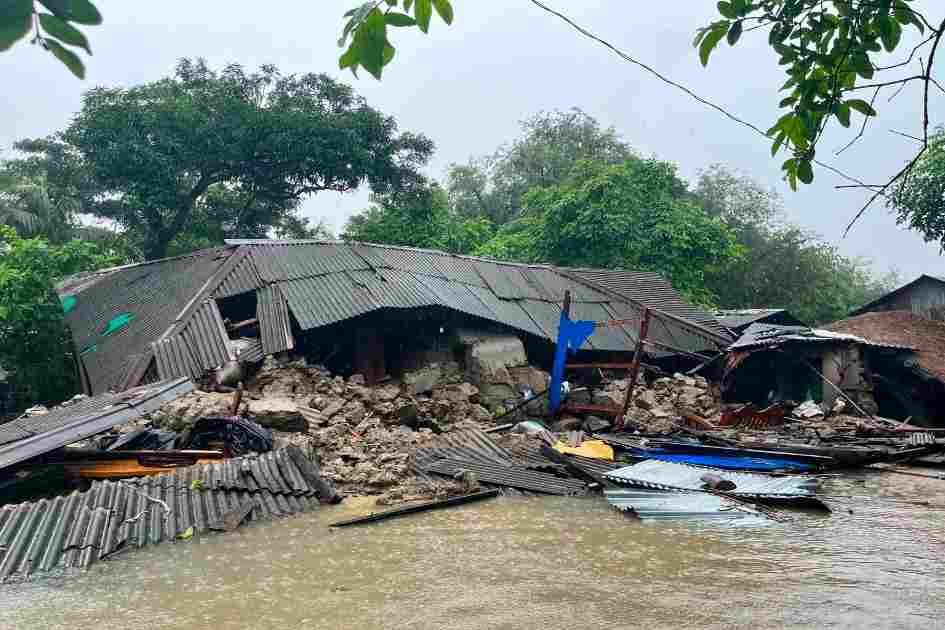



Collapsed mud homes, submerged drinking water sources and livestock losses have deepened hardship across southern Chattogram, with residents calling for rehabilitation beyond immediate relief.
More than 754,000 people have been affected by floods in Bangladesh’s southeastern Chattogram district, where families say their homes have collapsed, stored food has been destroyed and government relief is not enough without rehabilitation support.
According to the district administration, 754,590 people have been affected by the current flooding in Chattogram, while 188,648 families remain marooned and are living in severe hardship.
In West Bagmara of Katharia union in Banshkhali upazila, four adjacent earthen houses were swept away by floodwaters. Farmer Harun, his wife Tahera and their two sons and two daughters have lost their last remaining shelter and are now living huddled under a broken tin roof.
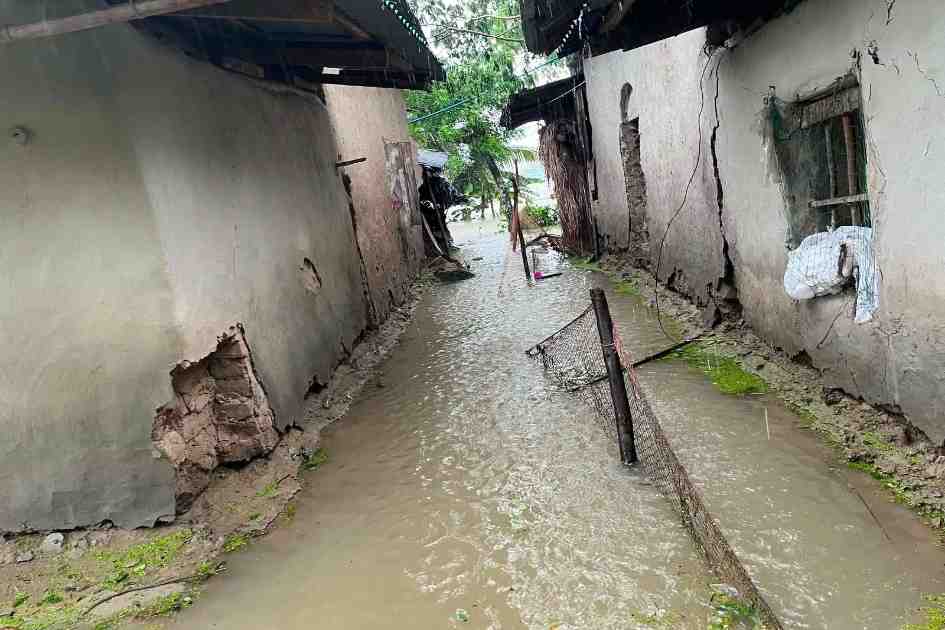
The floor of Tahera Akter’s earthen house is still under water. She said she has not slept properly for five days. With four children, she has joined plastic baskets and wooden planks to build a makeshift raised platform inside the house, where the family is spending its days.
Although government relief has reached the area, residents say they need rehabilitation. Tahera’s husband is a farmer. The rice they had stored in a warehouse for the whole year was destroyed by floodwater, causing losses of Tk 800,000 to Tk 900,000.
Six neighbouring families are also bearing the cost of the floods. For some families, there was only one earning member and their home was their last asset. After losing it, they have been left destitute. In Paschim Baghmara of Banshkhali’s Katharia union, grief has spread from house to house.
Residents said about 90 percent of the surrounding earthen homes have collapsed. Most of the affected people are farmers and day labourers. One resident said his kitchen had collapsed and repairs would cost about Tk 300,000 to Tk 400,000.
Like Tahera Akter, hundreds of thousands of people in Chattogram, Cox’s Bazar, Bandarban, Rangamati and Khagrachhari are spending their days in uncertainty. Beyond these five districts of Chattogram division, Moulvibazar and Habiganj in Sylhet division are also facing floods.
Eight straight days of heavy rain and upstream hill runoff have submerged 50 percent of Chattogram district. The district administration said the floods have affected 754,590 people, with 188,648 families marooned and living in extreme hardship.
Heavy rain over the past week has caused flooding in several upazilas of Chattogram, with Banshkhali and Satkania hit hardest. In some areas, water rose up to the roofs of houses. Affected residents alleged that government relief had not reached them in eight days.
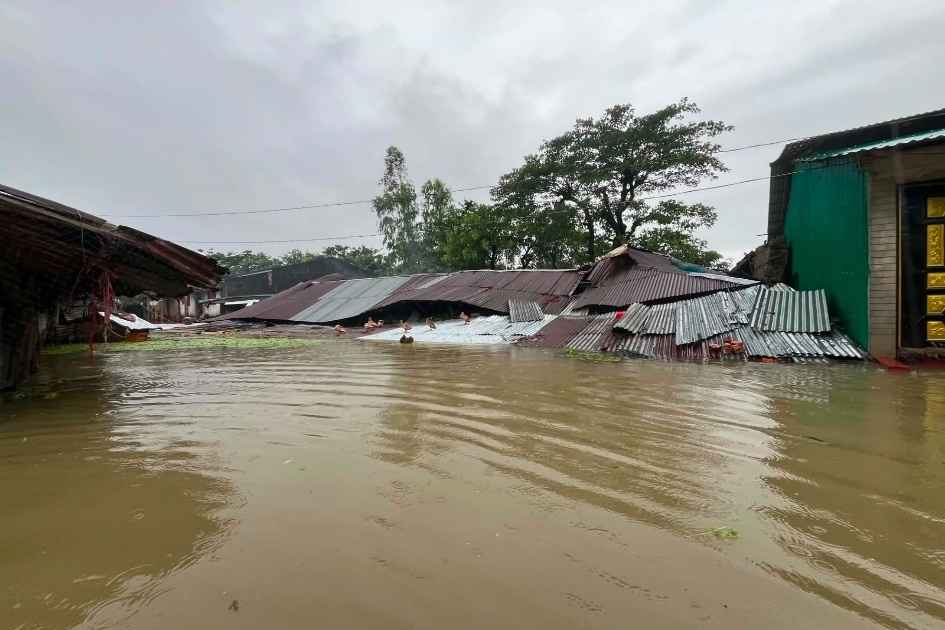
Under the influence of the monsoon, heavy rain began in the Chattogram region on July 5. From 6:00 am on July 5 to 3:00 pm yesterday, Chattogram recorded 1,354.9 millimetres of rainfall. In the latest 24-hour period, 151.7 millimetres of rain was recorded. The Bangladesh Meteorological Department said heavy to very heavy rain could continue for the next two to three days.
According to the Ministry of Disaster Management and Relief, the death toll from floods, upstream hill runoff and landslides has risen to 51. The number of deaths stood at 44 on Saturday. Cox’s Bazar recorded the highest toll with 28 deaths. Thirteen people died in Chattogram, six in Bandarban, three in Rangamati and one in Moulvibazar.
Beyond Chattogram, floods have affected several parts of the country. A July 12 report by the disaster management and relief ministry said that, as of 12:30 pm on Sunday, 59 upazilas across the affected districts had been inundated. The floods had marooned 267,918 families and affected 1,022,963 people.
One village after another has been flooded in the Chattogram region. Roads have collapsed and communications have been cut off. In some places, the water has started to recede slowly, while in others it is rising again. In some areas, people have begun returning home, but travel remains impossible without boats. Relief has reached some places but has yet to reach others.
Large parts of southern Chattogram remain effectively cut off. In many villages of Banshkhali, Satkania, Lohagara and Chandanaish, people are still living in knee-deep to waist-deep water. With sources of safe drinking water submerged, a severe shortage has emerged. In many areas, families are unable to cook. Collapsed mud houses, damaged crops and losses of livestock have left residents facing fresh uncertainty.
Floods triggered by a week of heavy rainfall and upstream hill runoff have killed 112,827 livestock and poultry across five districts of Chattogram division, with total losses estimated at Tk 30.15 crore, according to a preliminary government assessment.




