




A women-led cooperative in Chitwan is using fish drying technology to reduce dependence on fresh-fish prices, increase profits and strengthen members’ financial independence.
Women from the Sundardeep Women Fish Farmers Cooperative in Khairahani, Chitwan, are earning better prices for their fish after receiving a fish drying machine.
For Bhunti Chaudhary, fish farming is more than a business. It is a family tradition.
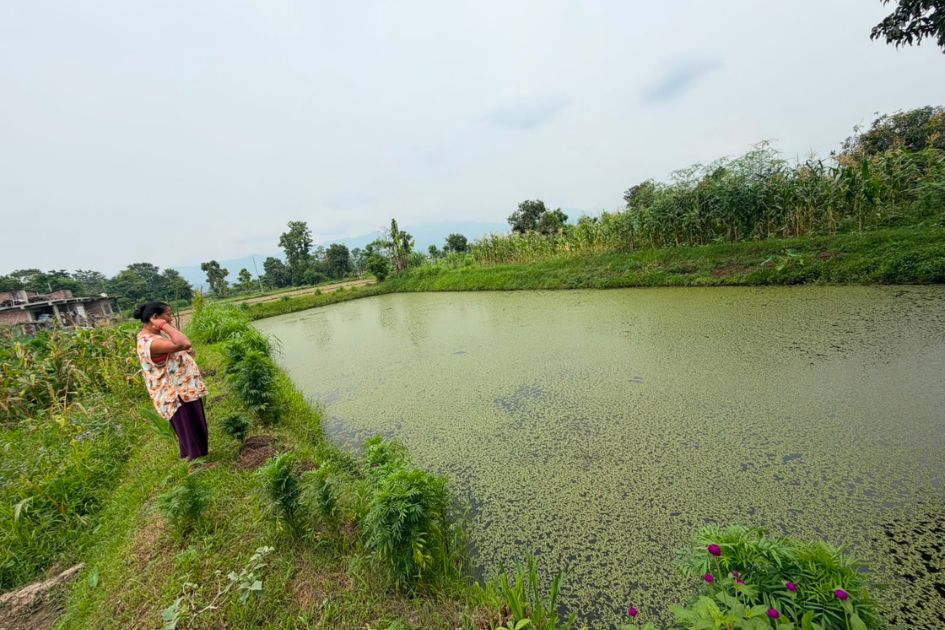
She lives in Khairahani Municipality-7, Chitwan, where her family has been raising fish in a one-kattha pond for the past ten years.
“In the Tharu community, fish is part of our culture,” she says. “We need fish for many festivals and family events. That is why almost every Tharu family has a small fish pond. If we do not have our own fish, we have to buy it.”
After keeping enough fish for her family, Bhunti sells around 300 kilograms every year. She says fish farming is easier than raising cows or buffaloes and provides a good source of income.
Like Bhunti, women in 23 households in Majhui village are involved in fish farming.
Shanti Mahato, another fish farmer from Khairahani-7, has a one-and-a-half-kattha pond. The money she earns from selling fish helps cover her family’s daily expenses. Every year, she sells fish worth around NPR 150,000.
“Fish farming has made us more independent,” says Shanti. “We no longer have to depend on others for small household expenses. We can manage them with the income from our ponds.”
To support each other, the women formed the Sundardeep Women Fish Farmers Cooperative. The cooperative provides loans to members and helps them sell their fish in the market.
Shanti, who is also the chairperson of the cooperative, says they started it so women could easily access small loans to grow their businesses. Today, the cooperative has 27 women members.
Technology adds value
Before, the women sold fresh fish for NPR 300 to 350 per kilogram. They had little control over the price because buyers decided how much they would pay.
That changed after the cooperative received fish drying machines.
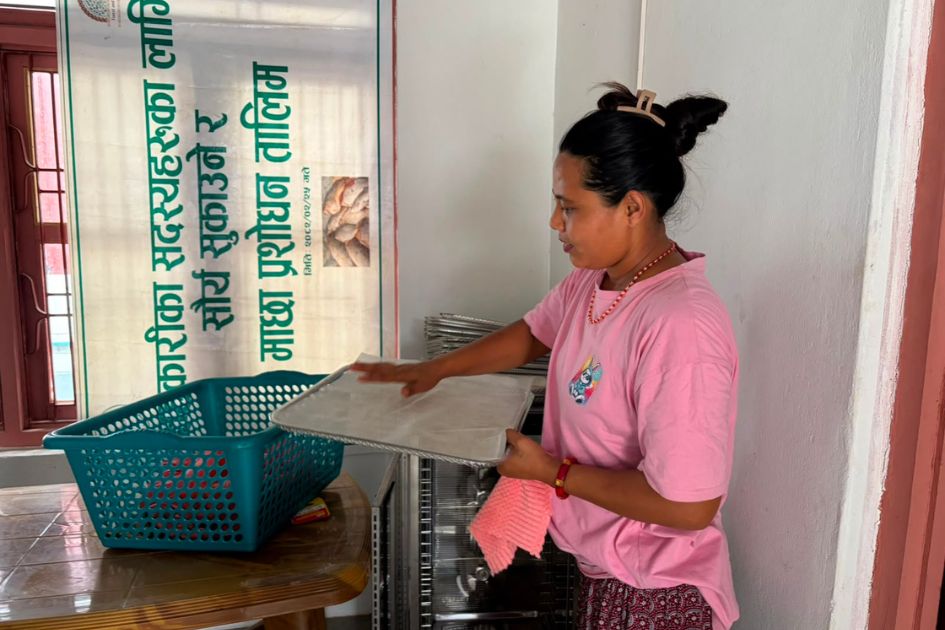
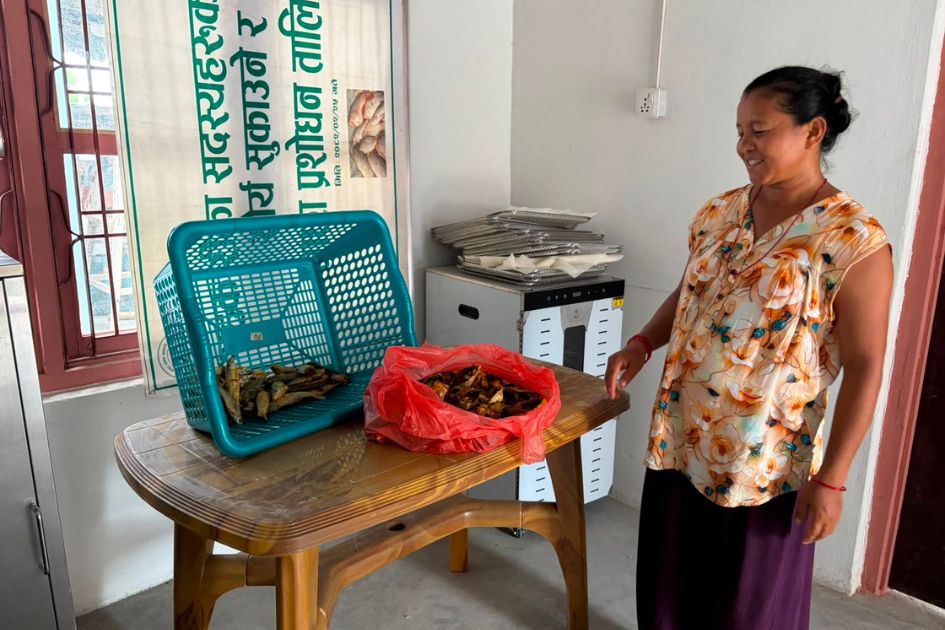
“We did not have this technology before,” says Shanti. “The market decided the price of our fish. Now, even if the price of fresh fish is low, we are not worried. We dry the fish and sell it later.”
Dried fish sells for around NPR 3,000 per kilogram. About six kilograms of fresh fish produce one kilogram of dried fish. According to the women, selling dried fish earns them an additional profit of NPR 800 to 1,000.
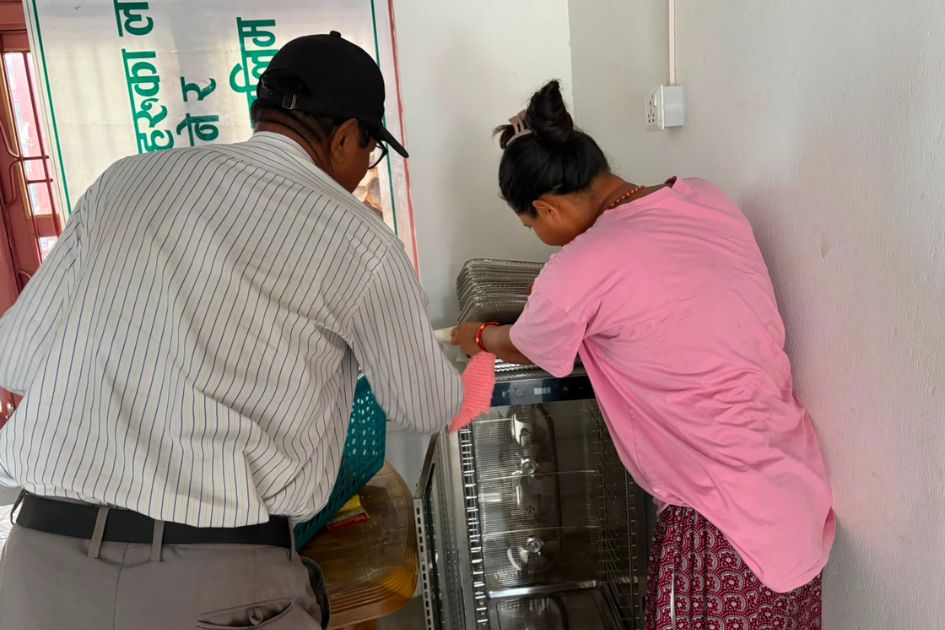
The fish drying machines were provided through the Forest and Farm Facility Programme with support from the Food and Agriculture Organization of the United Nations (FAO). The cooperative received two machines, and women now use them to produce and sell dried fish at better prices.
For these women, technology has done more than improve their income. It has given them greater confidence, stronger businesses and more control over their future.




