

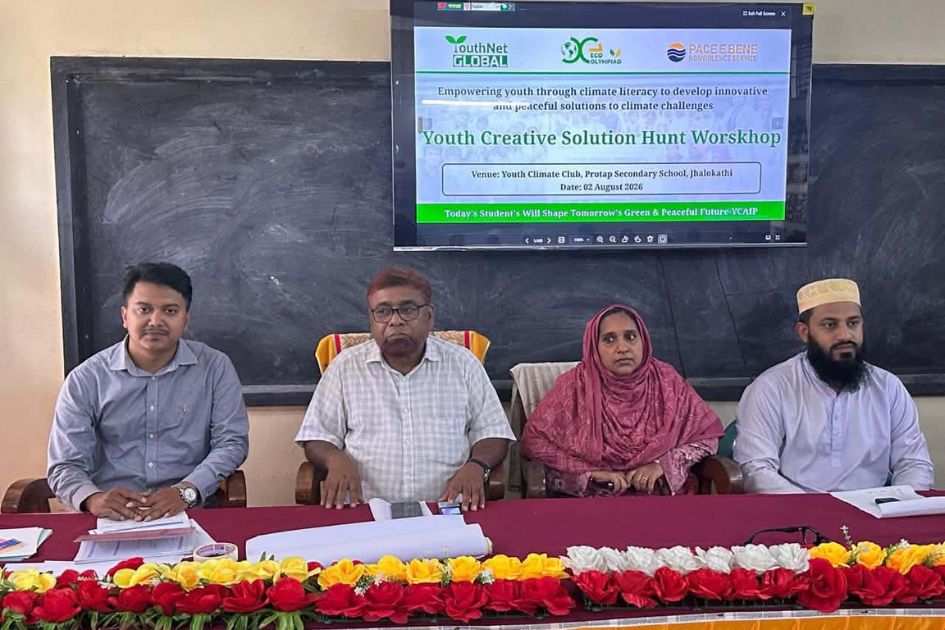



Thirty Youth Climate Club members in Nalchity examined local environmental risks, climate justice and loss and damage while developing leadership, problem-solving and peaceful cooperation skills.
On Bangladesh’s climate-vulnerable coast, students are turning local challenges into ideas for action. In Nalchity of Jhalakathi district, members of a Youth Climate Club are exploring creative solutions to climate risks while promoting peace, resilience and youth leadership.
A “Youth Creative Solutions Exploration Workshop” was organised at Pratap Secondary School in Nalchity by YouthNet Global, with support from Peace e Bene Nonviolence Service, a US-based organisation dedicated to promoting peace and nonviolence. The workshop aimed to strengthen students’ leadership, creativity, problem-solving skills and understanding of climate justice.
Thirty students from the school’s Youth Climate Club participated in the workshop, where they discussed climate change impacts, local environmental risks, loss and damage and the role of young people in building resilient and peaceful communities.
Through interactive group activities, students learned how to identify problems, analyse challenges, collaborate with peers and develop innovative solutions. They explored climate-related challenges affecting their communities and presented their ideas for possible responses.
Nalchity and surrounding coastal areas face growing climate threats, including river erosion, waterlogging, cyclones and tidal surges. Many families in coastal Bangladesh depend on rivers, agriculture and natural resources for their livelihoods, making climate impacts a daily reality. These challenges affect education, income, health and community well-being.
During the workshop, students connected their local experiences with global climate justice discussions, including loss and damage. They recognised that vulnerable communities often face the greatest impacts despite contributing the least to global greenhouse gas emissions.
The participants also learned that responding to climate change requires more than technological solutions. Social cooperation, solidarity, peaceful dialogue, nonviolence and inclusive participation are essential for building climate-resilient communities.
The event was attended by Chief Guest Md. Mizanur Rahman, Head Teacher of Pratap Secondary School. Also present were two teacher advisers of the school’s Youth Climate Club, YouthNet Global General Secretary Arifur Rahman Shuvo and Divisional Coordinator Sajid Mahmud.
“We are pleased to be part of this initiative by YouthNet. Engaging students in climate and environmental activities will help build awareness, leadership, peace values and a sense of responsibility among them. It will support their journey towards becoming responsible citizens,” said Md. Mizanur Rahman.
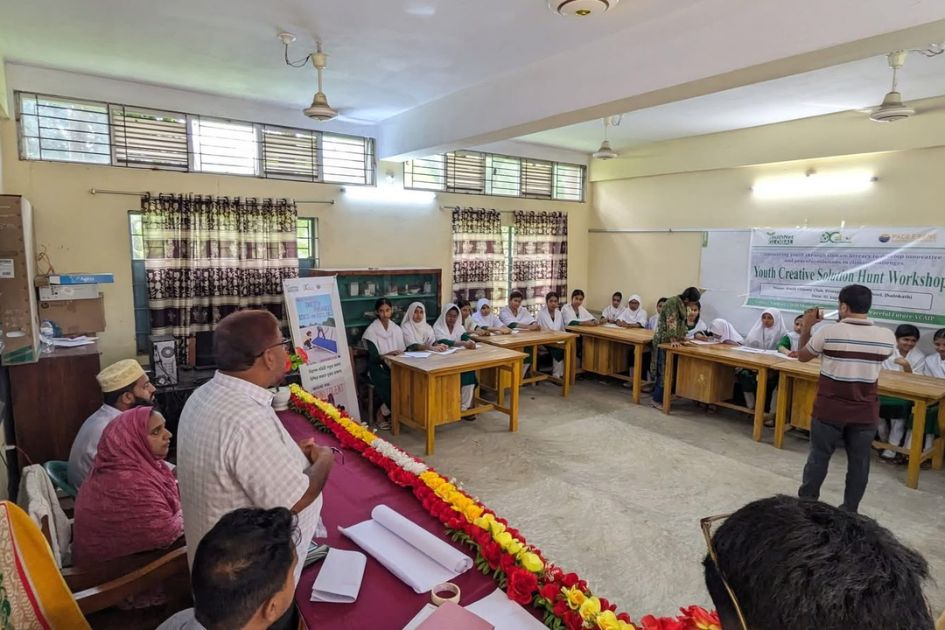
YouthNet Global General Secretary Arifur Rahman Shuvo said young people are among those most affected by the climate crisis, despite contributing little to its causes.
“Raising awareness about climate change is not enough. Young people need opportunities to use their creativity, ideas and leadership to identify solutions to local challenges,” he said.
He added that youth participation is essential for climate justice and for addressing the social challenges linked with climate change.
“Climate change can increase social pressures, inequalities and risks of conflict. Therefore, promoting peace, nonviolence, tolerance and cooperation is crucial to preparing young people to lead climate action. Through the Youth Climate Action for Peace initiative, we aim to empower students as active leaders in addressing climate challenges,” he said.
YouthNet Global Divisional Coordinator Sajid Mahmud said the organisation aims to develop Youth Climate Club members as future climate leaders and responsible citizens.
“Building creative thinking, problem-solving skills, peaceful coexistence and a sense of responsibility among students is essential for creating a sustainable future,” he said.
For Maria Akter, a student participant, climate change is not a distant issue but a challenge affecting her generation.
“Earlier, I thought climate change was only an issue for adults. Through this workshop, I realised that students can also contribute to environmental protection, peace and positive change through small initiatives,” she said.
While global climate discussions often focus on national policies and international commitments, initiatives like this highlight the importance of empowering communities and young people at the local level.
Organisers said the Youth Climate Action for Peace initiative will continue promoting climate awareness, youth leadership, peace, nonviolence, tolerance and cooperation among young people. Through continued activities, the initiative aims to build school-based climate leadership and empower students to become agents of peaceful, inclusive and sustainable change.
By empowering students with knowledge, creativity and a culture of peace, the initiative seeks to transform climate-vulnerable communities from those facing climate impacts into empowered leaders shaping sustainable solutions.




