

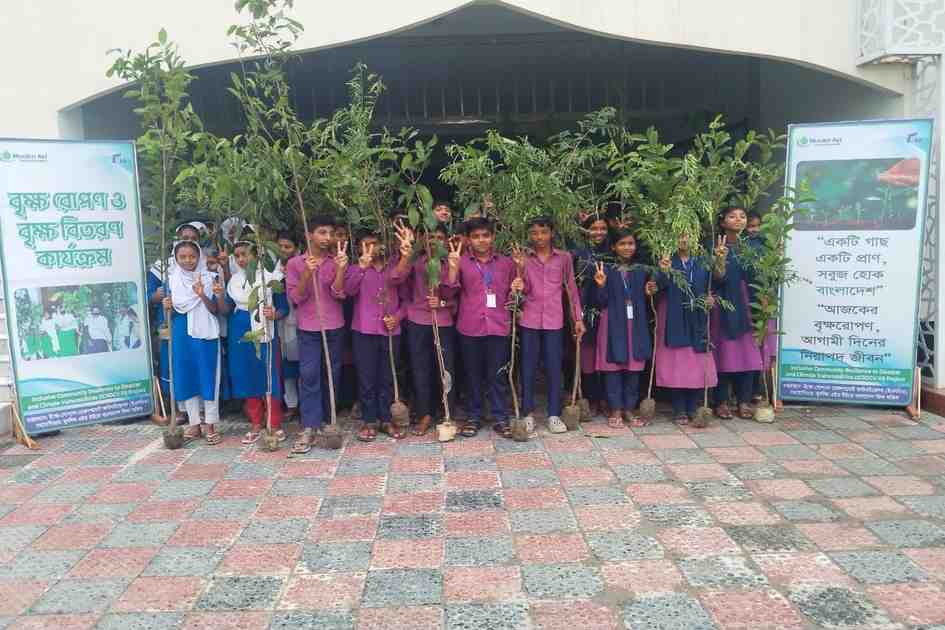



Organisers say youth-led planting in Ashashuni offers a practical response to salinity, warming and water stress as coastal communities wait for climate finance to reach the ground.
Students and children in Bangladesh’s southwestern Satkhira district have begun planting 5,000 fruit, timber and medicinal saplings as part of a local adaptation effort to protect Ashashuni’s fragile coastal ecosystem from rising heat, salinity and freshwater scarcity.
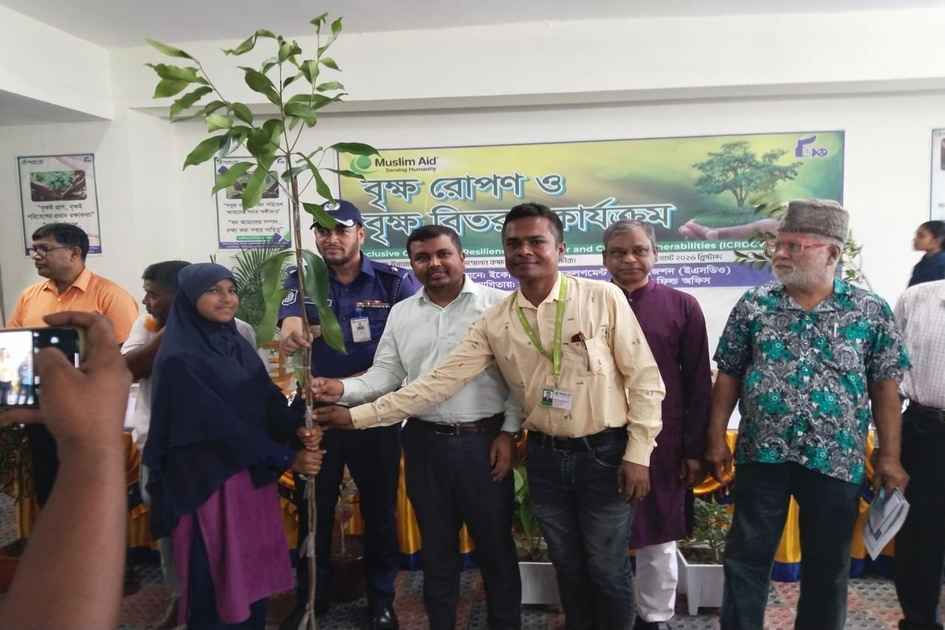
The saplings were distributed at noon on Thursday, August 13, at the Ashashuni Upazila Model Mosque auditorium in Ashashuni, a sub-district of Satkhira. The programme was organised with technical and overall support from the non-governmental development organisation Eco-Social Development Organization, or ESDO.
The initiative comes as the southwestern coastal region faces alarming increases in warming and shortages of safe drinking water linked to global climate change. Rising salinity is also threatening local biodiversity and agriculture.
Although international climate conferences have made pledges on finance and funds, those commitments remain caught in long-term bureaucratic complications, organisers said. Against this backdrop, children, adolescents and students in Ashashuni have taken to the field on their own initiative, without waiting for government or global grants, as part of climate justice and direct adaptation efforts.
The event was chaired by ESDO Project Director Shamsul Haque Mridha. Ashashuni Upazila Nirbahi Officer Shyamananda Kundu, the chief administrative official of the sub-district, attended as chief guest.
In his opening remarks, Kundu said, “The indicators of salinity and average temperature rise in the southwestern coast are increasing in such a way that, unless effective local adaptation initiatives are taken now, a large part of this region will lose its habitability in the coming decades. This awareness and field-level role of students are very important in reducing loss and damage.”
Local students Rakib Nur, Rakib Anwar, Anan and Rafiqul Islam, who are directly involved in the climate movement, said the coast could not be protected by relying on global climate finance policies and bureaucratic complexities.
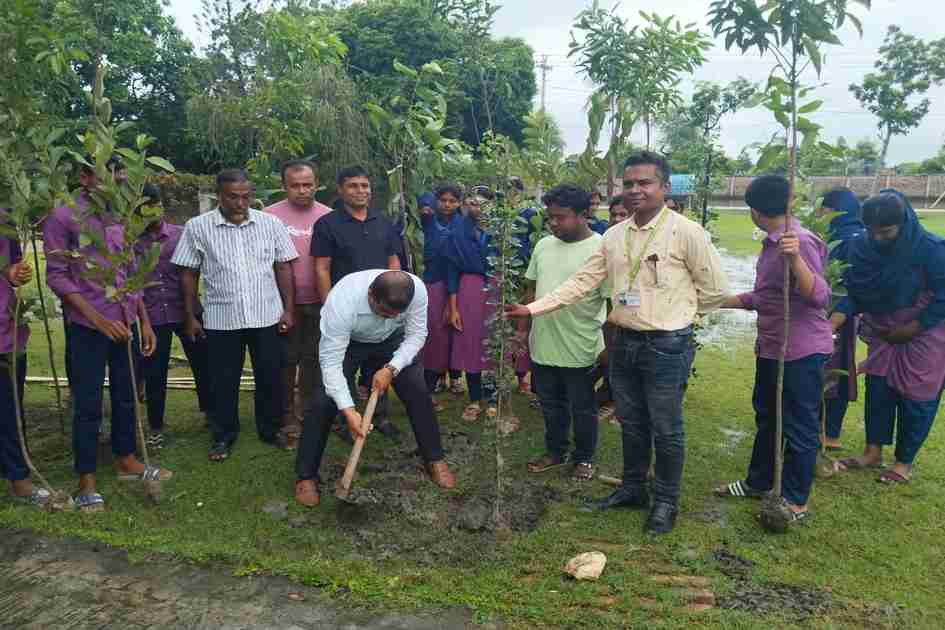
They said they had taken the initiative to create a green belt through their own efforts to increase carbon absorption in the atmosphere and protect coastal embankments and soil health. As an initial step, they said, the planting of 5,000 saplings would play both a symbolic and practical role in protecting the coast from desertification.
Representatives of the Climate Justice Forum, Ashashuni Government College Principal Md Nazrul Islam, Ashashuni Government Model Secondary School Head Teacher Md Azharul Islam Mukul, local administrative officials and environmental activists attended the event.
Environmental experts said such community-led adaptation projects, financed and carried out with the participation of coastal communities themselves, are a more effective model for building future climate resilience than theoretical discussions at the policy level.
The programme ended with saplings being planted on the premises of the upazila council.




