

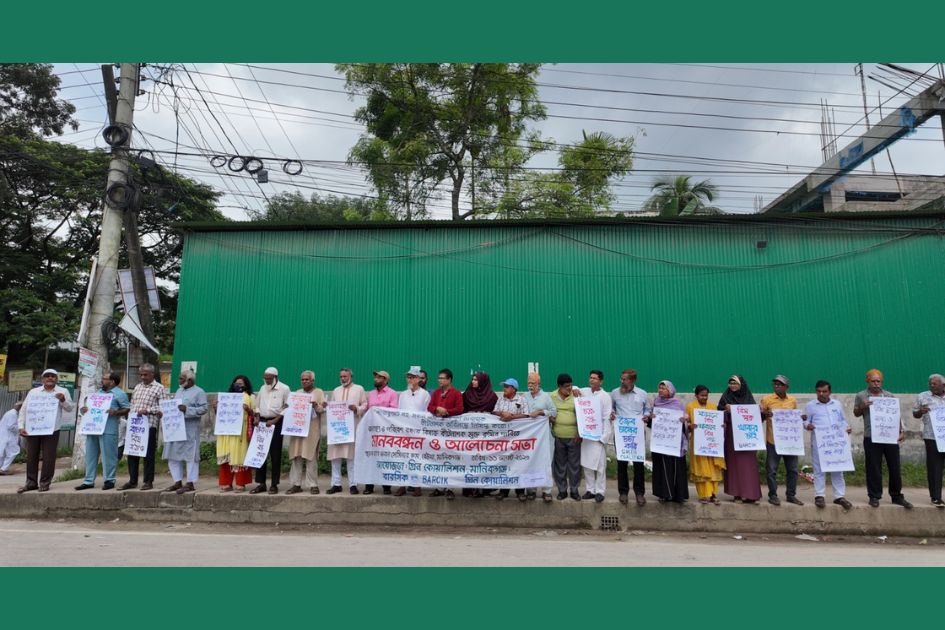



Speakers urged stronger market monitoring, farmer awareness and support for agroecology as they warned toxic pesticides threaten public health, biodiversity and safer farming in Manikganj.
Environmental activists, educators, community representatives and women entrepreneurs in Bangladesh’s central Manikganj district have called for an immediate ban on the production, sale and use of highly hazardous pesticides, including paraquat, citing concerns over public health and environmental safety.
The call was made at a human chain and discussion meeting held on August 11 on Beutha Road in Manikganj under the slogan, “Ban Paraquat and All Highly Hazardous Pesticides.”
The programme was organised to demand pesticide-free agriculture and raise public awareness about the harmful impacts of toxic agricultural chemicals.
Iqbal Hossain Kochi, joint convener of the Manikganj District Green Coalition, chaired the discussion. It was moderated by Bimal Ray, regional coordinator of the Bangladesh Resource Center for Indigenous Knowledge, or BARCIK.
Speakers at the event included Mo.sheim Biswas, general secretary of the district unit of JASAS; Professor Main Uddin Ahmed; Professor Moonward Hossain; Professor Anisur Rahman; retired head teacher Mirza Iskandar; Md. Harun-or-Rashid; Hossain Ali Master; Md. Masudur Rahman, head teacher of Halacha High School; Mahmud Haider Khokon, convener of the Green Coalition’s Nabogram Union Committee; Md. Mansur Ali, convener of the Betila-Mitara Union Parishad; fiction writer Kalpana Sultana; and women entrepreneurs Asma Akter and Mila Akter of the Agroecology Learning Center.
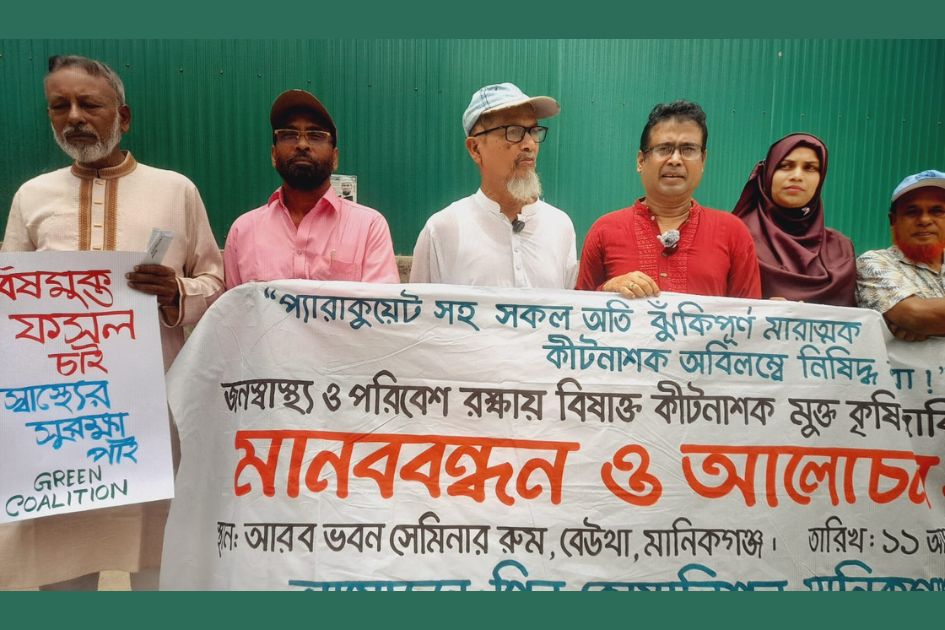
The speakers expressed concern that highly hazardous pesticides, including paraquat, are still reportedly being sold in Manikganj markets despite serious concerns about their potential impacts on human health and the environment.
“It is difficult to understand how highly hazardous pesticides such as paraquat are still being sold in Manikganj markets, apparently escaping regulatory oversight,” participants said.
The demonstrators called on authorities to immediately remove highly hazardous pesticides from local markets and take effective measures to stop their use.
They also demanded widespread awareness campaigns among farmers about the risks of toxic pesticides and greater promotion of safer and environmentally friendly agricultural alternatives.
Participants said protecting public health, biodiversity and the environment requires a transition toward safer and more sustainable agricultural practices. They highlighted agroecology and reduced dependence on hazardous chemical pesticides as important pathways toward healthier farming systems.
The event concluded with calls for stronger monitoring of pesticide markets, effective enforcement of existing regulations and greater institutional support for farmers adopting safer and ecological farming practices.




