




The Phnom Penh Communiqué puts equity, financing and safeguards for new technology at the centre of regional efforts to close gaps in access to health services.
Parliamentarians from 16 Asia-Pacific countries on today called for stronger action to advance universal health coverage, build climate-resilient health systems and govern artificial intelligence responsibly.
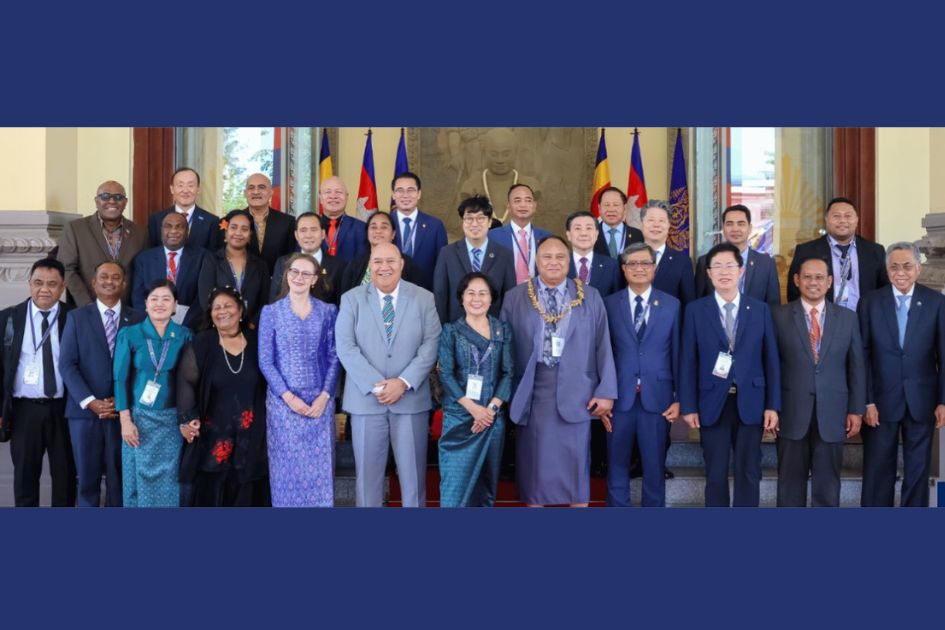
The appeal came at the close of the Ninth Meeting of the Asia-Pacific Parliamentarian Forum on Global Health, held in Phnom Penh from August 11 to 13. The National Assembly of Cambodia hosted the forum with support from Cambodia’s Ministry of Health and the World Health Organization, marking the first time the meeting was held in a Mekong country.
In the Phnom Penh Communiqué adopted at the end of the forum, lawmakers urged fellow parliamentarians across the region to strengthen sustainable financing for universal health coverage, or UHC, to expand access to health services for all, including the most vulnerable populations.
They also called for responsible governance of AI amid ethical concerns over the fast-evolving technology and for stronger climate-resilient health systems able to anticipate and respond to growing pressures, from rising sea levels in coastal areas to air pollution and other environmental degradation.
The forum was held under the theme “Universal Health Coverage in the era of Climate Change and Artificial Intelligence”.
Parliamentarians said at-risk and marginalized groups are the most severely affected by gaps in access to health services. They include people living in poverty, women and children, persons with disabilities, older people, migrants, refugees and those in rural, remote or island communities.
The Communiqué urged parliamentarians and policy-makers to advocate for laws and policies that support sustainable financing to protect people from financial hardship, with a focus on primary health care, prevention and equity.
“The Communiqué is a call to action. It sets out ambitious, concrete measures that deliver meaningful impact on the ground. We are all accountable for advancing universal health coverage and translating our commitments into tangible results. Cambodia is fully committed to advancing UHC, including the promotion of ‘healthy people, prosperous country’ campaign,” said Samdech Maha Rathsapheathika Thipadei Khuon Sudary, President of the National Assembly of the Kingdom of Cambodia.
His Excellency Professor Chheang Ra, Minister of Health of the Kingdom of Cambodia, said universal health coverage could not be achieved by the Ministry of Health alone.
“Universal health coverage cannot be achieved by the Ministry of Health alone. It requires support, particularly from parliamentarians, across political, legislative, financial, social protection, education, infrastructure, and environmental domains. While each country follows its own path, one factor is universally critical for success: strong governance and leadership. We all believe in this principle, and in our respective political roles, we remain committed to strengthening these key success factors to ensure that no one is left behind.”
Lawmakers also acknowledged that AI has already shown its ability to improve access to health services and support health delivery. But they said careful and ethical governance was needed to safeguard quality, safety, privacy and public trust.
The forum said parliamentarians had an important role in promoting legal and regulatory frameworks addressing liability, records ownership and data governance, while supporting innovation that protects ethical practice.
“Without strong governance, safeguards for privacy and data security, sustainable financing, and attention to those most at risk of exclusion, new technologies may widen existing gaps instead of closing them. This is why parliamentarians matter. We pass laws. We approve budgets. We scrutinize government action. We represent communities. We can ask whether health services are reaching rural, remote, ageing, poor, and marginalized populations. We can ask whether innovation is being guided by equity, evidence, and ethics,” said Hon. Man Hee Lee, President of the Asia-Pacific Parliamentarian Forum on Global Health.
Parliamentarians said the climate crisis is a direct threat to people’s health and to achieving universal health coverage, deepening the same gaps in access already faced by at-risk and marginalized communities.
They recognized the need for WHO Member States to ensure sufficient national appropriations and oversight. They also called on parliamentarians to raise awareness in their constituencies and mobilize local action to build climate-resilient and sustainable health systems.
“Universal health coverage, climate change and AI cannot be addressed in isolation. The same communities struggling to access health services today are often the ones most exposed to climate shocks, and most in need of the opportunities AI can offer if this technology is governed responsibly,” said Dr Saia Ma’u Piukala, WHO Regional Director for the Western Pacific.
“Having served previously in this Forum myself as a parliamentarian from Tonga, I recognize how the Phnom Penh Communiqué reflects the shared resolve of legislators across the Asia-Pacific region: the laws parliamentarians pass and the budgets they approve help ensure this progress reaches the people who need it most.”
As the meeting ended, delegates reflected on the issues they would take back to their parliaments and constituencies.
“I wish to share three points here worth carrying home from Phnom Penh: we need to invest in primary health care as the foundation of coverage; we need to remove the barriers that keep people from care, whether financial, geographic or social; and we need to build systems that are inclusive by design, protecting those most at risk of being left behind,” said Hon. Ouch Borith, First Vice-President of the Senate of the Kingdom of Cambodia.
The Asia-Pacific Parliamentarian Forum on Global Health is a platform for parliamentarians to exchange ideas, build political will, strengthen capacity and foster collaboration towards sustainable health action.
Target 3.8 of the Sustainable Development Goals calls on countries to achieve universal health coverage, including financial risk protection, access to quality essential health services and access to safe, effective, quality and affordable essential medicines and vaccines for all.
In the Western Pacific, the UHC service coverage index, or SDG 3.8.1, rose from 63 in 2000 to 81 in 2023, with figures including Indonesia. Roughly one in four people in the Western Pacific have experienced financial hardship under SDG 3.8.2.
Progress towards UHC in the Asia-Pacific region remains uneven, with hundreds of millions of people still lacking access to essential health services or facing financial hardship due to health-related expenses. The forum said strengthening the role of parliaments through legislation, financing and oversight is central to closing the gap and accelerating progress towards UHC across the region.
Participants in the Cambodia meeting included parliamentarians from Brunei Darussalam, the Kingdom of Cambodia, the Republic of Fiji, the Republic of Korea, Lao People’s Democratic Republic, Malaysia, the Federated States of Micronesia, Mongolia, the Republic of Naoero, Papua New Guinea, the Republic of the Philippines, Samoa, Tonga and the Republic of Vanuatu.




