




Affected villagers say saline water entering through pipes has damaged paddy fields, weakened flood protection and prompted petitions to local officials for immediate action.
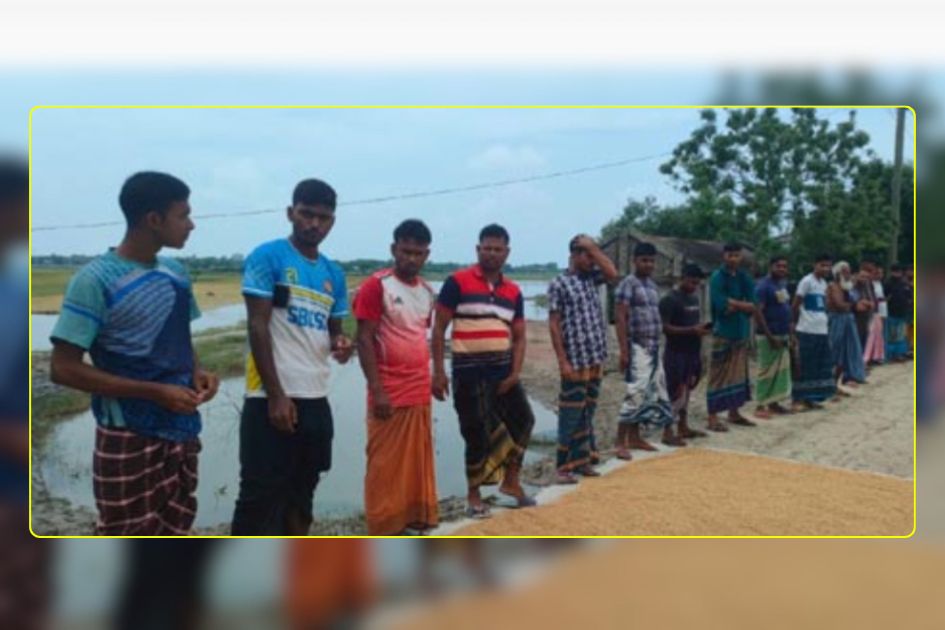
Residents in Bangladesh’s southwestern coastal district of Satkhira have formed a human chain to protest the cutting of a flood-control embankment on the Kopotakkho River to install pipes for drawing saline water into fish enclosures.
The protest was held on the afternoon of August 21 on the local river embankment north of Chakla ferry terminal in polder 7/9 of Pratapnagar union in Ashashuni upazila.
The human chain was organised by affected residents, who said the cutting of the embankment was damaging the flood-control structure and threatening agricultural land and homes in the area.
Among those who spoke at the protest were affected residents Md Abul Kalam Dhali, Nurman Sardar, Ashikul Alam, Amirul Gazi, Iman Ali Gazi and Abdur Rouf Sana, the elected member of ward No. 1 of Pratapnagar Union Parishad, the lowest tier of local government in rural Bangladesh.
Speakers alleged that Aslam Hossain Gazi, a former member of Subhadrakati village in Pratapnagar union, had long been operating fish enclosures by cutting the embankment and letting saline water in, without regard for government rules.
They said 250 to 300 bighas of surrounding paddy land were being damaged by saline water because there was no outlet or drainage system to remove the water.
They also said local people had objected when the embankment was cut and pipes were installed on August 5. At that time, they alleged, the accused persons misbehaved with the local union parishad member and later filed a false complaint against him.
Pratapnagar Union Parishad Chairman Abu Daud Dhali said he had informed higher authorities about the matter.
He said residents had submitted a mass petition to the upazila nirbahi officer, the Bangladesh Water Development Board authorities and the district administration, demanding an end to the cutting of the embankment and the entry of saline water into cultivated land.
Local residents fear the practice could damage the embankment, inundate the area and cause widespread harm to farmland and homes.




