




The new strategy links regulation, surveillance, battery traceability and cleanup, but experts say success depends on enforcement, safer markets, worker protection and verifiable declines in exposure.
Cabinet approves national strategy targeting a 95pc reduction in children’s blood lead levels by 2035. After 15 years of evidance generation, activism and mounting public pressure, Bangladesh has taken its first nationally coordinated step to confront one of the country’s most serious but least visible public health threats: lead poisoning.
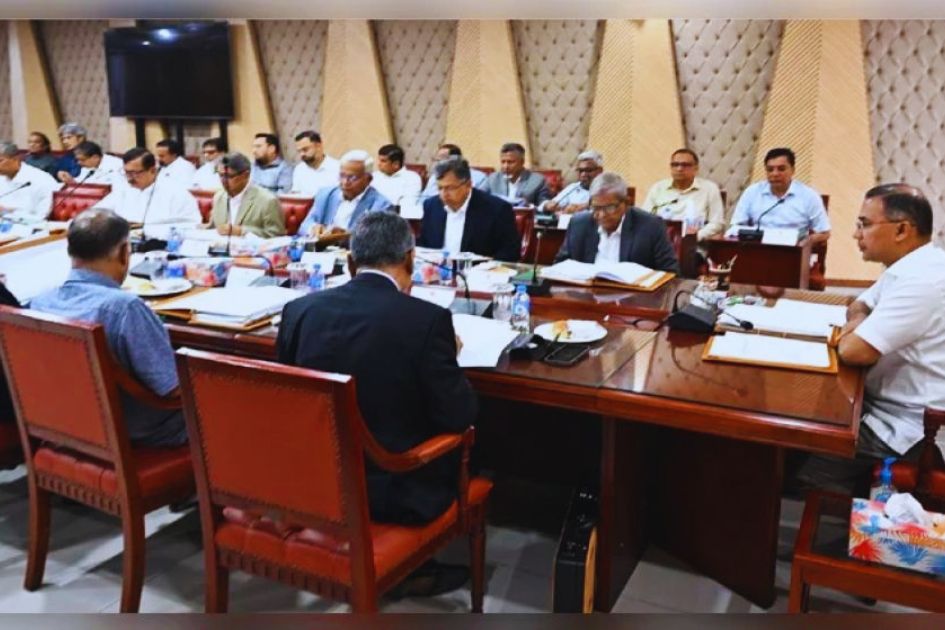
At a Cabinet meeting chaired by Prime Minister Tarique Rahman at the Secretariat on August 17, the government approved the draft National Strategy and Multi-Year Action Plan for a Lead-Free Bangladesh 2026–2035. The strategy sets a goal of cutting children’s blood lead levels by half by 2030 and by 95 percent by 2035.
The strategy creates a 10-year national framework for preventing lead exposure through regulation, monitoring, safer industrial practices and coordinated action across sectors. Environment, Forest and Climate Change Minister Abdul Awal Mintoo said the strategy marks a shift away from simply identifying lead hotspots toward actively preventing exposure through regulation, monitoring and safer industrial practices.
But approval is only the beginning. The harder test will be whether Bangladesh can enforce the strategy against decades of entrenched informal practices, reshape the economic incentives that make unsafe recycling profitable and build institutions capable of measuring whether exposure is actually falling.
A crisis hiding in plain sight
Lead poisoning is often invisible. Children exposed to the toxic metal can look healthy and attend school normally, even as the toxin quietly impairs brain development, attention and memory, with consequences that can last a lifetime.
Government data underline the scale of the problem. According to the Bangladesh Bureau of Statistics’ Multiple Indicator Cluster Survey 2025, more than 38 percent of children aged one to five have elevated blood lead levels, along with nearly 7.5 percent of pregnant women. In Dhaka Division, the proportion among young children rises to 65.2 percent.
UNICEF Bangladesh health specialist Dr Priscilla Wobil said lead poisoning is best understood as a human capital crisis rather than merely an environmental one, since it can affect children across all income levels while remaining largely undetected.
The economic toll is just as alarming. Research published in The Lancet Planetary Health by economists Bjorn Larsen and Ernesto Sánchez-Triana estimated that lead exposure is associated with roughly 138,000 cardiovascular deaths among Bangladeshi adults each year and with the loss of around 20 million IQ points annually among young children. At the population level, the researchers estimated an average loss of nearly seven IQ points per child within the first five years of life.
The burden extends beyond childhood health, affecting learning, employment and lifetime earnings and imposing a substantial economic cost on the country.
Bangladesh already knows targeted action can work
Bangladesh’s experience shows that individual sources of lead exposure can be tackled successfully when scientific evidence, regulation and public pressure come together.
The country capped lead in decorative paint in 2018 and later cracked down on turmeric adulterated with lead chromate, a practice once used to make the spice appear brighter yellow. Both campaigns demonstrated that coordinated action can produce measurable results.
But those successes also reveal the limitation of tackling sources one at a time. The challenge of the new strategy is to move from individual interventions to a system that prevents exposure before contamination reaches children and communities.
The battery economy’s toxic contradiction
The toughest test is likely to be unsafe lead-acid battery recycling, and the challenge is growing as Bangladesh’s fleet of electric three-wheelers and other battery-powered vehicles expands.
Used batteries create a large and growing waste stream, much of which still moves through informal networks where workers break apart batteries and recover lead with little protective equipment and few or no pollution controls.
The economics work against safety. Informal recyclers, who often operate without the environmental controls, worker protections and other compliance costs required of formal businesses, can offer higher prices for scrap batteries and compete aggressively for the same waste stream.

Georgetown University’s Dr Amrita Kundu said good regulations have limited impact without effective implementation. She argued that the underlying economic incentives need to shift so that responsible, formal businesses can compete with the informal sector.
That makes battery recycling more than an environmental enforcement problem. It is a market-design problem.
Experts say the fix lies in building a genuinely traceable battery economy through digital registration, minimum durability standards and producer accountability from manufacture to disposal. Stanford’s Dr Erica Plambeck has noted that consumers largely cannot tell a safely produced battery from a hazardous one, which strips the market of any incentive to reward businesses doing it right.
Traceability could begin to change that equation by making producers and importers more accountable for batteries after they leave the showroom and by giving regulators a clearer picture of where products are manufactured, sold, collected and recycled.
But reform cannot come at workers’ expense. Independent University, Bangladesh professor Dr Md Hafizur Rahman framed it as a matter of fairness as much as public health, arguing that protecting children and protecting workers must happen together.
A just transition in the battery economy therefore cannot simply shut down informal workers or push hazardous recycling further underground. It must create safer livelihood pathways while ensuring that responsible businesses are not commercially penalised for complying with environmental and labour standards.
Youth and communities push the issue forward
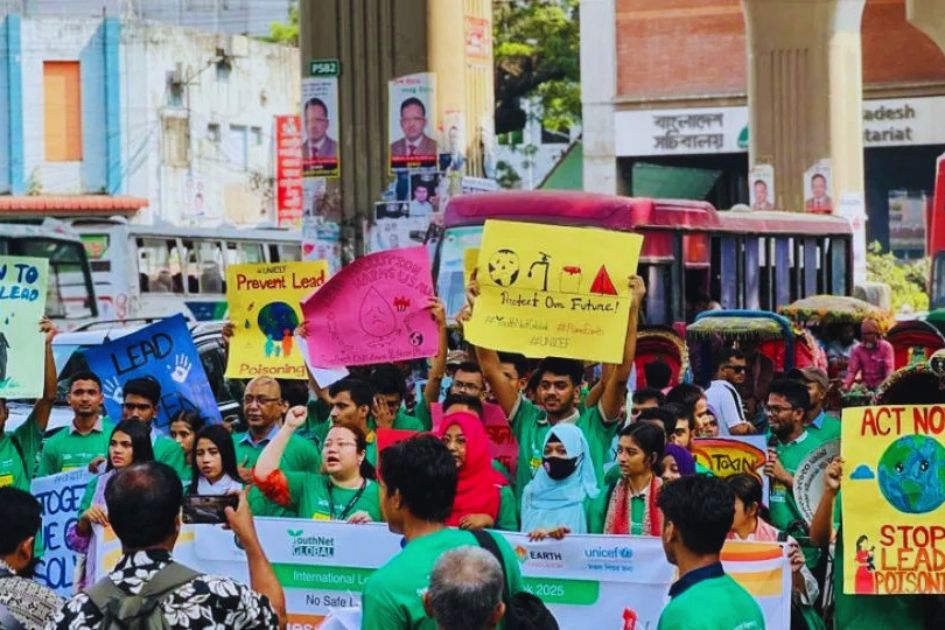
Perhaps the most striking shift in Bangladesh’s lead-poisoning movement has been generational. Young people, once treated largely as bystanders in environmental policy, are increasingly embedded in the response itself. They are documenting unsafe recycling sites, mobilising communities and taking evidence to local authorities.
Trained through programmes backed by Pure Earth Bangladesh, youth volunteers from groups including YouthNet Global fanned out during the 2025 International Lead Poisoning Prevention Week, reaching all 64 districts, engaging more than 17,000 people and training over 300 young leaders.
Pure Earth Bangladesh country director Mitali Das said youth-led work has helped bridge the gap between national policy debates and the lived reality of families near contaminated sites.
In Narayanganj, youth activist Fariha Alif helped organise a community campaign against a battery-recycling operation next to her sister’s school, where children reportedly struggled to breathe and coughed constantly. She said bringing students, parents, teachers and the wider community together proved young people can create real change.
YouthNet Global’s Executive Coordinator Sohanur Rahman argued that young people must be treated as architects of the response, not just its cheerleaders. He insisted they should be included in designing, implementing and monitoring solutions, not only invited to raise awareness after decisions are made.
“Young people are problem-solvers and advocates for change, not only victims of environmental crises,” he said.
That means youth participation should extend beyond awareness campaigns. Young people can help identify local sources of exposure, document unsafe practices, communicate risks, monitor implementation and press authorities to respond.
Proof that recovery is possible
Bangladesh’s experience also shows that contamination is not necessarily permanent.
At Labanchora in Khulna, once among the country’s most polluted informal lead-smelting sites, scientific assessment and targeted cleanup reduced soil contamination by more than 99 percent. The intervention demonstrated that heavily contaminated environments can be remediated and that reducing a major environmental source of exposure is possible.
But remediation without prevention simply resets the clock. A cleaned site can become contaminated again if unsafe activities continue or new sources emerge.
That is why the new strategy places prevention, surveillance and traceability alongside cleanup.
The government plans to use tools including a national contamination database, mandatory labelling and QR-code battery-traceability systems, according to Dr Fahmida Khanom, Acting Secretary of the Ministry of Environment, Forest and Climate Change. She pointed to district-level monitoring and other enforcement mechanisms as central to implementation.
Technology, however, is only as strong as the institutions behind it. Databases require accurate information. Traceability systems require compliance. Regulations require inspectors with the authority, resources and technical capacity to enforce them.
The question is therefore not simply whether Bangladesh can build a digital system, but whether its institutions can make that system work in the informal and fragmented markets where much of the country’s battery economy operates.
Global momentum, uncertain funding
Bangladesh’s move comes as the global campaign against lead poisoning gathers pace.
At the Second Annual Research Conference on Global Lead Exposure, hosted by the Center for Global Development Europe, researchers presented fresh evidence of lead contamination in consumer products across South Asia, the Middle East and Africa, while citing new initiatives from Bloomberg Philanthropies and the Asian Development Bank.
But that momentum is unfolding against a backdrop of shrinking foreign aid budgets in major donor countries including the United States and United Kingdom. That raises a question for Bangladesh’s 10-year strategy: can it build sufficient domestic institutions, financing and enforcement capacity to sustain the effort if international support becomes less predictable?
For Bangladesh, that question is particularly important because a 10-year strategy cannot depend on short-term projects. Blood-lead surveillance, laboratory capacity, inspections, remediation, worker transition and enforcement all require sustained investment.

A lesson beyond Bangladesh
Pure Earth President and CEO Drew McCartor frames Bangladesh’s journey as a template for other nations wrestling with rapid industrialisation and weak regulatory capacity. He argues that no single fix solves a crisis this size. It takes “stacking multiple solutions together”: research, political will, industry cooperation, public pressure and youth mobilisation.
That combination helped move Bangladesh from a largely invisible problem more than a decade ago to a national strategy with measurable targets for 2030 and 2035.
The broader lesson is not that one intervention can solve lead pollution. It is that scientific evidence becomes powerful when it is connected to regulation, enforcement, market reform, community pressure and political commitment.
Bangladesh now has the opportunity to turn those individual successes into a national prevention system.
The real test begins now
The strategy’s ambitious targets will only carry weight if they are backed by transparent and independently verifiable data: reliable laboratory testing, regular blood-lead surveillance, environmental monitoring and public reporting that allows citizens to see whether exposure is actually falling.
The coming decade will test whether Bangladesh can enforce regulations without driving hazardous recycling further underground, reform its battery economy without abandoning workers, create incentives for responsible businesses, strengthen inspection capacity and sustain political commitment through 2035.
It will also test whether young people and affected communities are treated as participants in implementation rather than as audiences for awareness campaigns.
Ultimately, success will not be measured by how many policies are adopted, databases created or campaigns launched.
It will be measured by whether children have less lead in their blood, whether contaminated communities remain clean and whether workers can earn a living without sacrificing their health.
Bangladesh now has a 10-year roadmap. The real test is whether that roadmap reaches the factories, battery markets, schools, neighbourhoods and homes where lead exposure actually happens.




