

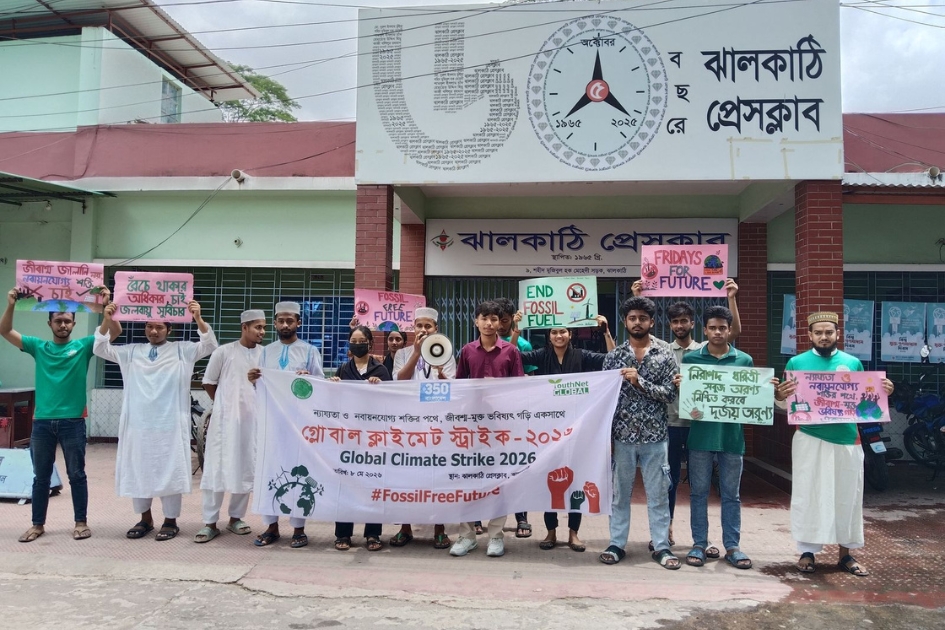



Young climate activists in Jhalakathi urged Bangladesh to adopt a 10,000MW solar roadmap by 2030, end fossil fuel expansion and prioritise renewable energy solutions for climate resilience and energy security.
Jhalakathi, a southern Bangladesh district, saw young climate activists on Thursday demand a time-bound roadmap for generating 10,000MW of solar power by 2030 and a rapid transition away from fossil fuel dependency.
The demand was raised during a youth-led climate strike and march held in front of the Jhalakathi Press Club, organised by YouthNet Global in response to the global call of Fridays For Future, with solidarity from 350.org.
The programme began at 10am when young activists gathered at the Press Club and marched through the town before concluding with a rally in front of the Deputy Commissioner’s office.
Participants raised slogans including “No False Solutions, We Want Renewable Energy” and “We Want a Fossil Fuel-Free Bangladesh,” calling for an immediate end to fossil fuel expansion and public financing for fossil fuel-based energy projects.
Speakers at the rally urged the government to prioritise rooftop solar expansion, smart grids, battery storage systems and other sustainable energy solutions to ensure long-term energy security and climate resilience.
Speaking at the programme, Sazid Mahamud said Bangladesh’s energy future must urgently shift towards renewable energy.
“Bangladesh cannot remain locked into fossil fuel dependency. We need a clear roadmap for at least 10,000MW of solar power and strong renewable energy commitments in the upcoming energy master plan. This is essential for both climate justice and economic resilience,” he said.
He added that continued reliance on fossil fuels would deepen economic pressure on citizens while increasing climate vulnerability.
The activists stressed the need for a just energy transition that ensures affordability, sustainability and protection for climate-affected communities.
They also highlighted the importance of stronger policy implementation, removal of barriers to solar energy adoption and improved coordination among relevant government agencies.
The rally ended with a call for a fossil fuel-free and renewable energy-driven future for Bangladesh.




