

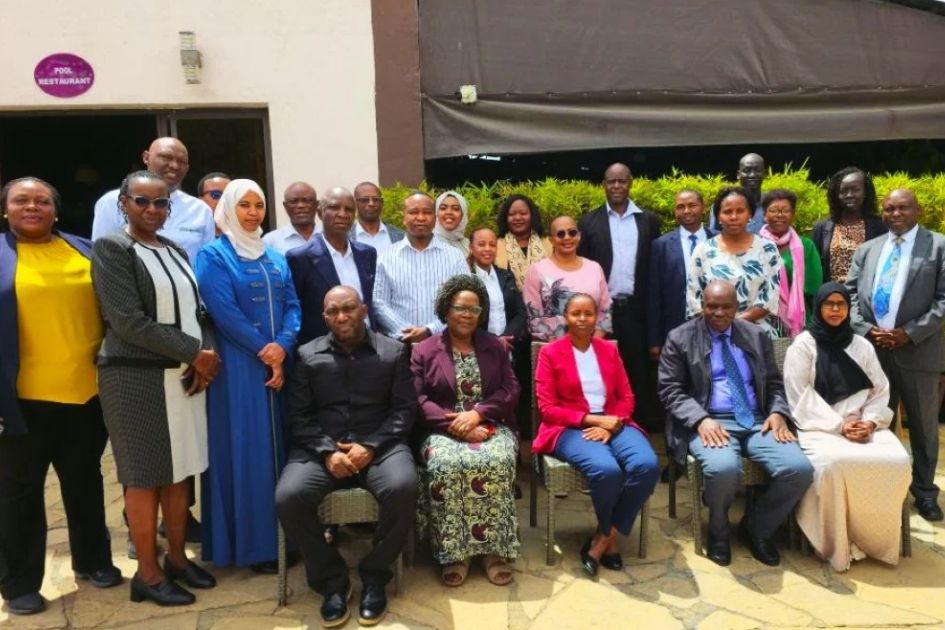



The regional bloc’s proposed common position urges developed countries to fulfil climate finance commitments, expand adaptation funding and ensure vulnerable nations can access support without accumulating more debt.
Eight East African countries are calling for more predictable, accessible and grant-based climate finance as they prepare to adopt a common regional position ahead of the United Nations Climate Change Conference, COP31, in November 2026.
The East African Community (EAC) Partner States of Kenya, Uganda, Tanzania, Burundi, Rwanda, the Democratic Republic of Congo, Somalia and South Sudan are seeking stronger international support as the region faces increasingly tumultuous and unpredictable weather conditions.
COP31 will be held in Antalya, Türkiye. The EAC’s common position calls on developed countries to meet their public climate finance obligations, triple adaptation finance by 2035 and improve direct access to climate funding.
It also calls for greater support for adaptation and loss and damage without increasing the debt burden of vulnerable countries.
The position was validated alongside the EAC Climate Change Strategy and Action Plan 2026-2036 at a regional validation meeting held in Machakos, Kenya, from September 29 to October 3, 2026.
The meeting brought together delegates from EAC Partner States, the EAC Secretariat, the Lake Victoria Basin Commission, technical experts and representatives receiving technical and logistical support from the German government through GIZ.
The EAC’s COP31 messages also call for full capitalisation of the Fund for Responding to Loss and Damage, direct access to its resources by national institutions and support for both economic and non-economic losses.
The regional bloc is also calling for full funding of the Santiago Network, which provides technical assistance to countries vulnerable to loss and damage, as well as stronger cooperation on disaster risk reduction and early warning systems.
The demand for greater climate finance reflects the scale of climate impacts facing the region. According to the World Meteorological Organization’s State of the Climate in Africa 2023 report, African countries are losing between 2 and 5 percent of their gross domestic product annually to climate extremes, with some diverting up to 9 percent of national budgets to disaster response at the expense of long-term development.
William Tayebwa, Uganda’s Assistant Commissioner for Production and Infrastructure at the Ministry of East African Community Affairs, who chaired the meeting, underscored the importance of solidarity and collective action in addressing climate change.
“When we speak with one voice, we stand on firmer ground in international negotiations and in mobilising the resources our region needs,” he said, adding that the strategy is essential for putting the EAC Climate Change Policy into practice and steering the region towards low-carbon, climate-resilient development.
The common position also seeks to strengthen the region’s ability to access climate finance. Partner States are calling for transparent, predictable and efficient funding procedures and greater support for national institutions to access climate funds directly.
Dismas Mwikila, EAC Environmental and Social Safeguards Specialist, speaking on behalf of the EAC Secretariat, emphasised the importance of a coherent regional position that responds to the shared climate priorities of Partner States.
The EAC is also calling for equitable participation in carbon markets under Article 6 of the Paris Agreement, supported by harmonised regional standards for measuring, reporting and verifying emission reductions and strong safeguards for nature-based projects.
Other priorities include ecosystem restoration, including peatlands and rangelands, the use of new technologies to strengthen early warning systems and greater participation of women and young people in climate action.
Susanne Wallenoeffer, Project Manager for the EAC4Nature Project, said the German government, through GIZ, would continue working with the EAC to strengthen capacities to address climate change impacts.
“The completion of this validation should not be seen as the end of the process, but as the beginning of the next phase, which is translating commitments into concrete actions and measurable results on the ground,” she said.
The validated COP31 Common Key Messages will be shared with the African Group of Negotiators and the Partner States’ UNFCCC focal persons to inform the wider African position. The EAC Secretariat will coordinate regional side events and bilateral engagements during COP31.
The validated Climate Change Strategy and Action Plan is set to be submitted to the 12th Meeting of the Sectoral Council on Environment and Natural Resources for consideration and adoption.




