

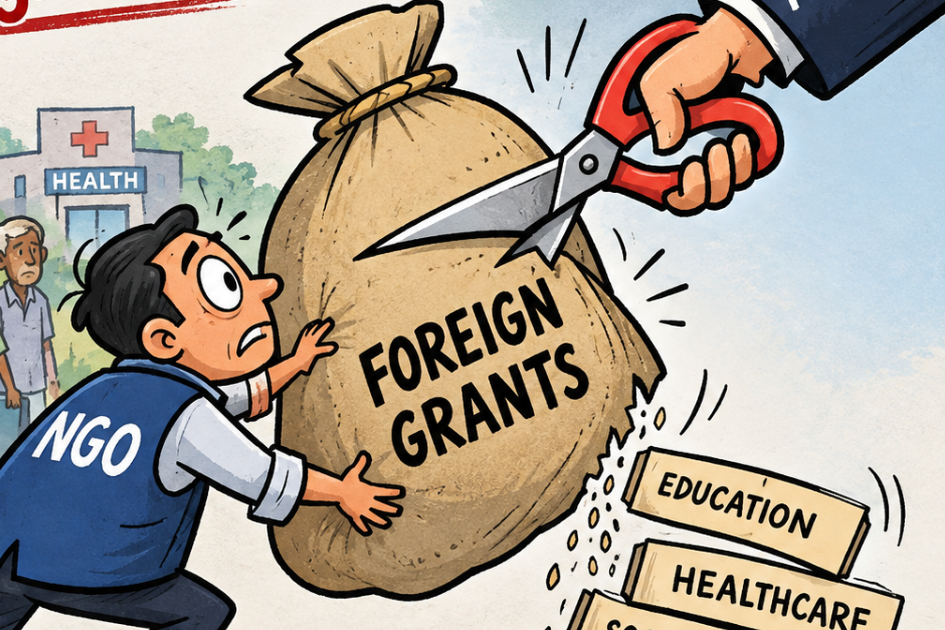



A BIDS study found foreign-grant-dependent NGOs facing steep budget cuts, while declining project approvals and corporate social responsibility spending add pressure on smaller organisations.
More than 2,000 small and medium-sized non-governmental organisations in Bangladesh are at risk as foreign aid shrinks, threatening the delivery of education, healthcare and other social services, according to a Bangladesh Institute of Development Studies study.
The study found that NGOs dependent entirely on foreign grants had suffered an average 40 per cent cut in their budgets, with those without microcredit programmes being particularly vulnerable.
BIDS Research Director Kazi Iqbal presented the findings at a seminar titled ‘Beyond Foreign Dependence: The Future of NGO Financing in Bangladesh’ at the BIDS conference room in Dhaka on Tuesday.
Finance and Planning Minister Amir Khosru Mahmud Chowdhury, who attended the seminar as chief guest, said the government lacked adequate outreach and called for a policy framework for partnerships with NGOs and the private sector.
He said activities should be assigned to providers capable of delivering them effectively at the lowest cost, with financing arrangements incorporated into the partnership model.
The minister said collaboration had already begun through the creative economy initiative, citing the technical and design support required to help shital pati producers reach international markets.
The study found that about two-thirds of surveyed NGOs relying solely on foreign grants reported severe funding impacts, compared with about 12 per cent of NGOs running microcredit programmes.
It warned that funding shortages could force NGOs to cut social services and focus more on lending, weakening their capacity to serve poor communities.
Foreign grants released through the NGO Affairs Bureau stood at Tk 10,143 crore in the 2025-26 fiscal year. However, the figure reflected earlier approvals and did not capture the full impact of recent aid cuts, according to the study.
The number of new project approvals fell 19.75 per cent to 1,654 in 2025-26 from 2,061 in 2021-22.
Banks’ corporate social responsibility spending also declined by 69 per cent between 2022 and 2025 to Tk 345 crore.
The study recommended maintaining an open register of eligible NGOs and increasing their access to government service contracts.
It also recommended greater funding opportunities for smaller NGOs through the Bangladesh NGO Foundation and Palli Karma-Sahayak Foundation.




