

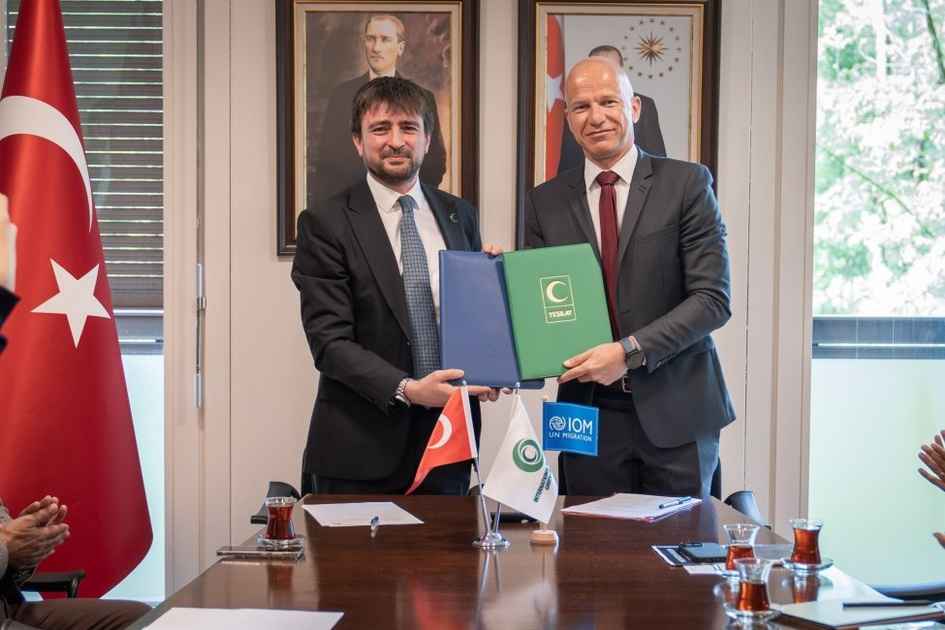



IOM and IFGC signed a Geneva agreement to strengthen mental health, psychosocial support and addiction prevention services for migrants and displaced communities affected by crises, conflict, displacement and instability worldwide.
The International Organization for Migration (IOM) and the International Federation of the Green Crescent (IFGC) have signed a Memorandum of Understanding in Geneva to strengthen cooperation on mental health, psychosocial support and addiction prevention for migrants and displaced communities.
The agreement aims to expand efforts to prevent and treat substance use disorders and other addictive behaviours among people affected by crises, displacement and instability.
“As humanitarian needs continue to grow worldwide, this partnership will help strengthen the prevention and treatment of substance use disorders and other addictive behaviours among migrants affected by crisis, displacement, and instability,” said Vincent Houver, Director of IOM’s Department of Mobility Pathways and Inclusion.
“It also reinforces our shared commitment to reducing stigma and discrimination, ensuring that vulnerable populations receive dignified support,” he added.
Under the agreement, IOM and IFGC will collaborate through joint training initiatives, research and knowledge-sharing as well as coordinated country-level activities. The partnership will also explore joint programmes focused on addiction prevention and mental health support for migrant communities.
Secretary General of IFGC Mehmet Güllüoğlu said migration extends far beyond physical relocation and often involves serious psychological, social and cultural challenges.
“It is especially important to support the mental health of individuals affected by crises, wars, and forced displacement,” he said.
“As the IFGC, we value strengthening our knowledge and experience in the field of addiction prevention through international cooperation. We believe that through this agreement with IOM, we will contribute to protective and preventive efforts that support the psychosocial well-being of migrant communities.”
The agreement reflects IOM’s broader efforts to support the well-being of migrants and crisis-affected populations through partnerships with global and regional organisations.
IOM, the leading intergovernmental organisation within the United Nations system working on humane and orderly migration since 1951, established its Mental Health, Psychosocial Support and Intercultural Communication Unit in 1999.
Since then, the agency has integrated mental health and psychosocial support into humanitarian response, recovery efforts, public health programmes and migrant assistance services worldwide.
In 2025 alone, IOM provided mental health and psychosocial support to more than 1.4 million people across 99 countries.
Founded in Istanbul in 2016, IFGC brings together independent civil society organisations from 70 countries to promote healthier and more resilient communities through addiction prevention.
The federation supports its members through advocacy, training and knowledge-sharing while addressing substance and behavioural addictions including tobacco, alcohol, drugs, gambling and excessive technology use.
Source: IOM




