




Bangladesh and India accelerate negotiations to renew the Ganges Water Sharing Treaty as climate risks, dry-season flows and updated hydrological data reshape debates over equitable transboundary river governance.
Bangladesh and India have intensified technical and diplomatic engagements over the renewal of the 1996 Ganges Water Sharing Treaty, which is set to expire in December 2026, as both sides debate hydrological data, allocation methods and long-term climate resilience in managing one of South Asia’s most critical transboundary rivers.
Officials in Dhaka said a ministerial-level meeting of the Joint Rivers Commission (JRC) is likely to be held between August and September while expert-level consultations continue to determine whether the existing framework will be renewed or significantly revised.
The treaty, signed in 1996 between then Bangladesh Prime Minister Sheikh Hasina and Indian Prime Minister H. D. Deve Gowda, governs dry-season water sharing at the Farakka point on the Ganges River in India’s West Bengal state.
Bangladesh pushes for predictable and enforceable flow guarantees
Bangladesh Water Resources Minister Shahid Uddin Chowdhury Annie expressed optimism about reaching a renewed agreement through ongoing bilateral processes.
He said, “August or September will be our target. We are very hopeful that a new agreement will be reached, which will continue the continuity of the last 30 years.”
Bangladesh is advocating for a more predictable and climate-resilient framework that includes legally binding guarantees to ensure minimum dry-season flows.
Water experts in Dhaka have proposed increasing the guaranteed minimum flow for Bangladesh from 35,000 cusecs to 40,000 cusecs, along with a stronger compliance mechanism to ensure implementation during low-flow periods.
India calls for updated hydrological data framework
India has indicated that any revised arrangement should be based on updated hydrological data reflecting current river conditions rather than relying on historical baselines.
Former Indian High Commissioner to Bangladesh Pankaj Saran said, “Now water sharing requires updated data. How much flow exists in the river must be the basis. If we accept that statistics have changed, we can adjust to the new situation.”
He added that the existing allocation formula, based on river flow data from 1949 to 1988, may no longer fully represent present hydrological realities.
Experts divided over basin-wide versus point-based measurement
Bangladeshi water specialists have raised concerns over proposals to rely primarily on flow measurements at the Farakka point, arguing that such an approach fails to reflect broader basin hydrology and upstream water interventions.
Water expert Ainun Nishat cautioned against narrowing the data scope, saying, “The Ganges does not begin at Farakka. Upstream withdrawals have significantly altered flows, so averaging only local data cannot ensure fairness.”
He stressed that any future agreement must account for basin-wide hydrology, upstream usage and ecological considerations to ensure equitable sharing.
Civil society calls for regional river governance mechanism
In Rajshahi, speakers at a public gathering marking the 50th anniversary of the historic Farakka Long March called for the establishment of a broader regional river governance framework involving Bangladesh, India, Nepal, Bhutan and China, with possible facilitation by the United Nations and the World Bank.
Sohanur Rahman, executive coordinator of YouthNet Global, said the issue has moved beyond bilateral water sharing and must be addressed as a climate justice challenge.
He said, “Ganges water sharing is no longer only a bilateral negotiation issue. It is a climate justice and survival question for millions of people in the delta. Any future agreement must be rooted in equity, predictability and climate resilience, not just historical averages.”
He added that failure to ensure a fair and forward-looking agreement would deepen risks for already climate-vulnerable riverine communities across the basin.
Farakka remains a long-standing point of tension
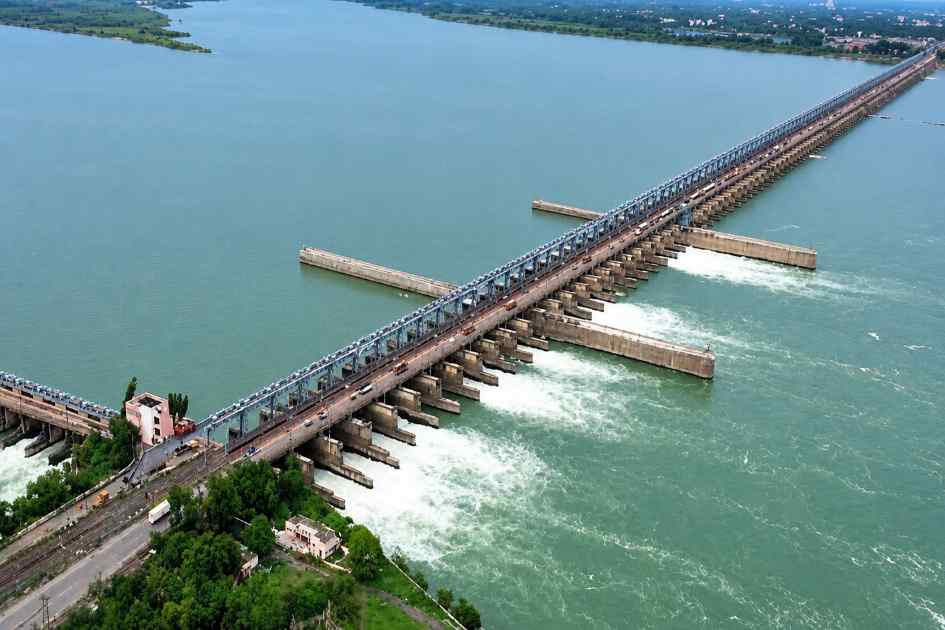
The Farakka Barrage, located about 18 kilometres upstream of the Bangladesh border in India’s West Bengal state, has long been a sensitive issue in Bangladesh-India relations.
Built in the 1970s, the barrage was designed to divert water to the Hooghly River system to support navigation and the Kolkata Port. Bangladesh, however, maintains that reduced downstream flows have contributed to ecological degradation, agricultural stress and livelihood losses in the Padma basin.
The issue has shaped bilateral relations for decades, including the 1976 Farakka Long March led by Maulana Abdul Hamid Khan Bhashani, which became a landmark protest demanding equitable water sharing.
Outlook: negotiations continue under rising deadline pressure
Despite ongoing technical engagement through the Joint Rivers Commission, several key issues remain unresolved, including the legal enforceability of future guarantees, the methodology for calculating river flows and the institutional structure of a renewed agreement.
With the treaty’s expiry approaching in December 2026, both Dhaka and New Delhi are expected to accelerate negotiations in the coming months as pressure mounts to avoid a governance gap in one of South Asia’s most important shared river systems.




