

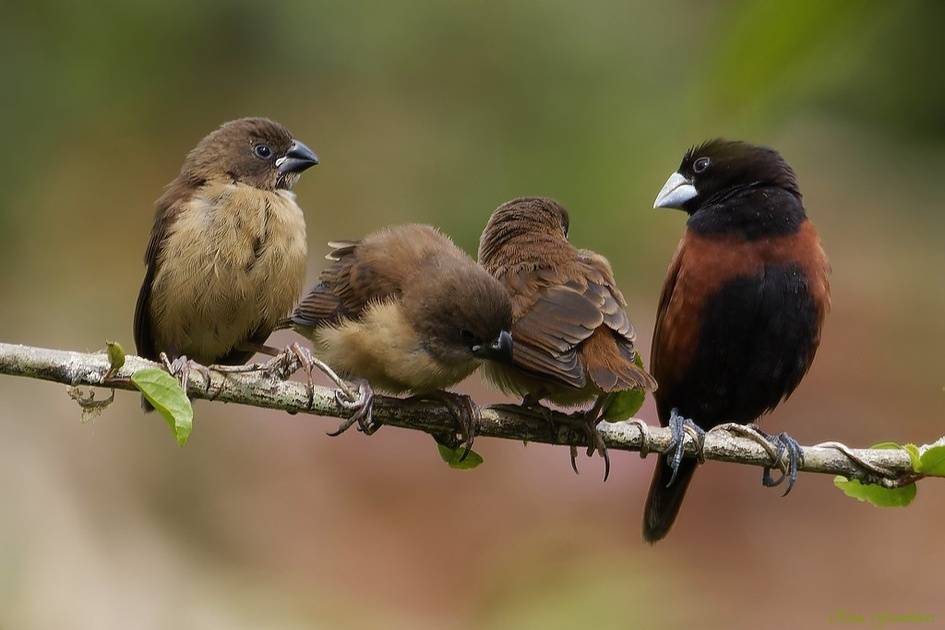

The Chestnut Munia continues to brighten Bangladesh’s wetlands and grasslands, though habitat destruction, pesticide use and shrinking nesting grounds are raising concerns over the bird’s long-term survival.
Tiny, colourful and energetic, the Chestnut Munia remains one of the most familiar birds across Bangladesh’s rural landscape, thriving in grasslands, wetlands and paddy fields while quietly supporting the country’s ecosystem.
Also known as the Black-headed Munia, the Chestnut Munia, scientifically named Lonchura atricapilla, is a small passerine bird belonging to the finch family. The species is widely seen across Bangladesh, from the haor wetlands of Sylhet to the fringes of the Sundarbans, where open fields and tall grasses provide ideal conditions for nesting and feeding.
The bird mainly feeds on seeds, particularly grass seeds and paddy grains, though it also consumes small insects. This feeding habit makes the species beneficial to farmers by helping reduce pests and unwanted weeds in agricultural fields.
Chestnut Munias are also recognised for their elaborate nesting behaviour. Male and female birds work together to build spherical nests using grass blades, usually placing them close to water bodies for added protection. Their strong parental care and cooperative breeding habits have made them a notable species among bird enthusiasts.
Despite their adaptability, the birds face increasing threats from habitat loss caused by agricultural expansion, wetland drainage and excessive pesticide use. Conservationists warn that these activities are reducing both food availability and suitable nesting sites.
The Chestnut Munia is currently listed as “Least Concern” by the International Union for Conservation of Nature, though experts say local populations could still decline if habitat destruction continues unchecked.
Environmentalists say protecting grasslands and wetlands, along with promoting sustainable farming practices, will be crucial to ensuring the species survives in Bangladesh’s countryside.
Often seen fluttering through fields in small flocks, the Chestnut Munia has become a symbol of the delicate balance between agriculture and nature, highlighting the importance of preserving biodiversity in the country’s rural ecosystems.




