

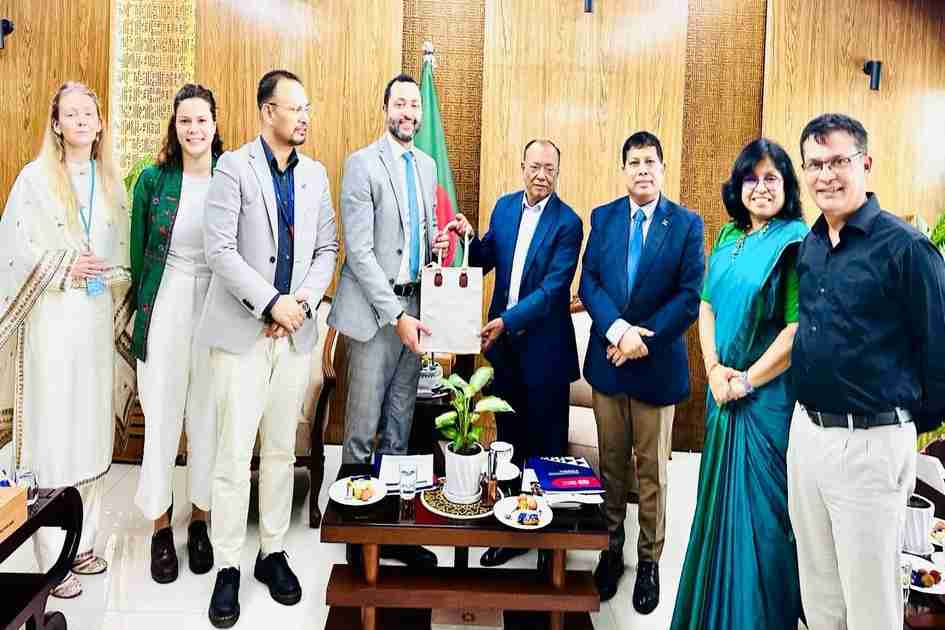

Bangladesh and the ILO discussed expanding cooperation on just transition, renewable energy, plastic waste management and sustainable industrial development to support inclusive economic growth and climate resilience efforts.
Bangladesh and the International Labour Organization (ILO) on Tuesday discussed expanding cooperation on just transition policies, plastic pollution management, renewable energy, e-waste, and sustainable industrial development as the country accelerates its climate and green growth agenda.
The discussions took place at the Ministry of Environment, Forest and Climate Change in Dhaka between Environment, Forest and Climate Change Minister Abdul Awal Mintoo and ILO Country Director in Bangladesh Max Tunon.
Bangladesh, widely recognized as one of the world’s most climate-vulnerable countries, continues to pursue a development pathway that seeks to balance economic growth with environmental protection, labour rights, and climate resilience through inclusive strategies.
Focus on Just Transition and Inclusive Climate Action
A key focus of the meeting was strengthening Just Transition initiatives involving the Ministry of Environment, Forest and Climate Change and other relevant ministries. Both sides emphasized ensuring that the shift toward a low-carbon economy remains fair, inclusive, and protective of workers and vulnerable communities.
Bangladesh is among the first countries in the region to have embedded a dedicated Just Transition chapter in its NDC 3.0. The discussions reaffirmed this mandate and the importance of bringing these commitments to action through a strong Implementation plan.
The discussions also highlighted the importance of integrating Just Transition criteria into the Bangladesh Climate Development Partnership (BCDP), ensuring climate policies are aligned with social protection, skills development, and decent work principles. Officials further stressed the need to actively involve workers, employers, and industry stakeholders in climate decision-making processes.
Broader Cooperation on Environment and Green Growth
The meeting covered a wide range of cooperation areas including plastic pollution control, climate finance, carbon markets, circular economy practices, and renewable energy expansion.
Minister Abdul Awal Mintoo noted that the government is implementing Extended Producer Responsibility (EPR) mechanisms to strengthen sustainable waste management and improve accountability in plastic waste handling. He also highlighted the need to strengthen CETP operations in the Savar Tannery Estate to protect workers, reduce industrial pollution, and improve environmental compliance.
On energy transition, the minister highlighted ongoing efforts to expand large-scale solar energy installations and promote electric mobility as part of Bangladesh’s low-carbon transport strategy.
Growing Attention to E-Waste Management
The meeting also addressed the emerging challenge of e-waste and its links to lead poisoning. The minister indicated that the government will take necessary steps to ensure safe management and recycling of e-waste and protect the health of workers and communities. Both sides recognized e-waste as a growing concern requiring structured policy intervention and greater public and institutional awareness, particularly on the health impacts of lead exposure.
ILO Calls for Stronger Coordination and Standards
Max Tunon emphasized the importance of maintaining international standards in recycling systems, waste management, and environmental governance. He highlighted the upcoming Residential Workshop on Trade, Investment and Decent Work in Gazipur on 7-8 June, which will support policy dialogue and capacity building on sustainable and inclusive supply chains, and extended a formal invitation to the Ministry to participate.
He also introduced Sobuj Shomonnoy (“Green Harmony”), a multi-stakeholder just transition alliance for the RMG and construction sectors co-founded by ILO and Laudes Foundation, ahead of its formal launch in September 2026.
Multi-Stakeholder Participation Highlighted
Senior officials from the Ministry of Environment, Forest and Climate Change, including additional secretaries from the climate change and environment wings, and senior representatives from the ILO Country Office in Bangladesh, attended the meeting.
The meeting reflects Bangladesh’s continued commitment to aligning environmental sustainability with inclusive economic development as it advances toward a resilient and green industrial future.




