

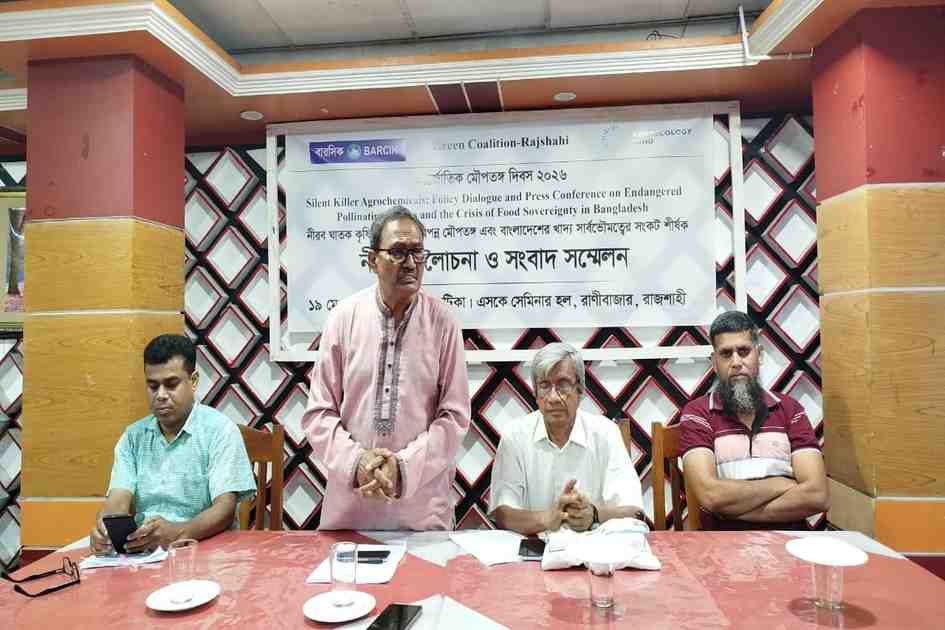



Experts, researchers and beekeepers in Bangladesh urged urgent action against toxic pesticides, warning pollinator decline is threatening biodiversity, food security and sustainable agriculture amid worsening environmental and climate-related pressures.
Environmental experts, researchers and beekeepers in Bangladesh on Tuesday called for urgent policy measures to curb the excessive use of harmful agrochemicals, warning that toxic pesticides are driving the decline of pollinating insects, destroying biodiversity and deepening environmental risks.
The concerns were raised at a meeting titled “Silent Killer Agrochemicals: Policy Dialogue and Press Conference on Endangered Pollinating Insects and the Crisis of Food Sovereignty in Bangladesh” held at the SK Food Seminar Hall in Rajshahi to mark World Bee Day 2026.
The event was jointly organised by development research organisation BARCIK and Green Coalition, with Green Coalition President Mahbub Siddique chairing the programme.
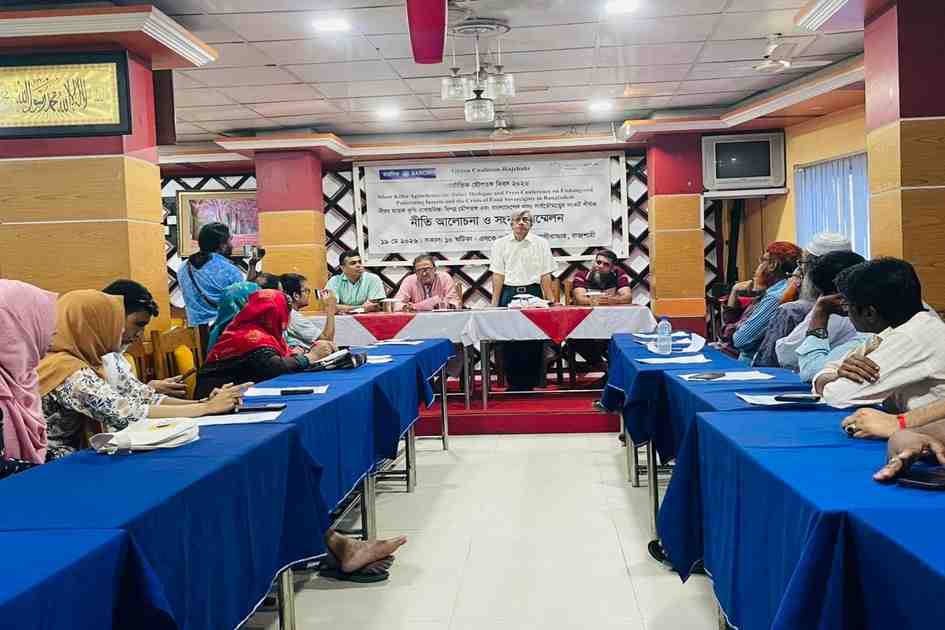
Distinguished environmental and zoological scientists, agricultural researchers, human rights activists, beekeepers and grassroots farmer representatives attended the discussion and presented a series of demands and recommendations.
Speakers said formulating a time-appropriate national policy and ensuring its implementation could play a crucial role in the judicious use of harmful agrochemicals and help protect pollinating insects essential for food production and ecological balance.
They warned that the growing use of toxic pesticides has been contributing to the death of pollinating insects, destruction of biodiversity and wider environmental disaster, stressing that controlling the frequent application of pesticides is now unavoidable.
Addressing the meeting as focal speaker, Prof. Bidhan Chandra Das, a retired professor from the Department of Zoology at Rajshahi University, said around 20,000 species of pollinating insects have been documented worldwide.
He called for extensive research on the issue and demanded the formulation of a national policy for pollinator protection, conservation of the natural environment and restrictions on the excessive use of harmful pesticides.
“The use of high-risk and banned pesticides must be stopped,” Bidhan Das said, adding that Bangladesh should formulate a National Pollinator Protection Policy.
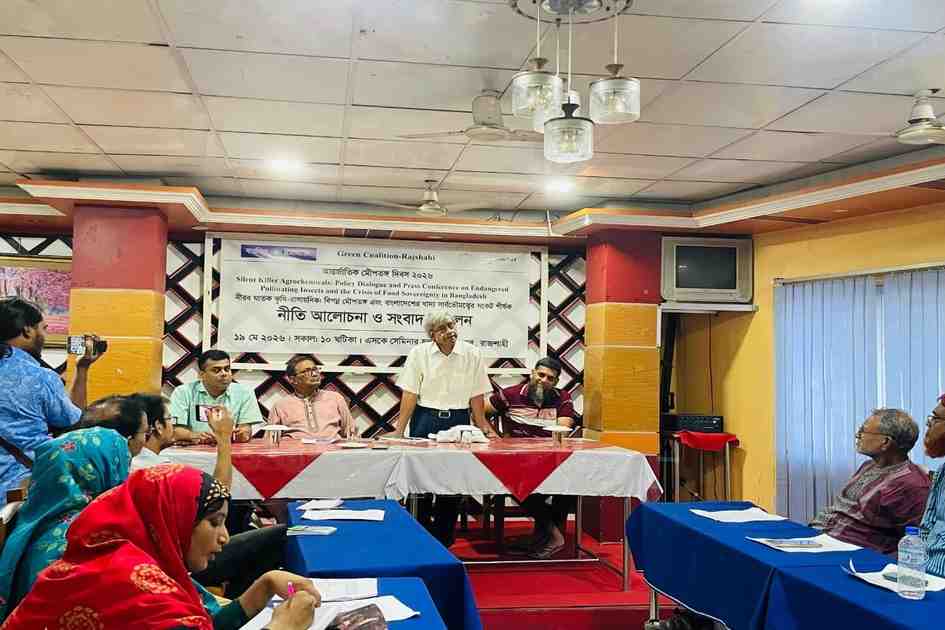
He also called for the expansion of agroecology and environmentally friendly farming practices, alongside a special environmental protection programme for the drought-prone Barind region.
BARCIK Regional Coordinator Shahidul Islam presented a policy paper at the event, saying the expansion of agroecological practices could help protect against multi-species crises and the extinction of pollinators.
He said such initiatives could also strengthen regional food sovereignty and reiterated the demand for a national policy aimed at protecting pollinating insects.
Beekeeper Shafiqul Islam Babu said extreme heatwaves have been increasing in recent years, with temperatures in the Barind region fluctuating sharply and creating serious challenges for honeybee populations.
Participants in the discussion noted that pulses, oilseeds such as mustard, vegetables and most fruits consumed in daily diets depend directly on natural pollination, making the protection of pollinators critical for food security and sustainable agriculture.




