

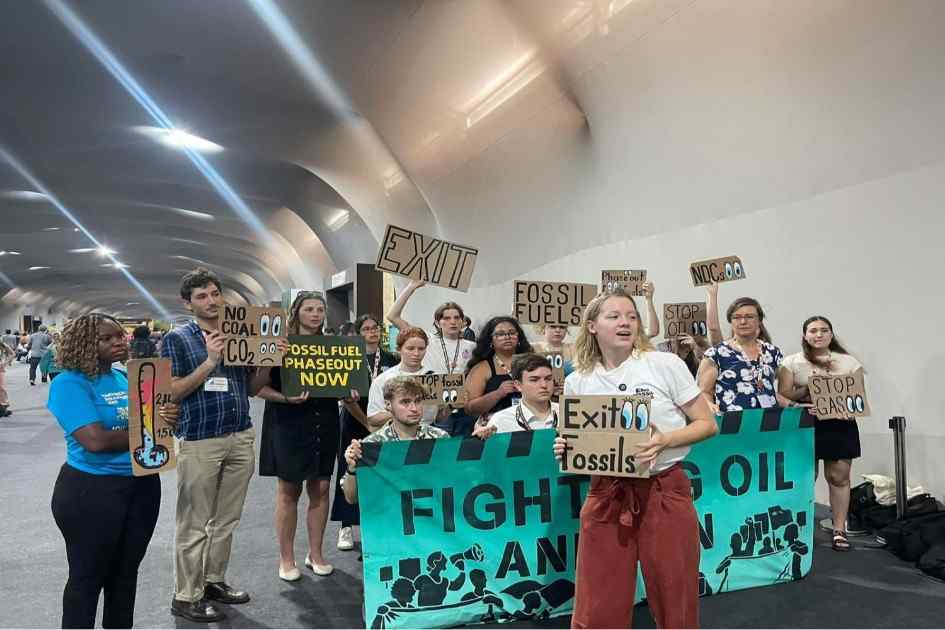



Tensions spiked at COP30 as developed nations pushed fossil fuel phaseout, while developing countries warned their growth needs were being overlooked. Youth and civil society demanded climate justice. Talks stalled and shifted to informal consultations, exposing deep divides over fairness, finance and the 1.5°C goal.
Tempers flared on the third day of mid-session negotiations in Belém, as the UN climate talks’ “Just Transition Work Programme” became the latest battleground between developed and developing nations.
What was expected to be a technical exchange on designing a fair, people-centred transition quickly erupted into a clash over priorities, with wealthy countries demanding rapid decarbonisation, and developing nations warning that their development pathways were being sidelined.
Delegates from the European Union, the United Kingdom, Australia, Canada and New Zealand insisted that the world has no choice but to phase out fossil fuels. They argued that expanding renewables, improving energy access and ending fossil fuel dependence are essential to a stable climate future. “The path forward must focus on renewable power, clean cooking solutions and the socioeconomic benefits of a fossil-free world,” an EU negotiator said.
But the push met fierce resistance from African states, the Like-Minded Developing Countries (LMDC) group and Turkey, who said the narrative ignores economic realities. “For us, fossil fuels remain central to growth and poverty reduction,” an African delegate told negotiators, urging the talks to prioritise “clean cooking energy” rather than a blanket phaseout. Arab countries added that fossil fuels still underpin energy security for millions of people.
Youth groups and civil society, led by YOUNGO and Latin American networks, invoked the International Court of Justice’s recent advisory opinion affirming that states have a legal duty to take stronger climate action. The EU, New Zealand, the Marshall Islands and Indigenous groups pressed for winding down fossil fuel subsidies. Developing nations countered that calling for subsidy reform without addressing financing needs would be “unjust and exclusionary.”
The 1.5°C goal once again triggered tensions. Developed nations and small island states demanded that emission-cutting targets be explicitly tied to the temperature limit. Several Latin American countries insisted that any such linkage must also come with firm commitments on climate finance and adherence to the Paris Agreement’s original wording.
Bangladeshi youth climate delegate Sohanur Rahman, Executive Coordinator of YouthNet Global, said the debate must go beyond energy. “Just Transition is not only about energy; it’s about justice, social, economic and intergenerational. It must put people, not profit, at the centre of climate solutions,” he told The Climate Watch.
Talks were eventually suspended and will resume in informal consultations. “Belém’s heat is not just tropical, it’s political,” one observer remarked as delegates walked out of the session.
The showdown underscored a hard truth: the struggle over Just Transition is no longer solely about science or moral responsibility. It is now a contest over power, equity and the right to development, a divide negotiators will confront again when discussions resume on Thursday.




