

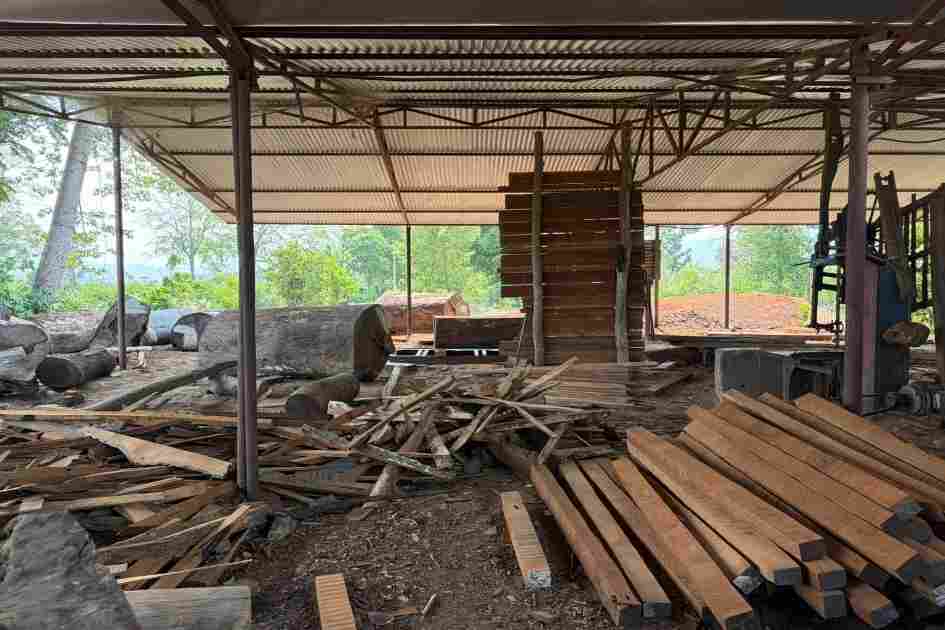



A community-run sawmill in Nepal’s Dang district struggled for years against bureaucratic delays, alleged harassment and shifting regulations, highlighting how forest-dependent communities face obstacles despite contributing significantly to forest conservation.
Although Nepal often talks about promoting the use of domestic timber and achieving prosperity through forests, the reality is very different. Community groups and local entrepreneurs involved in forest-based enterprises say they are discouraged by government delays, unnecessary procedures and harassment.
According to a recent report by the Government of Nepal, around 46% of the country’s total land area is covered by forests. After years of deforestation, the government reformed its forest policies and handed over many forests to local communities for conservation. As a result, Nepal’s community forestry model became internationally recognised for its success in forest conservation.
However, many of the same communities that contributed to forest protection at the local level say they have become victims of harassment and bureaucratic obstacles from government agencies.
Wards 1, 2 and 3 of Gadhawa Rural Municipality in Dang district are located at the foothills of the Chure hills. Around 6,000 local users depend on 12 community forests in the area for firewood and fodder.
The villages, including Kulapani and Badhahara, are located around five kilometres west of Kalakate along the East-West Mahendra Highway. Since the settlements are close to the forest, local residents also take responsibility for controlling forest fires.
Navaraj Sharma, chairperson of Kulapani Community Forest, said local people had risked their lives many times while controlling forest fires. According to him, community awareness also helped prevent illegal logging and timber smuggling in the area.
However, instead of receiving appreciation from the government for protecting public forests, local people said they faced years of suffering, delays and harassment from government agencies.
In 2011, community members planned to establish a local sawmill because villagers had to travel nearly 10 kilometres to saw timber and prepare firewood. Under the leadership of 12 community forests from present-day wards 1, 2 and 3 of Gadhawa Rural Municipality, the “Gobadiya Timber and Furniture Industry” was established in Badhahara in 2012.
But the Cottage and Small Industries Office refused to register the company under that name. Following the office’s suggestion, the community revised the name to “Gobadiya Timber Sawmill and Furniture Industry” and applied again through the Company Registrar’s Office.
According to Navaraj Sharma, chairperson of the industry’s management committee, officials advised them that registration would become easier if the word “sawmill” was included in the company name.
After that, the registration process officially began. The Cottage and Small Industries Office sought recommendations from the Forest Office. However, the then chief of the Dang Division Forest Office, Jivan Pangeni, delayed the recommendation by raising issues such as the need for an Initial Environmental Examination (IEE) and other procedural requirements. The community had to wait until Pangeni was transferred to another office before receiving the recommendation.
“We were not doing anything illegal, but we had to suffer severe mental stress,” said Tirtharaj Gyawali, a member of the management committee. “Government employees kept creating obstacles by citing changing laws and regulations.”
“No one openly said our work was wrong. Everyone verbally appreciated the project, but they did not process the work. Forest officials indirectly asked for money,” he added. “We wanted to work legally. Even after completing all procedures, our application was intentionally delayed.”
At one point, frustrated by the delays, representatives of the community forests travelled to the provincial ministry in Bhalubang and submitted all their documents directly, requesting support to operate the industry.
“We became so frustrated that we even handed over our entire file and documents to the ministry, asking them to run the project themselves,” Sharma recalled.
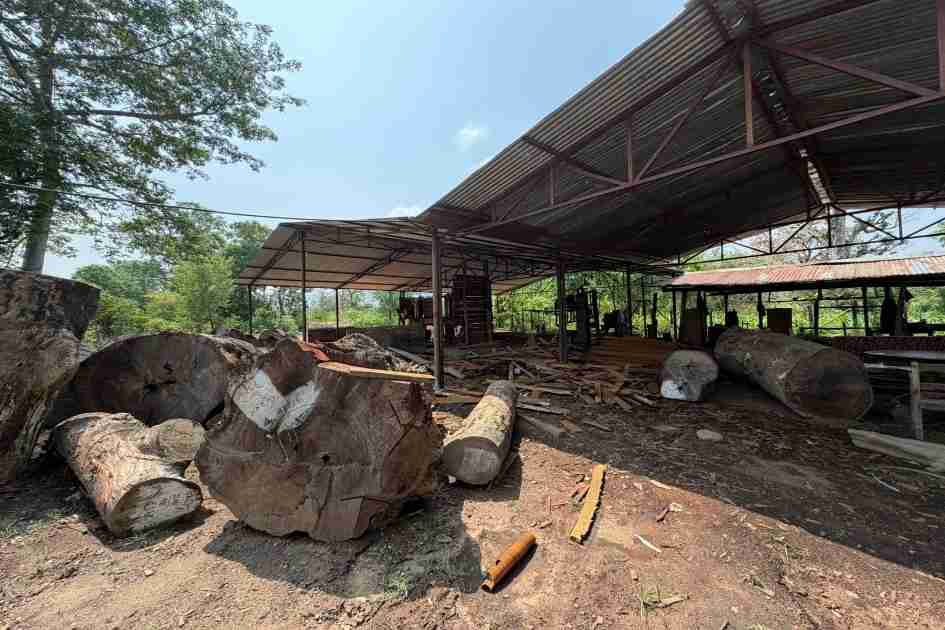
Promotion of Imported Timber
The issue of timber imports has long been a major topic in Nepal. The experience of this community in Gadhawa helps explain why people continue to rely on imported timber despite the country’s vast forest resources.
“We talk about prosperity through forests, but even consumers who legally purchase timber from community forests struggle to get it processed because of government restrictions,” Sharma said. “Our laws, regulations and the working style of government employees have become obstacles to prosperity.”
According to Nepal’s Department of Customs, the country imported timber and timber products worth 35.4 million US dollars between 2023 and July 2024. Based on the current exchange rate, this equals more than 5.34 billion Nepali rupees.
Government statistics show Nepal spends more than four billion rupees every year importing foreign timber and timber-related products.
The sawmill, established with an investment of 1.9 million Nepali rupees, remained almost closed for years because of government obstacles. However, support from organisations working in forest-based enterprises helped revive the industry.
“All the tin roofing had been blown away by wind and the industry was nearly shut down,” said committee member Gyawali. “We were supported by the Forest and Farm Facility programme of the Food and Agriculture Organization of the United Nations (FAO), which helped bring the industry back to life.”
Under the programme, the community received around 6.6 million rupees to support forest-based enterprises, including the sawmill.
The funds were used to repair the mill, install roofing and provide furniture-making training to group members. The community also purchased a tractor to transport timber for local consumers at subsidised rates.
After years of struggle, the community finally received its official registration certificate from the Cottage and Small Industries Office on May 22, 2026.
Despite finally obtaining registration, local residents still fear they may not be allowed to operate smoothly in the future. Chairperson Navaraj Sharma said the success or failure of the enterprise still depended heavily on the Forest Office.
“Forest officials must approve and stamp the timber we process. They are also responsible for monitoring the operation,” Sharma said.




