

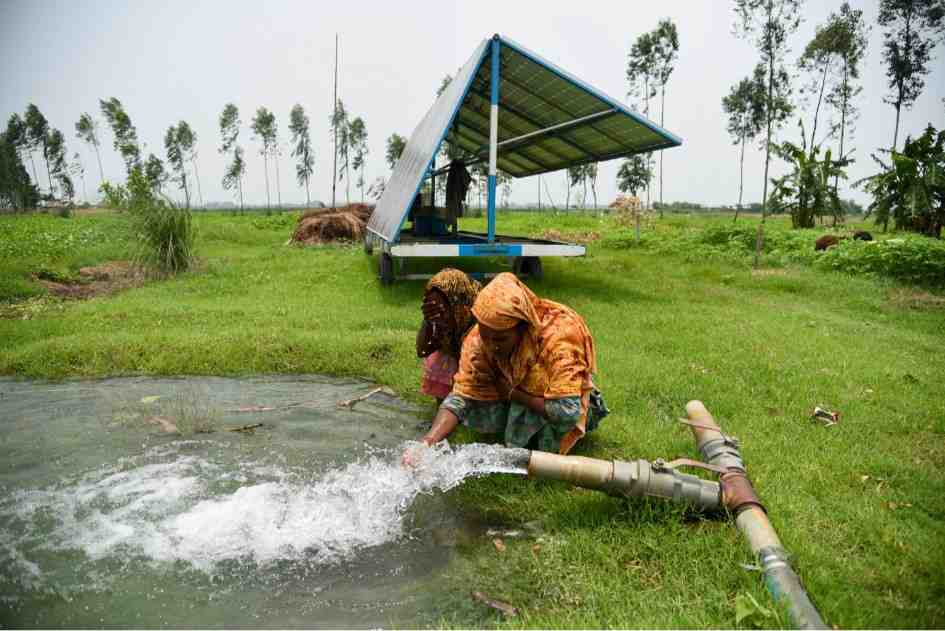



Bangladesh’s growing fuel import crisis is driving renewed focus on solar-powered irrigation as a practical solution to reduce energy dependence, cut agricultural costs, and support sustainable farming through integrated water, energy and food security strategies
The latest global energy shock has once again highlighted the Bangladesh economy’s deep dependence on imported fuel. As liquefied natural gas (LNG) and diesel prices rise and supply chains face uncertainty, the country is navigating familiar challenges—balancing immediate energy needs while continuing efforts to address longer-term vulnerabilities.
But this time, the solution may not lie in distant energy markets or large infrastructure projects. It may already be visible in Bangladesh’s rural landscape in the quiet spread of solar-powered irrigation.
For years, Bangladesh has treated solar energy primarily as a grid-scale or rooftop solution. Yet research and field experience suggest that one of the fastest, most scalable pathways to reducing fuel imports lies elsewhere – in solar systems that power agriculture.
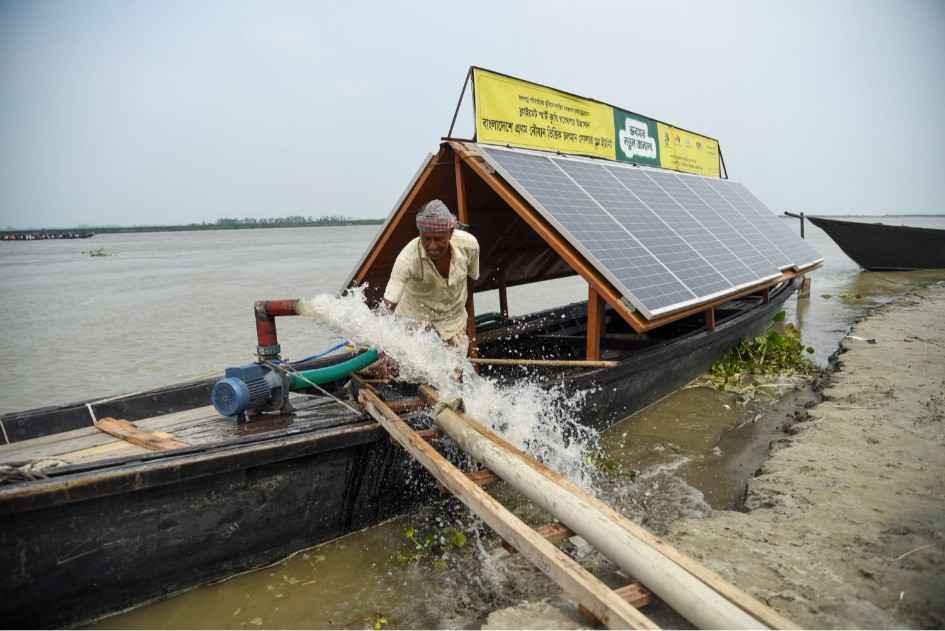
Work led by the International Water Management Institute (IWMI), supported by the Swiss Agency for Development and Cooperation, offers critical lessons on how solar can move from scattered pilots to a national strategy which addresses not just energy, but water, agriculture, and rural livelihoods together.
The hidden fuel crisis beneath agriculture
Bangladesh’s energy debate often focuses on LNG terminals, power plants, and tariffs. Yet a significant portion of imported fuel is consumed far from the grid in irrigation.
Hundreds of thousands of diesel pumps power the country’s agriculture. These pumps are not just an environmental concern, but they are tying food production directly to global fuel markets. Every spike in oil prices quietly raises the cost of irrigation, food production, and ultimately inflation.
Solar irrigation systems (SIPs) offer a direct alternative. Once installed, they eliminate fuel costs entirely. In a context where Bangladesh spends billions subsidising energy imports, this represents not just a technological shift but a macroeconomic opportunity.
IWMI’s research shows that replacing diesel pumps with solar is one of the fastest ways to reduce fuel imports at scale, without waiting for complex grid upgrades or large land acquisitions.
The water-energy connection policymakers often miss
However, solar irrigation is not a simple substitution. It comes with its own risks and opportunities where sustainability of the solar irrigation business model depends on balanced ground water use, farmer affordability and long-term viability.
One of IWMI’s most important findings is that the answer is not to slow down solar adoption, but to design it better.
IWMI-supported pilots in Bangladesh have demonstrated that grid-integration create supplement income options for service providers. For example, when farmers are given a reason to save water rather than maximise pumping, they respond quickly. This is where policy design becomes crucial.
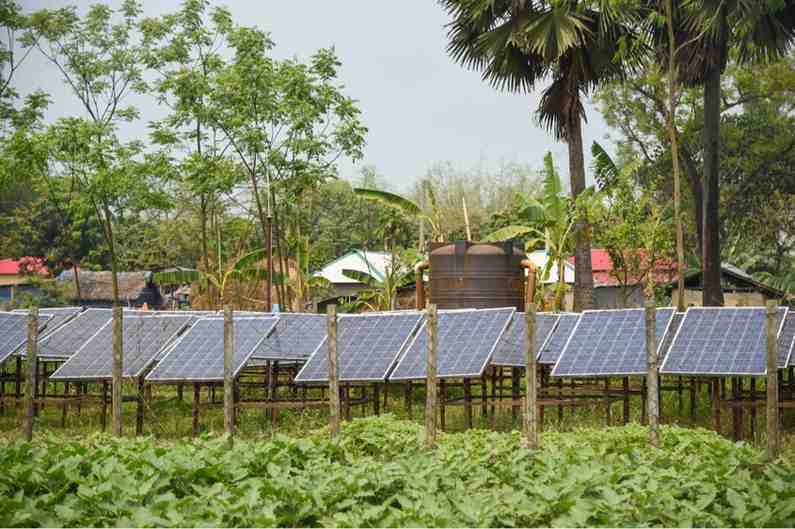
In second phase of Solar Energy for Agriculture Resilience (SoLAR) project, IWMI is also piloting Alternate Wetting and Drying (AWD) bundling with solar irrigation for boosting water productivity, producing more crop per drop, simultaneously lowering dependency on electricity or fuel cost and reducing greenhouse gas emissions especially methane from paddy field. Bundling AWD and solar irrigation is not merely a scaling pathway but has the potential to transform sustainable farming, supporting both food and water security while advancing renewable energy adoption.
Turning farmers into energy producers
A breakthrough insight from IWMI’s work is the potential to transform farmers from energy consumers into energy producers. In most current solar irrigation models, excess electricity generated by solar panels is simply wasted when irrigation demand is low. But if that surplus power can be fed into the grid and sold, the entire economic logic changes.
Farmers or service providers have two income streams like selling water for irrigation and selling electricity to the grid. This creates a powerful incentive to use water efficiently.
Such models have already shown promise in pilot projects. They align perfectly with the broader argument for feed-in tariffs and guaranteed purchase agreements that have driven solar expansion in countries like India.
For Bangladesh, this approach offers a way to solve multiple problems at once: reduce fuel imports, manage groundwater sustainably, and attract private investment into rural energy systems.
Why solar irrigation has not scaled yet
Despite its potential, solar irrigation in Bangladesh remains limited in scale. A few thousand systems have been installed, but this is far below the country’s needs.
The barriers are not technological, but institutional.
First, access to finance remains a major constraint. Farmers and small entrepreneurs often cannot secure loans for solar systems, even when the long-term economics are favourable. Banks perceive these investments as risky, especially in the absence of guaranteed revenue streams.
Second, policy signals have been inconsistent. Without clear commitments on tariffs, grid connectivity, and long-term support, investors hesitate.
Third, limited infrastructure and weak market systems for solar irrigation equipment, maintenance, and after-sales services remain a major constraint to the sustainable expansion of solar irrigation. Fourth, there is a lack of integration between sectors. Solar irrigation sits at the intersection of energy, water, and agriculture but policies are still made in silos.
IWMI’s work highlights that scaling solar irrigation requires coordination across ministries, not isolated interventions.
Lessons for rapid solar expansion
If Bangladesh is serious about rapidly expanding solar capacity, lessons from solar irrigation are directly relevant to the broader energy transition. Experience shows that the main barriers are not technological, but lie in policy design, financing, and institutional coordination.
First, demand must be guaranteed through clear purchase agreements. As with large solar projects, decentralised systems need assured markets for electricity. Without this, revenue uncertainty will continue to constrain financing.
Second, incentives should be time bound. Clear deadlines can accelerate investment by creating urgency and reducing uncertainty. Similar approaches can be applied to both grid-scale and decentralised systems.
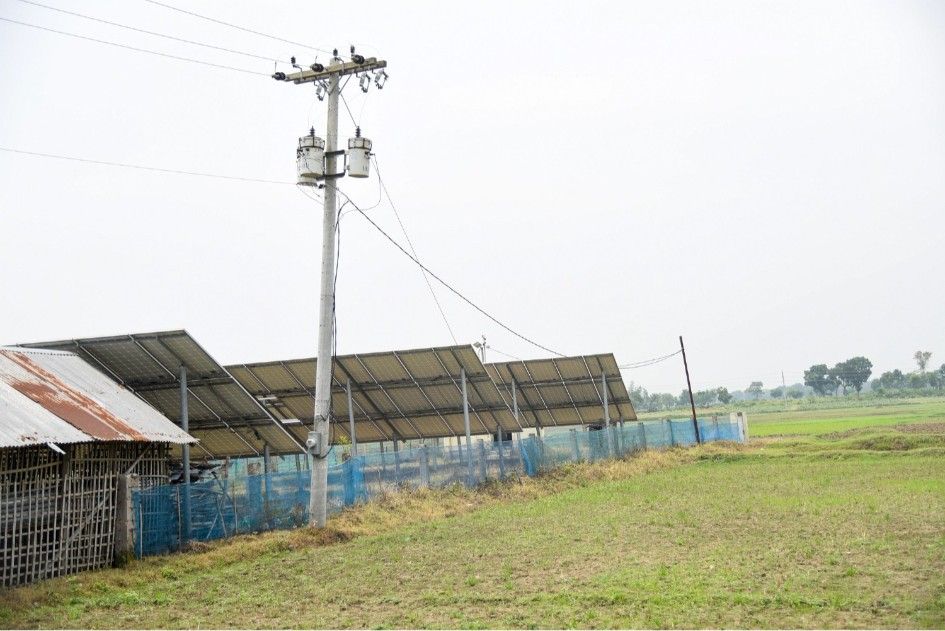
Third, service-based models should be prioritised. Research by the IWMI shows that systems managed by service providers perform better than individual ownership, lowering upfront costs and enabling faster scaling.
Fourth, solar expansion must align with water sustainability. Policies must combine solar deployment with monitoring, incentives, and awareness.
Finally, quality control is critical. Poor installations and weak maintenance have undermined trust in Bangladesh’s solar sector. Clear standards and accountability will be essential to ensure long-term success.
Bangladesh’s Agri-PV opportunity
Bangladesh is one of the most densely populated countries in the world and population has been growing. As a result, arable land available per capita has been shrinking. Bangladesh loses about 80,000 acres of agricultural land every year due to rapid urban expansion, housing and other infrastructure projects. The climate change pushing coastal region populations to urban areas putting more pressure on limited land resources.
Agri-photovoltaics (agri-PV) offer a promising synergy between renewable energy generation and agricultural productivity, enabling dual land use to address growing food and energy demands. Shade-tolerant crops like turmeric, ginger, green chilies, brinjal, and lettuce are suitable, with studies suggesting better yield due to improved microclimate under panels. Bangladesh can begin piloting agrivoltaics to better utilize limited land while advancing its renewable energy goals.
Incorporating agrivoltaics into national strategies is not just about policy alignment; it is about reimagining how land can serve multiple purposes efficiently. With the right policy support, agrivoltaics can become a cornerstone of sustainable land management, helping the country meet its energy goals without compromising agricultural resilience.
IWMI through the SoLAR project will be partnering with Infrastructure Development Company (IDCOL) to pilot Agri-PV in Bangladesh to develop a scalable business model which combining solar power generation with crop cultivation on the same land. Through this pilot research IWMI will study crop performance, optimization of land use and ensuring grid integration which may strike food production and renewable energy generation. This pilot will validate Agri-PV design in existing SIP of IDCOL sponsors, including commissioning and oversight of design studies, crop-energy trade-off analysis, and approval of pilot configurations (retrofit and elevated). This pilot study could lay the foundation for a resilient, dual-use land system which may boosting rural livelihoods while accelerating clean energy transition in Bangladesh.
The choice ahead
Bangladesh’s current energy crisis is often framed as a problem of scarcity of fuel, foreign exchange, and fiscal space. But it is also a moment of opportunity. The country has already experimented with solar solutions, built institutional knowledge, and generated evidence through research and pilot projects. What is missing is not innovation, but scale. This requires higher policy priority and sectoral co-ordination
Experience from SoLAR project supported by IWMI shows that rapid expansion is possible when incentives are aligned, risks are reduced, and systems are designed with users in mind.
In the coming months, Bangladesh will face pressure to secure energy supplies at any cost through higher LNG imports, renewed interest in coal extraction, or new fossil fuel investments. These may offer short-term relief, but they risk locking the country into deeper long-term dependence.
There is, however, a faster and more practical path. While large solar parks and rooftop systems remain important, they often face delays due to land constraints, grid challenges, and financing bottlenecks. In contrast, decentralised models such as solar irrigation and emerging Agri-PV systems can be deployed. By combining energy generation with agriculture, these approaches allow Bangladesh to produce both food and power from the same land, reducing pressure on scarce resources while supporting farmers directly.
Solar energy is no longer an expensive experiment. It is a practical and scalable solution, especially when linked to agriculture. The evidence shows that it can.
The authors work with International Water Management Institute.




