

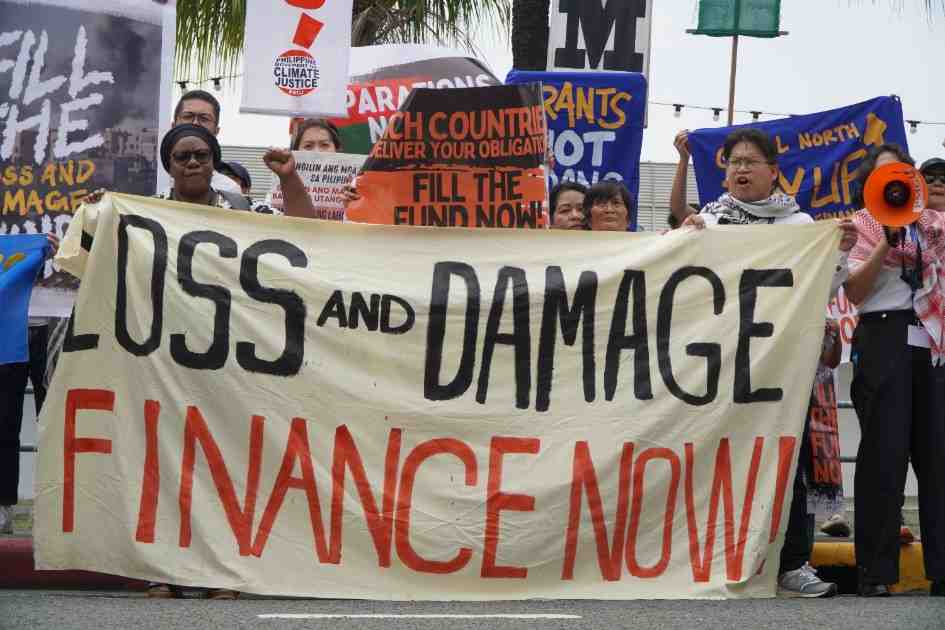



Draft decisions released at COP30 signal the most significant progress yet toward fully operationalising the long-awaited Fund for Responding to Loss and Damage, marking a pivotal moment in global climate diplomacy. The documents, covering both the UNFCCC’s 30th session and CMA 7, outline the Fund’s first year of activities and set out guidance that negotiators say moves the mechanism from concept to functioning reality.
The decisions, dated 15 November and issued under agenda items 8(e) and 10(d), come as climate-related disasters intensify worldwide, leaving vulnerable nations to absorb catastrophic losses from storms, sea-level rise, slow-onset changes and cultural and economic damage. For many developing countries, the drafts represent long-sought recognition that mitigation and adaptation alone cannot protect them from irreversible climate harms.
A decades-long struggle
The Fund’s emergence reflects more than three decades of pressure from countries least responsible for global emissions. Small island states first pushed the idea of “loss and damage” in the early 1990s during the formation of the UNFCCC, arguing that traditional climate finance tools could not address permanent losses such as destroyed heritage, forced migration or submerged coastlines.
Momentum strengthened after disasters such as Typhoon Haiyan (2013), Cyclone Idai (2019) and Pakistan’s historic 2022 floods exposed gaps in existing support. COP19 established the Warsaw International Mechanism, laying the groundwork for more structured discussions but offering no direct financial help. Only at COP27 in Sharm el-Sheikh did governments agree—after intense negotiations, to create a dedicated fund through decisions 2/CP.27 and 2/CMA.4.
Subsequent COPs refined the structure. COP28 in Dubai adopted the Fund’s governing instrument, and COP29 in Baku and established its interim arrangements. Now, at COP30 in Belém, set in the heart of the Amazon and symbolic of climate vulnerability, the Fund is entering its operational phase.
The governing instrument emphasises equity, common but differentiated responsibilities and the polluter-pays principle. It prioritises grants over loans to avoid worsening debt distress and targets particularly vulnerable developing countries, including SIDS, LDCs and climate-threatened regions across Africa, Asia and Latin America.
Breakthroughs in the draft decisions
Both CP and CMA drafts recall previous mandates and note the Board’s first annual report . They welcome a series of milestones that signal the Fund is finally becoming operational.
One of the most significant is the adoption of the Barbados Implementation Modalities (BIM), endorsed at the Board’s fifth meeting. BIM establishes the Fund’s first set of interventions for grant-based, country-owned and designed to address immediate and long-term loss and damage. The drafts hail BIM’s rapid rollout, including its access modalities, eligibility criteria and call for proposals, which officially opens the door for developing countries to request support.
The drafts commend the work of the newly formed independent secretariat, created at the seventh Board meeting. They highlight the interim support provided by the UNFCCC and GCF secretariats and by UNDP. Barbados and the Philippines, hosts of key Board meetings, are praised for facilitating progress in regions at the frontline of climate impacts.
Financial pledges also feature prominently. New commitments from Iceland, Japan, Latvia, Spain and other contributors are acknowledged, alongside previous pledges listed in annex II. Although several figures remain placeholders, they build upon more than USD 700 million announced at COP28. Parties are urged to convert pledges into cash quickly to provide predictability for vulnerable nations.
The Board’s 2026 work plan is welcomed, with critical areas identified for delivery:
Implementation of BIM, including development of a risk-management framework;
Design of the long-term operating model, featuring rapid-response windows and small grants for communities;
Resource mobilisation, where a long-term strategy will be essential ahead of the 2027 replenishment;
Coherence with other mechanisms, including the Santiago Network;
Stakeholder participation, with explicit inclusion of women, youth and Indigenous Peoples.
The Board reiterates that eligible countries may access the Fund directly through national governments–including direct budget support, pending procedures—reducing delays associated with intermediaries.
The drafts also stress multilingual accessibility, urging translation of templates to remove barriers for non-English-speaking applicants.
Implications for vulnerable nations
For countries repeatedly struck by cyclones, floods, droughts and sea-level rise, the draft decisions provide a measure of hope. The Philippines, host of two recent Board meetings, has faced billions in climate-induced losses; direct access could help rebuild schools, health facilities and farms far more quickly.
In the Caribbean, Barbados continues to advocate for seismic reforms to global finance. Prime Minister Mia Mottley has described the Loss and Damage Fund as a “moral imperative.” BIM’s bottom-up design aligns with her broader “Bridgetown Initiative,” which calls for fairer international finance structures.
Across sub-Saharan Africa, drought-stricken and flood-hit countries could channel grants into climate-resilient infrastructure, relocation plans or livelihood support. Marginalised groups stand to gain from the Fund’s inclusive engagement policies, which elevate local knowledge and participation.
Still, significant challenges loom. Annual loss and damage costs could reach hundreds of billions by 2030, according to the IPCC—far outstripping current pledges. Civil society groups warn that voluntary contributions are insufficient and call for fair-share assessments based on historical emissions.
Operational hurdles also remain, including verification of claims and ensuring funds reach affected communities swiftly. The drafts’ proposed safeguards and risk-management tools aim to address these issues, but their effectiveness will hinge on implementation.
Mixed reactions, cautious optimism
UNFCCC Executive Secretary Simon Stiell described the progress as “a testament to multilateralism,” while NGOs called for greater ambition. “USD XX million is symbolic—it must become systemic,” said Greenpeace campaigner Harjeet Singh.
Developed countries view the Fund as part of their broader climate-finance architecture, though some—like the United States—remain absent from new pledges. Negotiators say political constraints at home may shape contributions in the months ahead.
Experts see the Fund as complementing existing mechanisms such as the GCF and Santiago Network. Youth activists, increasingly influential within COP spaces, insist that affected communities must guide decision-making. “Loss and damage is about survival, not symbolism,” said Ugandan activist Vanessa Nakate.
Looking ahead
As negotiations continue in Belém, the draft decisions set the stage for final adoption later this week. The 2027 replenishment process will be a critical test of global commitment. Observers say the Fund’s success will ultimately be measured in real-world outcomes: rebuilt homes in Fiji, strengthened embankments in Bangladesh, revived agriculture in the Sahel.
In an era of narrowing time to curb warming, the Loss and Damage Fund stands as the clearest expression of climate justice within the Paris Agreement framework. The COP30 drafts move it closer to delivering tangible relief for nations already living the consequences of a heating planet.
Whether the world follows through will determine the Fund’s legacy—and perhaps the resilience of entire communities.




