




Experts warn declining climate-health funding is leaving Bangladesh’s health system unprepared as climate change intensifies maternal and reproductive health risks, particularly for women and adolescent girls in vulnerable coastal regions.
Climate-related budget allocations for Bangladesh’s health sector have declined over the past five years despite mounting evidence that climate change is worsening maternal and reproductive health risks for women and adolescent girls in the country’s coastal and vulnerable regions, experts warned on Saturday (June 6).
Researchers and policymakers said rising salinity, shortages of safe drinking water, malnutrition, inadequate sanitation and climate-induced poverty are exposing women to increasing health complications while climate financing for health continues to shrink. They stressed that Bangladesh will require nearly $1.4 billion over the next five years to build a climate-resilient health system capable of addressing growing threats.
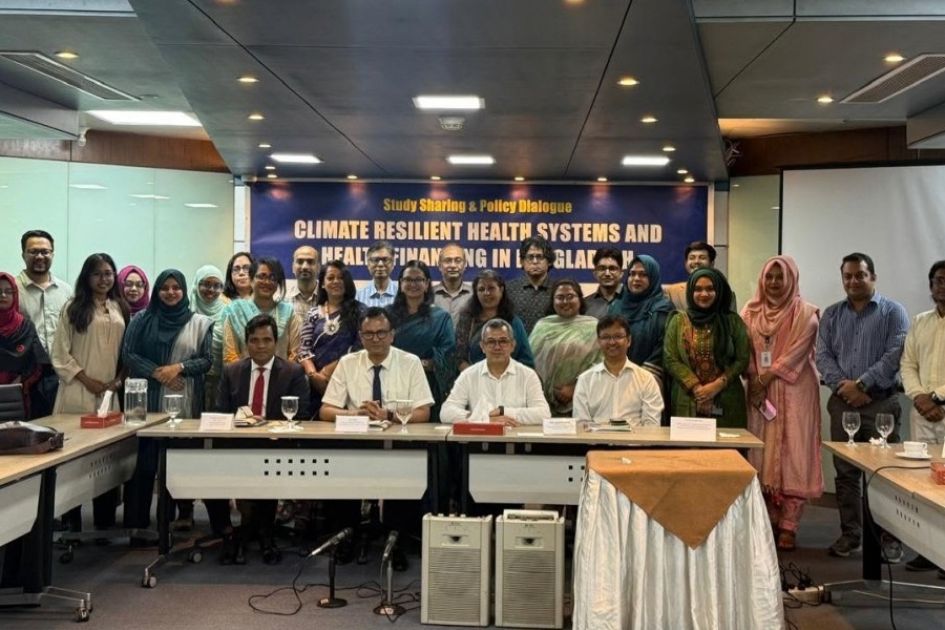
The concerns were highlighted during a policy dialogue titled “Climate-Resilient Health Systems and Health Financing in Bangladesh” held at BRAC Centre Inn in the capital, Dhaka. The event was jointly organized by the Centre for Participatory Research and Development (CPRD), HEKS/EPER and Sushilan.
Findings presented at the dialogue showed that climate-related allocations within the Health Services Division budget fell from 2.74 percent in fiscal year 2021-22 to 1.97 percent in fiscal year 2025-26. During the same period, the health sector’s share of the national climate budget declined from nearly 2.5 percent to 1.5 percent.
Experts said allocations should have increased in response to escalating climate-related health risks. Instead, funding has moved in the opposite direction, leaving the country’s health system inadequately prepared to address emerging challenges linked to climate change.
In her welcome remarks, Shirin Sultana Lira, Senior Programme Manager for Governance, Climate Change and Environment at the Embassy of Switzerland in Bangladesh, said the link between climate change and health risks was no longer a future concern but a present reality.
She said evidence-based findings must be translated into effective policies and implementation frameworks. Alongside increasing domestic health allocations, Bangladesh should make better use of international climate finance opportunities and actively engage in global climate negotiations to secure greater funding for the health sector.
The dialogue featured findings from two CPRD studies titled “Assessing the Impact of Climate Change on the Reproductive Health of Coastal Women and Adolescent Girls” and “Climate Finance in Bangladesh’s Health Sector: Policy Aspirations and Financial Realities.”
The studies found that women and adolescent girls living in coastal areas are among the groups most severely affected by climate change. Rising sea levels, increasing salinity, frequent cyclones and storm surges and limited access to safe water have significantly heightened health risks.
Women who participated in the research reported suffering from irregular menstruation, severe menstrual pain, miscarriages, pre-eclampsia, childbirth complications, postnatal infections and excessive bleeding. Researchers said many of these conditions are leading to long-term physical and psychological consequences.
They noted that climate change is often viewed primarily through the lens of agriculture, food security or infrastructure damage, while its growing impact on reproductive health, maternal health and child health remains insufficiently recognized.
Data presented during the dialogue also showed that the health sector has received limited support from the Bangladesh Climate Change Trust Fund (BCCTF). Less than one percent of the fund’s total financing has been allocated to health-related projects.
Of the 877 projects financed under the BCCTF through 2024, only three were implemented by the Health Services Division. Experts described this as a clear indication of the constraints facing climate financing in the health sector.
Speakers said health has been identified as a key adaptation priority under Bangladesh’s National Adaptation Plan (NAP) 2023-2050. However, the financial commitments required to implement those priorities remain largely absent.
According to the Health National Adaptation Plan (HNAP), approximately $1.4 billion will be needed over the next five years to establish a climate-resilient health system. The funding would support health infrastructure upgrades, stronger disease surveillance systems, enhanced emergency preparedness, capacity building for health workers and expanded climate-related research.
The studies also found that more than 60 percent of current climate-health spending is directed toward development projects. Meanwhile, critical areas such as disease surveillance, disaster preparedness, workforce development, research and long-term adaptation capacity receive comparatively limited funding.
Dr Shah Abdul Sadi, Deputy Secretary at the Economic Relations Division (ERD), said Bangladesh must present stronger and more evidence-based climate justifications to attract international climate finance, particularly as global adaptation financing has declined by around $2 billion in a single year.
He said the country should make its climate budget tagging system more effective and transparent while improving the capacity of different sectors to mobilize their own financing.
Professor Dr Md Iqbal Kabir, Director of the Climate Change and Health Promotion Unit under the Health Services Division, said only 5 percent of global climate finance currently reaches the health sector, leaving it underfunded.
He added that inadequate data remains a major challenge, making it difficult to prepare strong financing proposals and formulate effective policies.
AKM Sohel, Additional Secretary of the ERD and Head of the UN Wing, said climate change considerations have not yet been fully integrated into mainstream development planning. As a result, many initiatives are being implemented in isolation and are failing to deliver the desired outcomes.
He said that at a time when global climate finance is shrinking, Bangladesh must maximize the use of existing resources while strengthening domestic capacities and pursuing strategic investments to make the health sector more resilient.
At the conclusion of the dialogue, participants presented a series of recommendations for the 2026-27 national budget. These included more firmly integrating the priorities of the Health National Adaptation Plan into the budget process, strengthening climate budget monitoring mechanisms, increasing regular funding for disease surveillance and emergency preparedness and ensuring greater access to domestic climate funds for health sector adaptation initiatives.




