

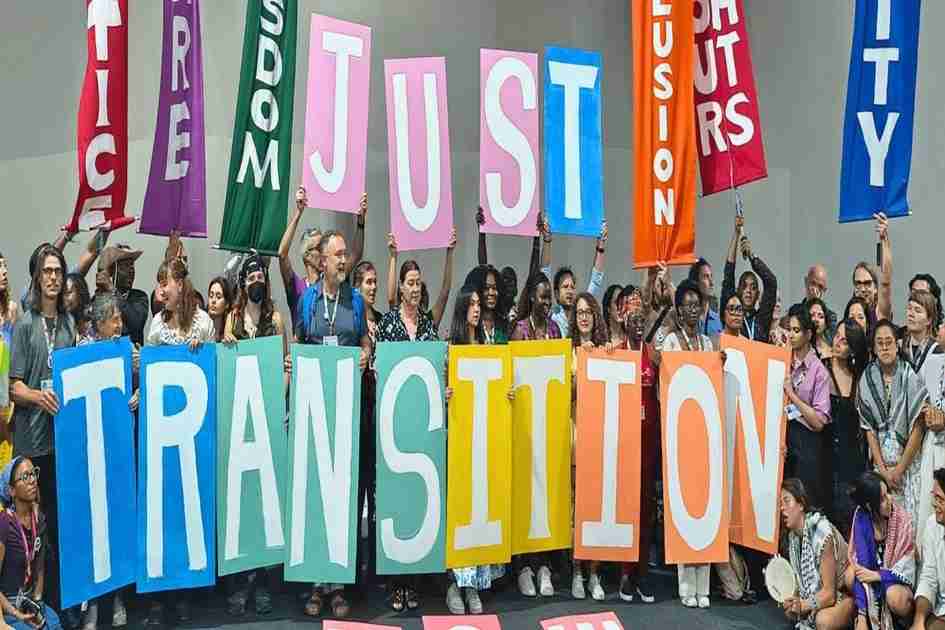

UN climate negotiators meeting in Bonn will define the framework for reviewing the Just Transition agenda, shaping fairness, finance and worker protections in global climate action ahead of COP31 in Türkiye.
Negotiators gathering in Bonn, Germany from 8 June will begin high stakes talks to define the terms of reference for a major review of the UNFCCC’s Just Transition Work Programme (JTWP), a process central to integrating fairness into global climate action ahead of COP31 in Antalya, Türkiye.
The 64th sessions of the Subsidiary Bodies (SB64), the UNFCCC’s mid-year climate negotiations, will run from 8 to 18 June 2026 in Bonn, serving as a key waypoint between COP30 in Belém, Brazil and COP31 in Türkiye.
The JTWP, established at COP27 in 2022, aims to ensure that the transition to low-carbon economies is socially just and inclusive for workers and communities. SB64 is expected to advance a draft decision on the UAE-led programme, including possible elements of a just transition mechanism, options for operationalization and the scope of its formal review.
Governments will focus on defining indicators, timelines and assessment criteria for the review due in November 2026, which will measure whether climate transition policies are delivering real outcomes for workers, communities and developing countries.
Attention is also focused on whether the framework will move beyond broad principles into sector-specific guidance, including energy systems, transport and labour markets.
The SLOCAT Partnership on Sustainable Low Carbon Transport has urged governments to embed workforce and mobility transitions into national climate strategies in a way that is affordable and worker centered.
Developing countries are expected to press for stronger support on finance, technology transfer and capacity building, warning that without adequate means of implementation, just transition risks remaining largely aspirational.
Civil society groups are calling for stronger integration of just transition into national development planning, deeper climate ambition, a managed fossil fuel phase-down aligned with science and the rejection of what they describe as false solutions.
They also reiterated demands for frontline community leadership, dedicated just transition finance and stronger accountability mechanisms.
“Just transition will only be meaningful if it delivers real protection for workers and frontline communities, not just text in negotiation rooms,” said Sohanur Rahman, young just transition negotiator from Bangladesh and Executive Coordinator of YouthNet Global.
As divisions persist over ambition and operational details, SB64 is expected to set the tone for the November 2026 review, widely seen as a key test of whether just transition remains a guiding principle or becomes an operational pillar of global climate governance ahead of COP31.




