

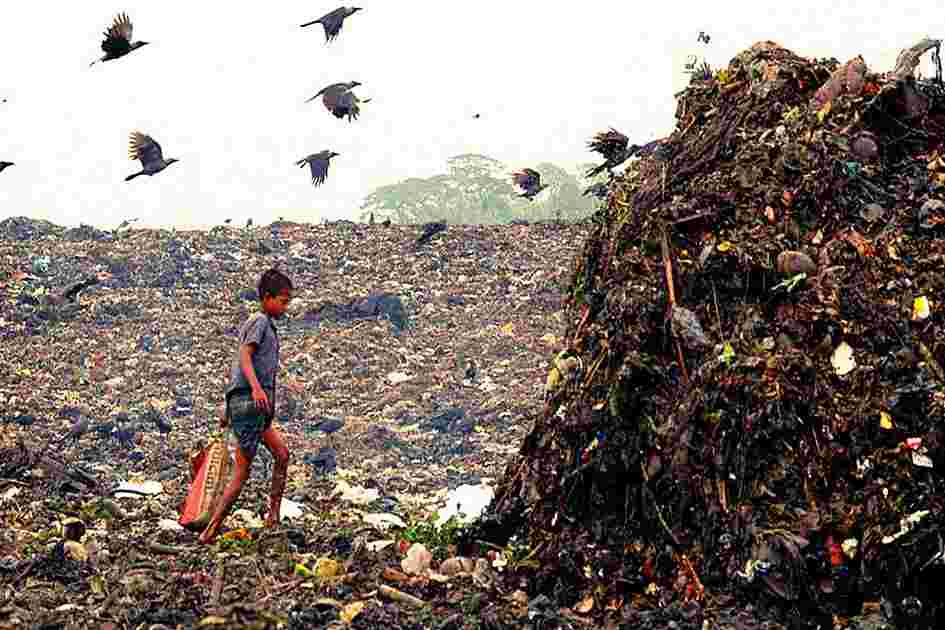



BWGED says high power tariffs, capacity payments, toxic emissions and weak safeguards make the Aminbazar project a costly threat to sustainable waste management.
The Bangladesh Working Group on Ecology and Development has urged Prime Minister Tarique Rahman to intervene directly to cancel the 42.5 MW North Dhaka Waste-to-Energy Power Project in Aminbazar, calling it one of Bangladesh’s most expensive and environmentally high-risk power projects.
In an appeal submitted to the Prime Minister on Tuesday, July 14, BWGED said the project posed serious and long-term risks to Bangladesh’s economy, public health, environment and climate. The organisation said the project was approved in 2020 under a special law without a competitive bidding process, while an agreement was signed in 2021 among the Power Division, Dhaka North City Corporation and China Machinery Engineering Corporation.
Despite more than four and a half years passing since the agreement, construction activities have yet to begin, BWGED said.
The 42.5 MW waste-to-energy plant is expected to generate about 316.5 million units of electricity annually if operated at an 85 percent plant load factor. Under the power purchase agreement, the government will buy electricity at 21.78 US cents per unit, equivalent to BDT 26.79 per kWh, which BWGED said is about 2.5 times higher than solar power tariffs and nearly double the cost of coal-based electricity.
If the plant operates at only 40 percent PLF, the electricity cost would rise to about BDT 47 per unit, while at 20 percent PLF, the cost could exceed BDT 75 per unit. BWGED said the government would also have to bear an annual capacity payment burden of USD 58.87 million, or about BDT 7.24 billion.
According to the proposed project budget, the construction cost is estimated at USD 467 million, or BDT 5,745 crore. This means the cost per MW will be around BDT 135.17 crore, which BWGED said is nearly 2.5 times higher than the construction cost per MW of the Rooppur Nuclear Power Plant, estimated at about BDT 47 crore per MW.
“With this amount of investment, Bangladesh could have installed around 425 MW of solar power capacity, which could generate approximately 688 million units of electricity annually without any fuel cost,” said Hasan Mehedi, member secretary of BWGED.
The project is being financed by international and foreign investors, including the Asian Infrastructure Investment Bank, which is providing USD 100 million, or BDT 1,230 crore, and the New Development Bank, which is providing another USD 100 million, or BDT 1,230 crore, loan. CMEC is investing USD 157 million, or BDT 1,931 crore. BWGED said the source of financing for the remaining USD 110 million, or BDT 1,353 crore, has never been publicly disclosed, raising concerns over transparency and accountability.
Under the agreement, Dhaka North City Corporation will supply 3,000 tonnes of municipal waste every day to the plant. If sufficient waste is not supplied, DNCC will reportedly have to pay a penalty of USD 50, or BDT 6,150, per tonne of shortfall. BWGED said DNCC currently generates about 2,750 tonnes of waste daily on average and warned that the project could create pressure to generate more waste instead of promoting waste reduction, recycling and sustainable waste management practices.
When operating at full capacity, the plant is expected to generate about 73,576 tonnes of bottom ash, fly ash and particulate matter annually, along with 39.56 tonnes of toxic substances, including heavy metals, dioxins and furans, and 1.17 tonnes of harmful gases such as nitrogen oxides, sulfur oxides, carbon monoxide and hydrogen chloride.
BWGED warned that these pollutants could increase the risks of cancer, cardiovascular diseases, respiratory illnesses and asthma among urban residents.
The organisation also challenged the claim that waste-to-energy plants reduce air pollution. According to BWGED, waste incineration produces about 1.3 to 1.8 kg of carbon emissions per unit of electricity generated, which it said is nearly double that of coal-based electricity and three times higher than gas-based power generation.
At full operation, the North Dhaka Waste-to-Energy Plant is expected to emit about 411,392 tonnes of carbon dioxide annually, BWGED said, adding that this would increase Bangladesh’s overall carbon emissions and undermine climate commitments, including the Global Methane Pledge.
BWGED also raised concerns over compliance with the environmental and social safeguards of the Asian Infrastructure Investment Bank. According to AIIB’s Environmental and Social Framework, meaningful consultation with affected communities must take place before project approval.
The organisation said that although the project’s Environmental Impact Assessment reported consultations with more than 100 local residents, around 40 percent stated that they had never been consulted. It also said the consultations reportedly took place only after government approval of the project.
BWGED alleged that key requirements under AIIB’s environmental and social policies, including public disclosure, grievance redress mechanisms and community participation, were not properly ensured.
The organisation also expressed concern over the proposed amendment to Bangladesh’s Air Pollution Control Rules, which require waste incineration at 1,000°C. It said that on April 16, the Ministry of Environment, Forest and Climate Change proposed reducing the required temperature to 850°C, allegedly to accommodate CMEC’s technical limitations.
BWGED said the North Dhaka Waste-to-Energy Project is not merely an expensive power project, but a long-term risk to Bangladesh’s economy, public health, environment and climate resilience.
The organisation urged the government to cancel the project and adopt sustainable alternatives, including waste reduction, recycling, composting, resource recovery and renewable energy-based solutions instead of waste incineration.




