


Bangladesh is urged to send prime ministerial or cabinet-level leaders to COP30 climate talks to boost visibility, protect biodiversity, support adaptation, and strengthen national positions in global climate negotiations forums.
High-level participation at the United Nations climate conference (COP) is crucial for Bangladesh to enhance its international visibility and effectively advocate for climate solutions, said Farida Akhter, Advisor to the Ministry of Fisheries and Livestock.
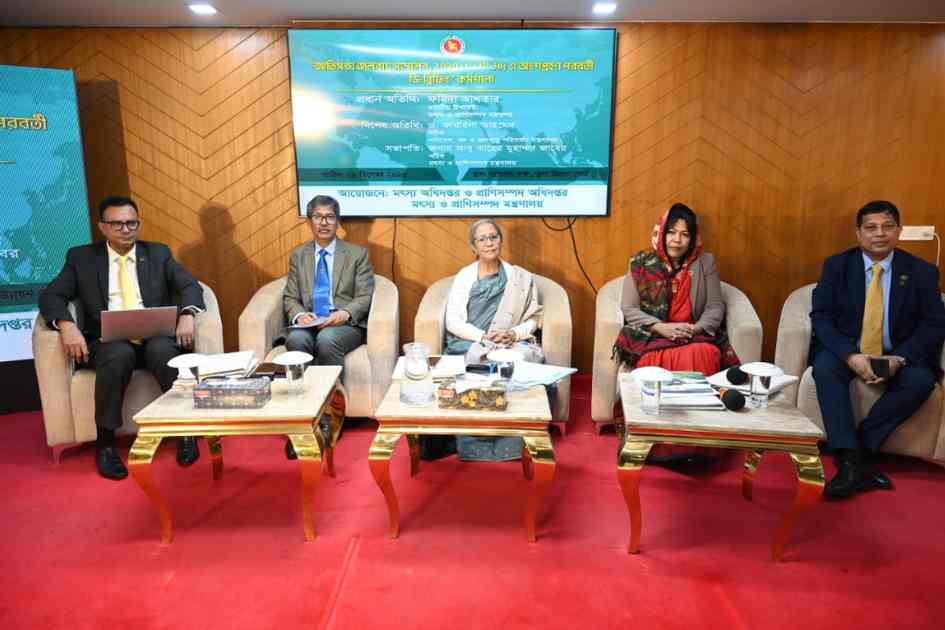
She made the remarks while speaking at a post-COP30 debriefing workshop organized by the Ministry of Fisheries and Livestock at the Cotton Development Board in Dhaka.
Farida Akhter emphasized that the presence of the Head of Government or minister-ranked senior advisors ensures a level of influence that lower-level delegations cannot achieve at global climate negotiations.
“Bangladesh is rich in biodiversity. Despite our challenges, we have the capacity to find solutions,” she said. “If we act collectively, we can significantly reduce climate-related losses.”
Referring to her role as Head of the Party Delegation of Bangladesh at COP30, the Advisor stressed the importance of preserving and promoting indigenous livestock breeds, noting that they are better adapted to local climatic conditions and require less care compared to foreign breeds. She cautioned against prioritizing productivity alone and called for greater investment in conserving and improving local genetic resources.
She also underscored the need to form a skilled national expert group on climate issues, highlighted the growing engagement of young people in climate action, and urged careful consideration of the impacts of genetically modified organisms (GMOs) on the fisheries and livestock sectors.
The workshop was chaired by Abu Taher Muhammad Jaber, Secretary of the Ministry of Fisheries and Livestock. Special remarks were delivered by Dr Farhina Ahmed, Secretary of the Ministry of Environment, Forests and Climate Change, who said the government aims to bring together both public and private expertise to address climate challenges. She confirmed that Bangladesh will continue climate initiatives using a national fund of $3.5 million, even without direct COP financing.
Deputy Head of the Party of Bangladesh at COP30, Mohammad Navid Safiullah, Additional Secretary of the Ministry of Environment, Forests and Climate Change, also spoke at the event. AKM Sohel, UN Wing Chief and Additional Secretary of the Economic Relations Division under the Ministry of Finance, highlighted international cooperation and financing aspects.
Other speakers included Mirza Shawkat Ali, Director of the Department of Environment; Mohammad Hafizul Islam Khan, Executive Director of the Bangladesh Center for Climate Justice; and Dr Md Tauhidul Islam, Bangladesh Ambassador to Brazil, who delivered an NDC-related video message. Pavel Partha, Director of BARCIK and Sohanur Rahman, Executive Coordinator of YouthNet Global, also addressed the workshop.
Panel discussions featured Gazi Md Wali-ul-Haq, Managing Director (Additional Secretary) of the Bangladesh Climate Change Trust; Dr Fazle Rabbi Sadek Ahmed, Deputy Managing Director of PKSF; and Mohammad Ziaul Haque, Additional Director General of the Department of Environment. The open discussion was moderated by Dharitri Kumar Sarkar, Joint Secretary of the Ministry of Environment, Forests and Climate Change, while Shahina Ferdousi, Joint Secretary of the Ministry of Fisheries and Livestock, conducted the session.
Sohanur Rahman, Executive Coordinator of YouthNet Global, highlighted the role of young people in climate action, saying, “Youth engagement is critical for implementing a just and sustainable transition. Our generation brings innovation, energy and local knowledge that can accelerate Bangladesh’s climate resilience efforts.”
Senior officials from various ministries and departments, along with representatives from non-governmental organizations, were also present at the workshop.




