

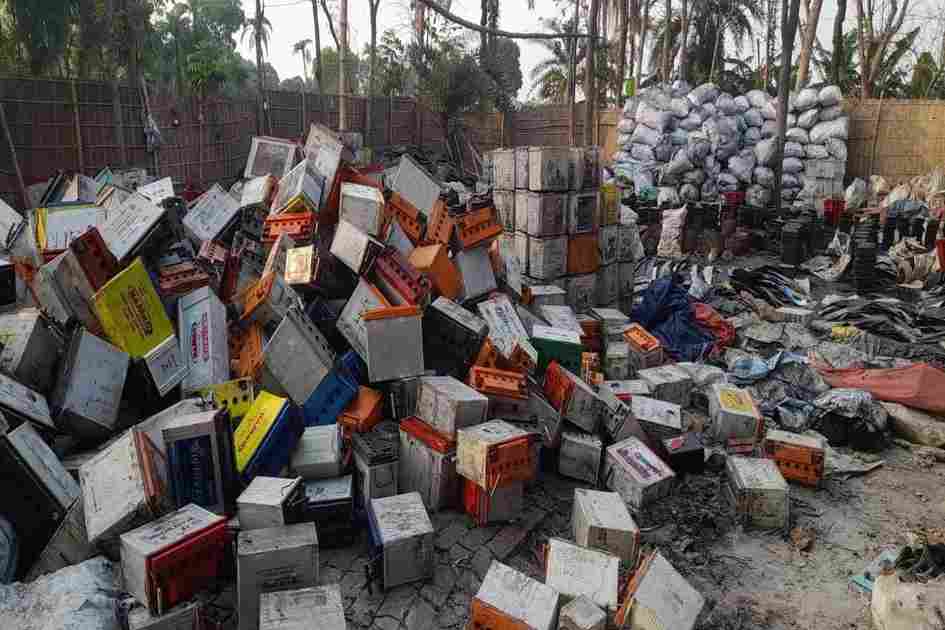

Bangladesh faces a worsening lead poisoning crisis as informal battery recycling exposes millions of children to toxic contamination, causing irreversible health damage, cognitive loss and billions in annual economic losses nationwide.
In Bangladesh, the toll of lead exposure is mounting quietly in the background of everyday life, shaping children’s health and the country’s economic future in ways that are largely invisible yet deeply consequential. What appears to be routine informal work in battery shops and recycling yards is, in fact, part of a wider public health and development crisis.
Beneath this normalized landscape is a growing neurological crisis affecting millions of children.
According to UNICEF, Bangladesh is among the world’s most lead-affected countries, with tens of millions of children estimated to be exposed to elevated blood lead levels. The consequences are severe and irreversible, including reduced cognitive ability, impaired brain development and lifelong learning deficits. The economic cost is also enormous, with billions lost in lifetime productivity due to diminished human potential.
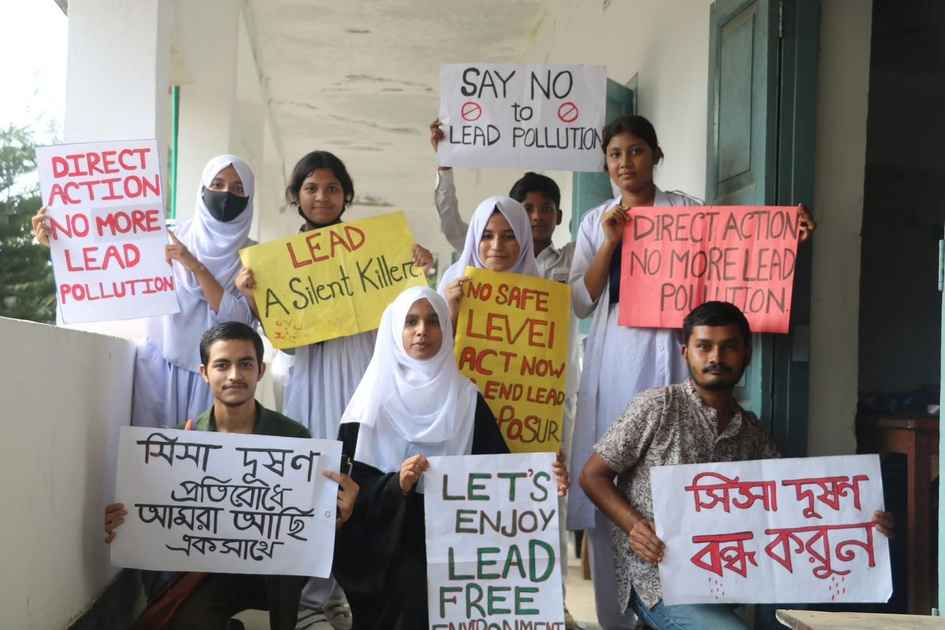
That silence carries a heavy price. A 2024 study by economist Bjorn Larsen, commissioned through Pure Earth, estimated the combined health burden of lead exposure in Bangladesh at $28.6 billion in 2019 alone, equivalent to 6 to 9 percent of GDP. IQ losses from childhood lead exposure are estimated at around $16 billion annually in lost lifetime productivity.
Health experts are unequivocal: there is no safe level of lead exposure.
A body of research by icddr,b has found widespread contamination across multiple regions, with children in industrial hotspots showing significantly higher blood lead levels than those in less exposed areas. In some hotspot studies, nearly all children tested showed detectable levels of lead exposure, underscoring how pervasive the contamination has become.
The science is no longer in question. The unresolved issue is why exposure continues at this scale.
A new source of an old poison
Bangladesh phased out leaded petrol decades ago, yet exposure has not declined as expected. Instead, it has shifted into a more diffuse and harder-to-regulate form: informal lead-acid battery recycling linked to the rapid expansion of battery-powered transport, particularly e-rickshaws.
These vehicles have transformed mobility and livelihoods across urban and rural Bangladesh. But they have also generated a vast waste stream of lead-acid batteries that frequently bypass formal recycling systems.
Across the country, discarded batteries are processed in informal smelting sites known as bhattis. In these unregulated settings, batteries are broken apart by hand and melted down, releasing toxic lead dust and fumes into the surrounding air, soil and water.
This is not conventional industrial pollution contained within factory boundaries. It is dispersed contamination embedded in neighbourhoods, peri-urban settlements and informal economic zones.
Short-lived batteries, lifelong contamination
The scale of exposure becomes clearer when traced through the lifecycle of a single vehicle.
E-rickshaws typically run on multiple heavy lead-acid batteries that last only a few months under intense use. With a multi-million-vehicle fleet across the country, this creates a continuous and expanding flow of hazardous waste.
In Kamrangirchar’s Tannery Pukurpar area, garage owner Rabiul describes a relentless cycle of replacement and disposal. Once discarded, batteries enter informal recycling chains with minimal oversight.
In Mirzapur, Tangail, field documentation by WHO and Pure Earth Bangladesh has captured open-air smelting practices where workers manually break batteries and melt lead in crude furnaces without protective equipment, exposing themselves and nearby communities to toxic emissions.The consequences are not theoretical.
One documented case involves a mother exposed during pregnancy whose teenage son now suffers from severe cognitive impairment linked to extremely high blood lead levels. Across multiple districts, similar patterns of developmental delay, chronic illness and neurological harm are increasingly being reported.
In Khulna’s Labanchara neighbourhood, former schoolteacher Kazi Sadiquzzaman recalls a smelting operation that coated a nearby school in toxic dust for more than a decade. In Narsingdi’s Fulbaria, residents spent years opposing an industrial battery plant accused of contaminating irrigation systems and fisheries before it was eventually shut down.
Employment at the price of exposure
The United Nations Environment Programme estimates that more than 1,100 informal battery recycling operations may be active across Bangladesh, many relocating frequently to avoid enforcement.
These operations persist not only because of weak oversight but also because of economic necessity. For many workers, they represent the only available source of income.
“The process is as primitive as it is lethal,” said Mitali Das, Country Director for Pure Earth Bangladesh. She noted that the informal recycling economy is sustained through complex and opaque supply chains linking collection, transport and smelting.
Industry representatives maintain that formal manufacturers operate under regulated import and recycling systems. However, experts argue that fragmented supply chains make accountability difficult.
The result is a system where labour, exposure and environmental harm are tightly interwoven.
Experts stress that periodic crackdowns are insufficient. Full traceability across the battery lifecycle and strictly enforced safety standards are required.
A crisis in the regulatory grey zone
The e-rickshaw sector has moved into a regulatory grey zone where formal rules and ground realities diverge sharply. Authorities have attempted to restrict unregistered three-wheelers in major cities, including Dhaka, but enforcement has struggled to keep pace with rapid expansion.
Millions of vehicles continue to operate without formal licensing while battery recycling remains only partially regulated.
Responsibility is fragmented across transport, environment and commerce authorities. While policy increasingly promotes cleaner technologies such as lithium-based systems, lead-acid batteries remain dominant due to cost and accessibility.
This institutional fragmentation weakens enforcement capacity and slows coordinated action.
The limits of enforcement
Bangladesh’s regulatory response to lead exposure has remained largely unchanged since 1999.
There is no national blood lead screening programme. Informal ULAB recycling continues with limited oversight. Soil remediation in high-exposure areas is absent and blood lead testing is not integrated into routine pediatric care.
Researchers at icddr,b point to structural barriers: weak enforcement of safe recycling policies, high profit margins, rising demand for lead-acid batteries and limited investment in safer alternatives.
“India banned leaded petrol one year after Bangladesh, in 2000, but has since adopted a more active regulatory approach toward post-petrol lead exposure sources,” said Dr Md Mahbubur Rahman.
The economic case for action is clear. International evidence suggests benefit-cost ratios of around 17:1 for lead reduction interventions. Bangladesh is currently absorbing losses equivalent to 6 to 9 percent of GDP annually while investing comparatively little in mitigation.
There are early signs of institutional movement.
A multi-stakeholder steering committee chaired by the Environment Secretary has been formed to coordinate cross-ministerial action, involving the Ministry of Health, DGHS, BSTI, food safety authorities and the Ministry of Industries. A national strategy extending to 2035 is under preparation with potential support from the Asian Development Bank.
Whether these commitments translate into enforceable action remains uncertain.
A preventable crisis
Health experts stress that lead poisoning is entirely preventable. The solutions are well established: enforceable industrial standards, formalized recycling systems, elimination of unsafe smelting and integration of blood lead screening into primary healthcare.
Yet implementation continues to lag behind exposure.
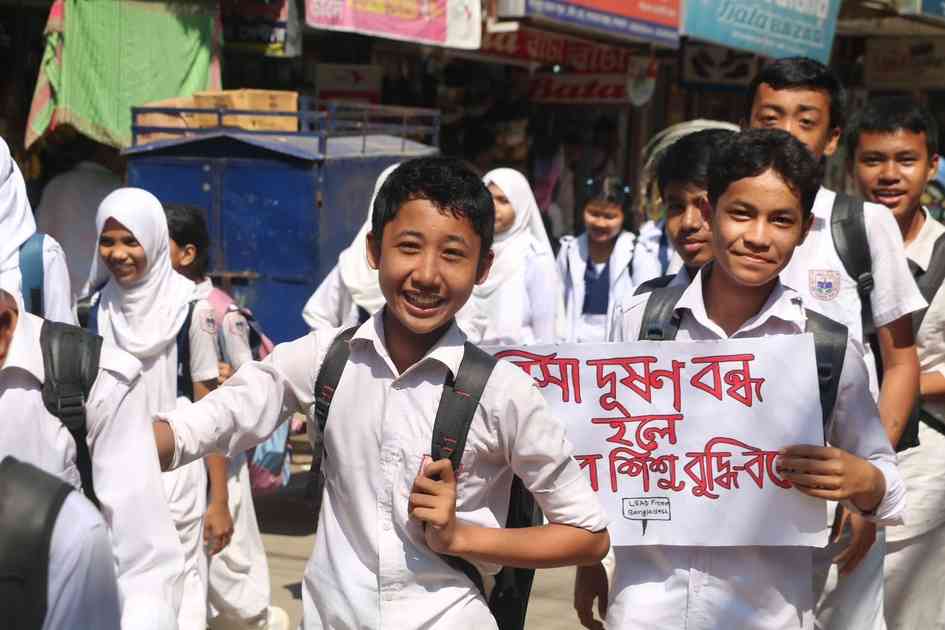
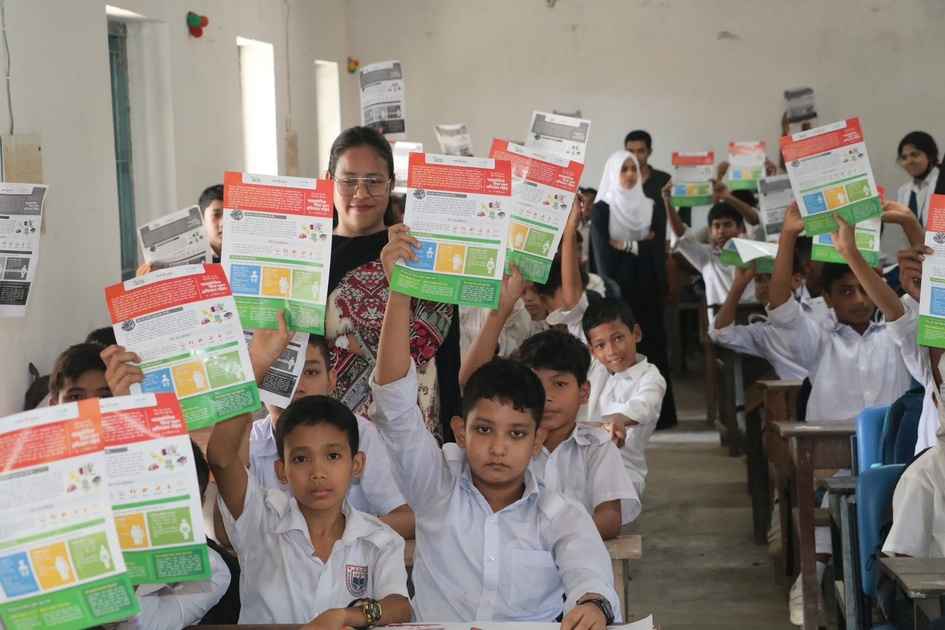
Across Bangladesh, a youth-led movement is pushing the issue into the national debate, documenting exposure sites and demanding a just transition that protects both livelihoods and public health.
The campaign is supported by YouthNet Global and Pure Earth Bangladesh.
Sohanur Rahman, Executive Coordinator of YouthNet Global, said the crisis reflects a deeper governance failure.
“Lead poisoning is silently stealing the future of millions of children in Bangladesh. This is a national emergency affecting human capital, education and development. Immediate coordinated action is needed before another generation is permanently harmed,” he said.
He added that any transition must be just and inclusive.
“A just transition means we cannot solve one crisis by creating another. We must protect children’s health while ensuring safe livelihoods through formalisation, clean technology and strong regulation.”
The hidden cost of progress
Bangladesh’s rapid expansion of low-cost mobility has transformed transport and livelihoods. But it has also created a parallel toxic economy shaping the health of an entire generation.
Lead does not announce itself. It accumulates silently in blood, soil, dust and water long before its consequences become visible.
For many communities living beside informal recycling sites, the crisis is not a warning about the future. It is already present in their children’s bodies.
And what is preventable can no longer be delayed.




