

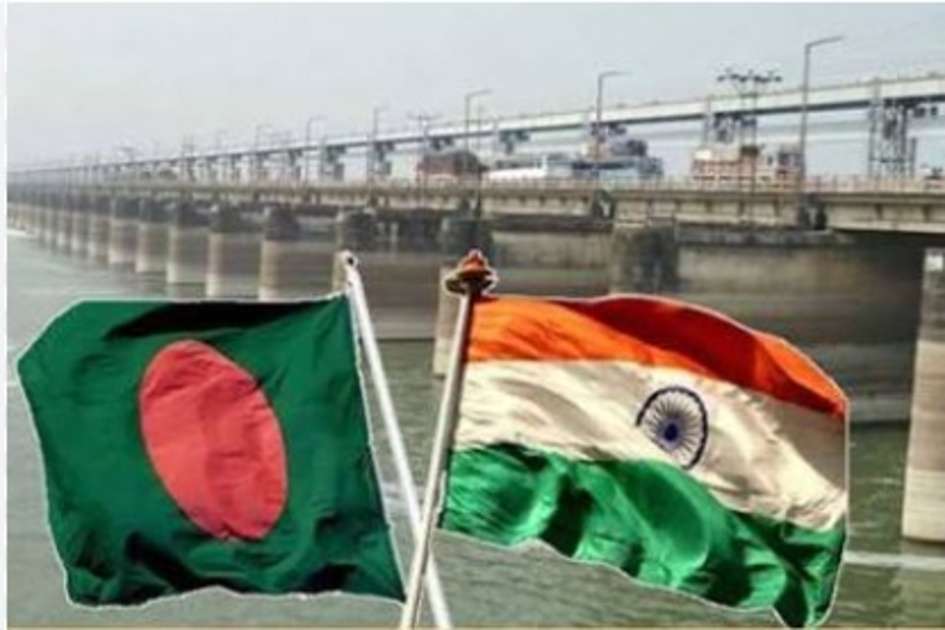



As dry-season flows shrink in the Padma, Bangladesh plans to press for data-based negotiations with India over equitable sharing, downstream protection and river-dependent livelihoods.
Bangladesh is preparing for crucial political-level negotiations with India over the renewal of the 1996 Ganges Water Sharing Treaty, which is due to expire in December, amid declining flows in the common river and differing positions over the formula for sharing its waters.
Technical teams from both countries are already working on the renewal and preparing the ground for talks between Dhaka and New Delhi, expected at a mutually convenient time, with only five months left before the 30-year agreement expires.
The treaty covers the sharing of Ganges waters during the dry season from January to May. The river enters Bangladesh as the Padma, a major lifeline for agriculture, fisheries, biodiversity and livelihoods in the lower riparian delta.
The renewal comes as Bangladesh says the river’s average flow has declined over the years because of unilateral diversion of water at various upstream points in India, leaving the country to face worsening downstream impacts.
India has long been withdrawing water from the river system without maintaining flows considered adequate even for its natural course, affecting biodiversity, agriculture and fisheries across Bangladesh, where many rivers originate in India.
Bangladesh and India share 54 rivers, but the Ganges remains the only one covered by a water-sharing treaty between the two neighbours.
The renewal of the Ganges treaty and the long-delayed signing of a Teesta water-sharing agreement are expected to feature prominently during a possible visit to India by Bangladesh’s prime minister Tarique Rahman at the invitation of Indian prime minister Narendra Modi. No date has been fixed for the visit, but officials from both sides are preparing the ground.
Bangladesh is expected to enter the talks with an emphasis on scientific studies and data showing how the Farakka Barrage on the Ganges is affecting the river system in the country’s north-western region.
The Indo-Bangladesh Joint Rivers Commission, established in 1972, is mandated to maintain liaison between the two countries and ensure joint efforts to maximise benefits from common river systems for both sides.
The commission is also tasked with ensuring that regional water resources are used on an equitable basis for the mutual benefit of people in both countries. But it has remained almost non-functional, mainly because of what Dhaka sees as India’s indifference to repeated calls for regular bilateral meetings to resolve outstanding water issues.
Pankaj Saran, a former Indian high commissioner to Bangladesh and now convener of NatStrat, a Delhi-based independent think tank on strategic and security issues, has suggested that the water-sharing formula based on historical flows recorded over 40 years from 1949 to 1988 may no longer be suitable for a renewed treaty.
Speaking during an interaction with a media delegation from Bangladesh in New Delhi on May 5, the retired diplomat said population had grown and water flow had declined, describing this as the “new reality” for the treaty’s renewal.
“The Ganges water-sharing formula in the 1996 treaty may not work anymore after 30 years. Things have changed a lot,” Pankaj was reported in the media as saying.
Referring to the formula in the annexure to the 1996 treaty, he suggested that both countries consider water flows from the immediate past 40 years as they prepare for negotiations on renewal.
Water experts in Bangladesh, however, believe such a formula would further deprive the country of its rightful share, as the water level at the Farakka point has fallen over the years.
India has been unilaterally withdrawing water from the Ganges upstream, reducing the flow at Farakka.
The last ministerial meeting of the Joint Rivers Commission ended in New Delhi in August 2022 after a gap of 12 years, without any progress on the long-pending Teesta agreement or negotiations on six other transboundary rivers.
At the meeting, both sides agreed to conduct a feasibility study for the optimum utilisation of the water received by Bangladesh under the provisions of the Ganges Water Sharing Treaty.
Dhaka has already raised the issue of renewing the treaty.
In a recent statement, Bangladesh’s state minister for foreign affairs Shama Obaed Islam said discussions with India on the renewal were moving in a positive direction.
She said “bilateral negotiations on the treaty are continuing, although every aspect of the discussions cannot be made public at this stage.”
According to the Bangladesh Sangbad Sangstha, the state news agency, Shama told reporters at her office in Segun Bagicha in Dhaka on July 9 that Bangladesh believed India understood the importance of the treaty and the significance of Ganges waters for both countries.
“I believe India will make the right decision, taking that into consideration and with the shared interest of ensuring that our bilateral relationship is not harmed in any way,” Shama Obaed was quoted as telling reporters.
Studies have identified the Farakka Barrage, located upstream in India about 18 kilometres from the Bangladesh border, as one of the major causes of intensified erosion and a sharp increase in sandbar formation over the decades in Bangladesh’s river system because of declining water flow.
An analysis of hydrological data from the Bangladesh Water Development Board over the past five years shows that the average dry-season flow between January and May fell from 2,093 cubic metres per second in 2020 to 1,116 cubic metres per second in 2025.
Before the commissioning of the Farakka Barrage, the Padma carried an average flow of 3,685 cubic metres per second in 1974.
Water has long been a major issue in Dhaka’s diplomacy with New Delhi, and Bangladesh is expected to seek protection of its interests in the upcoming negotiations by pressing for its rightful share from the major river system.
For Bangladesh, officials and experts say preparation will be critical as negotiations resume at a time when flow at the Farakka point inside India remains far below the volume available upstream, a situation that Bangladesh’s water experts attribute to India’s unilateral withdrawal of water at various points.




