

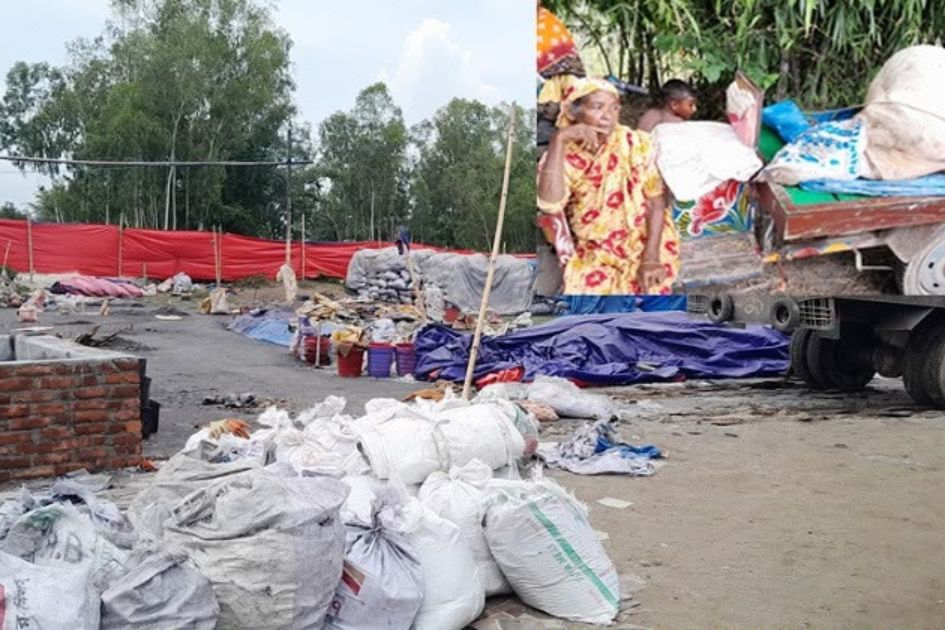



The reported livestock deaths have intensified scrutiny of hazardous waste management and informal battery recycling, prompting government investigations while raising broader concerns about environmental safety, rural livelihoods and toxic lead pollution.
Six cattle have reportedly died after consuming grass and water allegedly contaminated by acid, lead and other toxic waste from an unregulated used battery recycling facility in northern Bangladesh’s Panchagarh district. Two more cattle remain critically ill and are undergoing treatment, raising concerns over unsafe battery recycling practices and their impact on rural communities, livestock and ecosystems.
The incident occurred in Debupara village of Debnagar Union under Tetulia Upazila in Panchagarh district, where local residents alleged that waste from an old battery recycling facility contaminated nearby farmland, grasslands and water sources. They claimed that cattle became sick after consuming polluted grass and water and later died.
Authorities have launched an investigation, and officials from Bangladesh’s Department of Environment, the Department of Livestock Services, police and the local administration have visited the site. Laboratory tests are being conducted to determine the exact cause of the cattle deaths and whether exposure to toxic battery waste was responsible.
Used lead-acid batteries contain lead and corrosive acids. When recycling is carried out without proper environmental safeguards, toxic heavy metals and chemicals can enter soil, water and food chains, creating long-term risks for human health, animals and biodiversity.
Farmers report major losses
Local residents said three cattle belonging to Hafizul Islam, son of late Seraj Uddin of Debupara village, died along with one cattle each belonging to Amirul Islam of the same village, Shamsul Haque of Khatiyagach village and Bacchu, son of Ismail Haque.
Two additional cattle belonging to Hasan and Hafizul Islam are currently receiving treatment. The affected farmers estimate their combined financial losses at around Tk 450,000 to Tk 500,000.
Hafizul Islam said his three cattle died after consuming grass and water that he believes had been contaminated by acid and waste from the battery recycling facility.
“Three of my cattle died after consuming grass and water affected by waste from the battery factory. Strong legal action should be taken against those responsible for operating this facility,” he said.
Another affected farmer, Amirul Islam, said his family depends on agricultural work and that their cattle were their main source of livelihood.
“One cattle has died and another is critically ill. If the remaining one also dies, my family will face severe hardship,” he said.
Alleged unsafe lead recycling raises environmental concerns
Residents alleged that the battery recycling facility had been operating for a long time without adequate environmental safeguards. They claimed that lead, acid and other hazardous substances from used batteries were being discharged into surrounding areas.
They also alleged that smoke and chemical emissions from the operation were affecting not only livestock but also poultry, crops and vegetation.
Environmental experts say unsafe lead recycling is a major source of toxic exposure in many developing countries. Lead, a highly toxic heavy metal, can accumulate in ecosystems and create long-term risks for public health, particularly for children, workers and communities living near informal recycling sites.
The Panchagarh incident comes amid wider concerns over informal battery recycling networks in Bangladesh, where increasing demand for automotive batteries, renewable energy storage systems and electric mobility has increased the need for safe collection, recycling and disposal systems.
Authorities begin investigation
Tetulia Model Police Station Officer-in-Charge (OC) Laisur Rahman said police had inspected the site, collected information and ordered the temporary suspension of the factory’s activities.
“No written complaint has been submitted by the affected families so far. Legal action will be taken if a formal complaint is filed,” he said.
Tetulia Upazila Livestock Officer Dr Md Nazmul Haque of the Department of Livestock Services said a veterinary team was sent immediately after receiving the report.
“Samples from the dead cattle are being collected and will be sent to Dhaka for laboratory testing. The actual cause of death can be confirmed after receiving the test results,” he said.
Panchagarh Department of Environment Assistant Director Abdul Gafur said officials had visited the site and collected information.
“The matter has been reported to the district administration and higher authorities. Necessary legal action will be taken after reviewing the findings,” he said.
Tetulia Upazila Nirbahi Officer (UNO) Fahmida Sultana said relevant government agencies had been instructed to investigate the incident.
“Officials from livestock services, police and the Department of Environment have visited the area. Further action will be taken after receiving detailed reports,” she said.
Environmental justice concerns
Sohanur Rahman, Executive Coordinator of YouthNet Global, said the reported deaths of cattle in Panchagarh highlight the dangers of unsafe hazardous waste management.
“The reported deaths of cattle in Panchagarh are a warning sign of the dangers posed by unsafe lead recycling practices. Lead pollution is not only an environmental concern but also a public health and environmental justice issue. We need stronger enforcement of environmental laws, safe battery recycling systems and community-centred solutions to ensure that people, animals and ecosystems are protected,” he said.
He added that addressing toxic pollution requires cooperation among government agencies, industries, civil society organizations and local communities to build a safer and more sustainable battery lifecycle.
Wider concerns over informal lead recycling in Bangladesh
The Panchagarh incident comes amid growing concerns over informal lead recycling networks operating in several industrial and peri-urban areas of Bangladesh.
In Dhamrai’s Kalampur area near Dhaka, four lead smelting furnaces are reportedly operating at a garden house owned by Kamal Majumder.
In Savar, two furnaces have reportedly been identified inside an abandoned brick kiln near Namabazar, while another four are reportedly operating near the Aminbazar waste dumping area. Eight more furnaces have reportedly been found near a brick kiln south of Aowal Market in Vakurta Union.
In Gazipur’s Konabari area, another eight open furnaces are reportedly operating near a waste disposal site beside the Dhaka-Tangail highway.
Authorities and environmental groups say these allegations require proper investigation to determine whether the facilities have environmental clearance and comply with hazardous waste management regulations.
Building a safer battery lifecycle system
Environmental advocates say Bangladesh needs stronger systems for safe battery collection, recycling and disposal. They emphasize that reducing lead pollution requires both enforcement against unsafe practices and support for formal, environmentally responsible recycling industries.
Experts say manufacturers, recyclers and regulators must share responsibility for creating a safer battery lifecycle system, including proper waste management, worker protection, pollution monitoring and accountability for environmental damage.
The Panchagarh case highlights a broader environmental justice challenge: protecting rural communities, workers, livestock and ecosystems while ensuring a safe transition toward sustainable industrial practices.




