





The initiative will build evidence, train law enforcement and promote community digital literacy as traffickers increasingly use online platforms, job portals and social media to exploit people.
Bangladesh’s Economic Relations Division and the International Organization for Migration have signed a 24-month project to strengthen the country’s efforts to prevent and respond to human trafficking facilitated through digital technologies.
The project, titled “Countering Cyber-Enabled Human Trafficking Through Technology,” is funded by the IOM Development Fund and will be implemented by IOM Bangladesh in partnership with the Ministry of Home Affairs.
The initiative aims to support longer-term efforts to prevent cyber-enabled human trafficking in Bangladesh. Its findings and training resources are expected to contribute to future policy and programme development and strengthen existing national and inter-agency efforts to combat trafficking.
The project responds to growing concerns over traffickers’ use of social media, online platforms, job portals and other digital technologies to target, recruit, control and exploit people.
It will focus on three key areas: building evidence and knowledge, strengthening law enforcement capacity and improving digital literacy in communities.
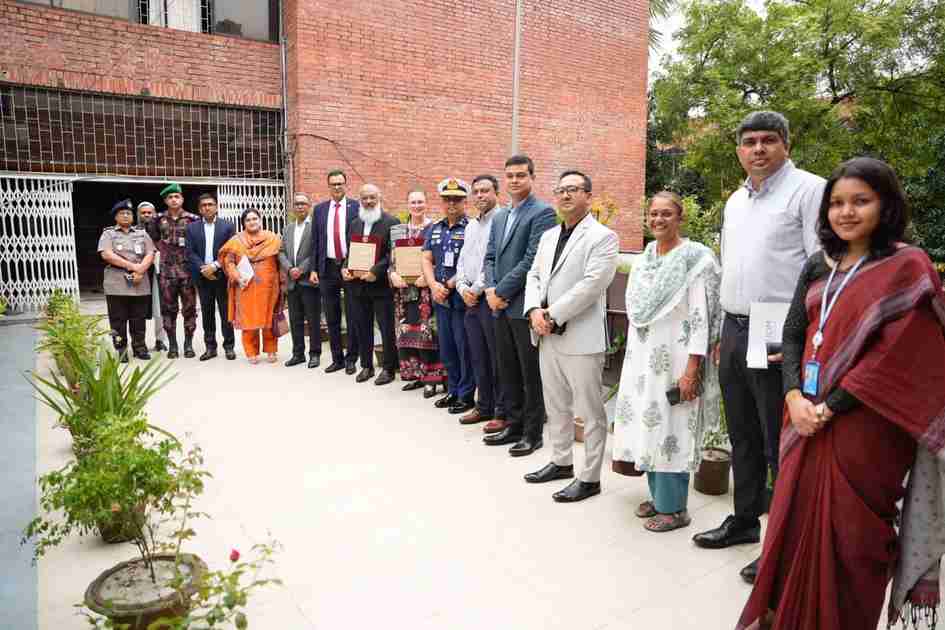
The agreement was signed by Md. Shahriar Kader Siddiky, Secretary of the Economic Relations Division under Bangladesh’s Ministry of Finance, and Dr Laura Tomm Bonde, Chief of Mission of IOM Bangladesh.
A. K. M. Sohel, Additional Secretary and Wing Chief of the UN Wing at ERD, representatives of relevant government agencies including the Ministry of Home Affairs and IOM officials were present at the signing.
“Technology is transforming the way people communicate, seek employment and connect with opportunities, but it can also be exploited by traffickers,” said Dr. Laura Tomm Bonde, Chief of Mission, IOM Bangladesh.
“This project will help strengthen the evidence, skills and community awareness needed to ensure that technology becomes part of the solution rather than a tool for exploitation,” she added.
Md. Shahriar Kader Siddiky said the project would contribute to the Government of Bangladesh’s efforts to prevent the misuse of technology for human trafficking while promoting technology as a means to counter human trafficking.
“Its overall outcome is to enable government stakeholders and communities to take informed action to prevent, respond to and mitigate the risks of cyber-enabled human trafficking,” he said.




