

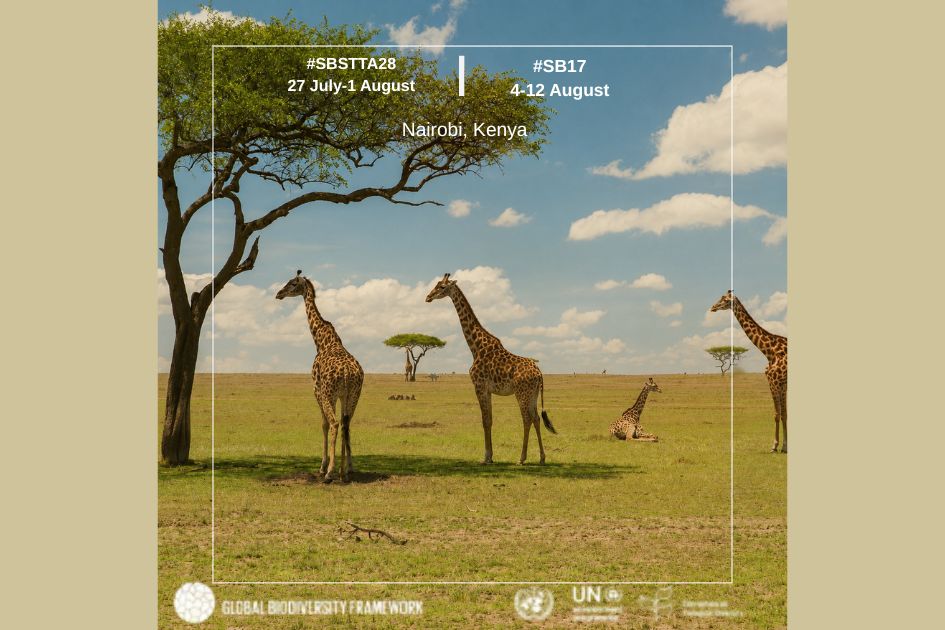



Negotiators advanced recommendations on protected areas, wildlife management and finance, but unresolved differences over speeding implementation now move to COP 17 in Yerevan, where Parties will review collective progress.
Parties to the UN Convention on Biological Diversity have recognised that the world is not on track to meet 2030 biodiversity targets, after nearly three weeks of talks in Nairobi aimed at preparing for a pivotal UN biodiversity conference in Armenia in October.
The negotiations in the Kenyan capital, held from 27 July to 12 August, made progress on scientific, technical and implementation issues, including sustainable wildlife management, protected areas, synthetic biology, marine and coastal biodiversity conservation, finance, capacity-building and digital sequence information.
The talks paved the way for decisive intergovernmental negotiations at the 2026 United Nations Biodiversity Conference, including COP 17, to be held in Yerevan from 19 to 30 October.
From 27 July to 1 August, the twenty-eighth meeting of the Subsidiary Body on Scientific, Technical, and Technological Advice, known as SBSTTA-28, found widespread consensus on issues surrounding sustainable wildlife management and the management of protected areas, synthetic biology and marine and coastal biodiversity conservation.
Highlights included recommendations on the first update of the Convention’s Programme of Work on Protected Areas since its adoption in 2004, global voluntary guidance for sustainable wildlife management and a thematic action plan to strengthen capacity-building, technology access and knowledge-sharing in synthetic biology.
From 4 to 12 August, the seventh meeting of the Subsidiary Body on Implementation, or SBI-7, tackled ways to strengthen key enablers of biodiversity action, including finance, mainstreaming, access to information, capacity-building and digital sequence information.
Parties showed a strong willingness to engage on issues ranging from resource mobilisation and the Convention’s financial mechanism to the role of communications and education, as well as biodiversity mainstreaming.
They also advanced recommendations aimed at strengthening the policies, resources, institutions, cooperation and capacity needed to turn national and global biodiversity commitments into action.
Across both meetings, Parties considered the key messages and conclusions of the first report on progress under the Kunming-Montreal Global Biodiversity Framework, titled “State of Biodiversity Action,” with a view to forging a common understanding of how gaps in progress can be overcome.
The 2030 biodiversity targets, agreed in 2022, have reached their halfway mark. The Convention said unprecedented engagement and momentum had been generated, with 130 Parties, more than 70 percent, submitting national reports and 172 Parties, almost 90 percent, submitting national targets that adapt global ambition to national circumstances.
Based on the record number of national reports submitted by Parties by the February 2026 deadline, the report provides what the Convention described as a robust evidence base for assessing progress so far in pursuing the Framework’s 23 targets.
It will serve as a basis for the review of collective progress in implementation, one of the most prominent items on the COP 17 agenda in Yerevan, where Parties will also discuss ways to accelerate progress.
The global report shows promising efforts on conservation targets, while progress on other areas related to means of implementation has been slower, including resource mobilisation, the repurposing of harmful subsidies and inclusive governance.
With the conclusion of the Nairobi meetings, Parties made significant progress in acknowledging the current state of biodiversity action and the uneven progress achieved.
Differences remain, however, over how to accelerate action toward achieving the 2030 targets.
Intense discussions around the Cali Fund underscored its importance as an instrument to help the private sector give back to nature and highlighted Parties’ strong desire to ensure that its governance and operations are fully aligned with the Convention’s priorities.
“I think that we can all leave Nairobi with a sense of satisfaction at what we have accomplished here, but the task awaiting us in Yerevan in nine weeks will take all the stamina and determination that Parties can summon,” said Astrid Schomaker, Executive Secretary of the CBD.
“When Parties convene in October for COP 17 and the meetings of the Cartagena and Nagoya Protocols, we will need strong agreement on pathways for addressing the gaps identified in the global report so that we can stay on track to achieve the goals and targets of the Global Biodiversity Framework,” she said.
“It is true that the progress is being made across all targets. However, implementation is not yet happening at the pace and scale needed to achieve the KMGBF. Fewer than half of aligned national targets assessed by Parties are currently on track, with some of the largest gaps in mobilising biodiversity finance, reforming harmful subsidies, addressing business impacts and dependencies, and shifting toward sustainable consumption,” Schomaker said.
The report’s findings, together with recommendations from SBSTTA-28 and SBI-7, will feed into the 2026 UN Biodiversity Conference in Yerevan, including COP 17 and the meetings of the Parties to the Cartagena and Nagoya Protocols.
At COP 17, Parties will undertake the first global review of collective progress in implementing the Kunming-Montreal Global Biodiversity Framework.




